


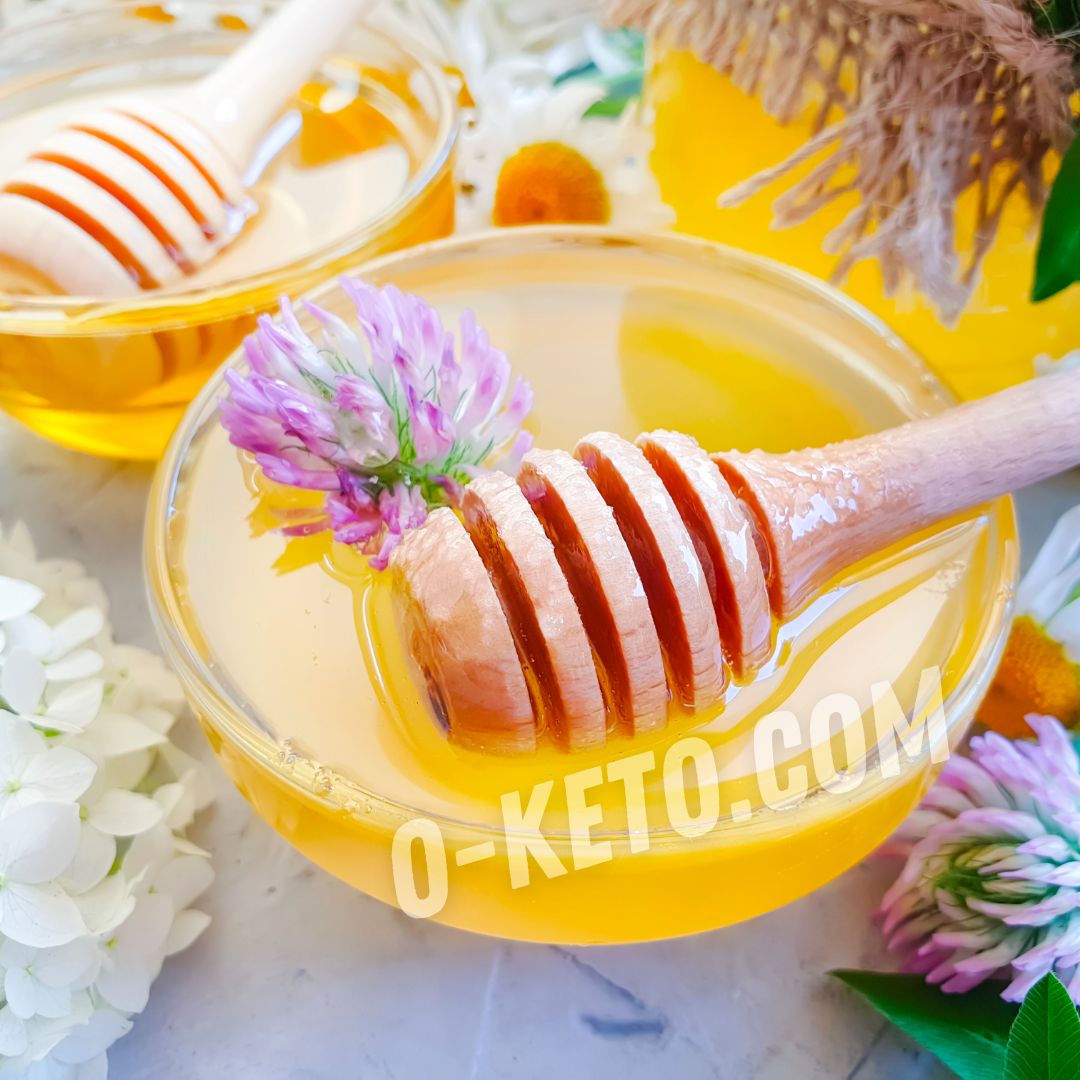

Sweet clover honey is made from the nectar of sweet clover, a melliferous plant with small yellow or white flowers. This honey is usually light in color, mild in taste, with a delicate herbal aroma and sometimes notes of vanilla, fresh hay, or meadow flowers. After crystallization it often becomes denser and fine-grained.
The name matters: sweet clover is not the same as clover and not the same as alfalfa, although all these plants can grow in meadows and be visited by bees. Sweet clover honey has its own aromatic profile, but nutritionally it remains honey: a sweet product with a high share of sugars. The floral source changes smell and taste, but it does not turn honey into a low-carbohydrate sweetener.
Nutrition
In 100 g of honey there are usually about 300-330 kcal and roughly 80-82 g of carbohydrates, mostly from glucose and fructose. Protein and fat are almost absent. Exact numbers depend on the batch, moisture, maturity of the honey, and laboratory testing, but for a low-carbohydrate menu the principle is the same: honey is counted as a sugar-rich food.
Honey is sometimes described as a source of vitamins, minerals, and many active compounds. In practice, an ordinary teaspoon gives mainly sweetness and aroma. Trace amounts of minerals do not make honey a replacement for vegetables, meat, fish, eggs, nuts, or other complete foods.
The glycemic response to honey depends on the amount, the honey’s composition, the rest of the meal, and individual response. Calling sweet clover honey low-glycemic is not reliable without analysis of a specific batch. For meal planning, it is safer to treat it as a fast source of sugars and dose it accordingly.
Keto and LCHF use
For strict keto, sweet clover honey usually does not fit. Even one teaspoon weighing about 7 g provides roughly 5-6 g of carbohydrates, and one tablespoon can provide about 15-17 g. For someone with a daily limit of 20-30 g, that is a large share, especially when honey is added to a drink and consumed quickly.
In a more flexible LCHF menu, honey is sometimes kept as an occasional flavor accent: a few grams in a marinade for a large portion of meat, a subtle note in a sauce, or a tiny addition to a cheese plate for those who consciously allow more carbohydrates. This is a compromise, not a keto sweetener.
If the task is to sweeten a drink, cream, or dessert while keeping carbohydrates low, stevia, erythritol, allulose, monk fruit, or a sweetener blend is a better choice. Honey gives a different taste, but it brings a sugar load with it.
How to use it
Sweet clover honey works well where a soft floral sweetness is needed without sharp bitterness. It can be added to tea after the drink cools to a comfortable temperature, mixed with unsweetened yogurt, served with cheeses, nuts, cottage cheese, and butter, or used in sauces and marinades. For keto, these uses require tiny amounts and carbohydrate counting.
In marinades, honey helps round salt, acid, and spices, but it can be replaced with a low-carbohydrate sweetener when sweetness is needed without sugar. For meat and poultry, half a teaspoon for the whole sauce is enough if honey is used mainly as an aromatic note. Large honey glazes change the dish’s carbohydrate profile.
Honey is best not added to hot drinks by the spoonful. First, it is easy to take in many sugars unnoticed. Second, the delicate sweet clover aroma is lost in boiling water. If honey is used for taste, it should be added to a warm rather than boiling drink, with the allowed portion decided in advance.
How to choose
Good sweet clover honey should have a clean sweet smell without sour fermentation, smoke, mold, or foreign aromas. The color may range from almost white after crystallization to light amber when liquid. Very runny honey out of season may simply have been warmed, or it may have high moisture; this depends on the seller and storage.
Crystallization is normal for honey. Fine, even crystallization often shows a natural process rather than spoilage. Foam, gas, a sour smell, layering with clear fermentation, and a caramel taste from strong heating should raise concern.
It is better to choose honey with clear origin: region, apiary, harvest year, and producer contact. The word “natural” alone proves little. If sweet clover honey is specifically needed, the botanical source should be clarified, because meadow, clover, or mixed-flower honey may be sold under similar names.
Limits
Honey should not be given to children under one year of age. This rule is about honey as a product, not about this particular variety. People who react to bee products or pollen should try honey very carefully or avoid it. When glucose is being tracked, sweet clover honey should be counted as a source of sugars.
Traditional use often assigns many effects to honey, but in nutrition it is more reliable to separate taste from promises. Sweet clover honey can be a pleasant aromatic product, but it should not replace medical treatment, prescribed medication, or complete meals. The stricter the low-carbohydrate plan, the less room there is for honey.
Storage and substitutes
Honey should be stored tightly closed at room temperature or in a cool cupboard, away from direct light and moisture. In the refrigerator it thickens faster, but refrigeration is not required. It is important to use a dry clean spoon: water and crumbs speed fermentation and spoil the taste.
If honey crystallizes, the jar can be gently warmed in a water bath at a moderate temperature. Strong heating worsens the aroma and gives a caramel taste. For a low-carbohydrate replacement of sweetness, allulose, erythritol, stevia, or monk fruit can be used. For a floral note, vanilla, cinnamon, lemon zest, or a drop of sugar-free flavoring may help, but they cannot fully reproduce the taste of sweet clover honey.


