


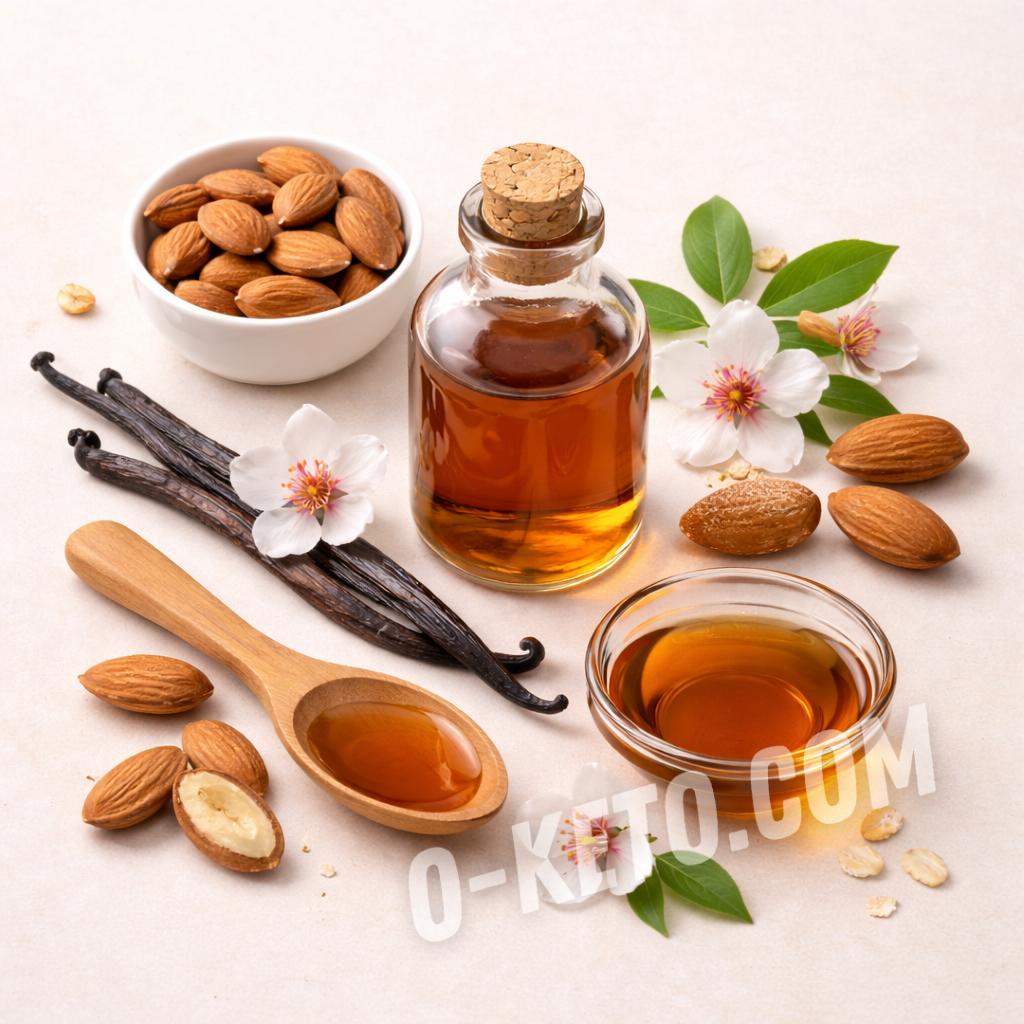

Almond flavoring is a concentrated flavor-aroma additive that gives a dish the recognizable note of almond, marzipan, or amaretto without adding a large amount of nuts. It is used in creams, drinks, sugar-free desserts, cottage cheese mixtures, chocolate, keto candies, glazes, ice cream, and sometimes sauces where a nutty accent is needed.
This product is not the same as almond flour, almond milk, or a specific homemade extract. It may be natural, nature-identical, or fully synthetic, and the base is often alcohol, water, glycerin, propylene glycol, or oil. For keto, the ingredient list, dose, and absence of sugar, syrups, and starchy carriers matter.
Composition and aroma
The main recognizable molecule of the almond profile is benzaldehyde. It gives the smell of bitter almond, marzipan, apricot kernel, and amaretto. Natural versions may be more complex and softer, while synthetic ones are often more stable and direct. Neither type is automatically better: quality, intended use, and clean taste matter.
The formula may contain aromatic compounds, a carrier, stabilizers, and sometimes colors or sweeteners. A water-based flavoring disperses well in creams and drinks. An alcohol-based version opens quickly and suits many desserts. An oil-based version is convenient for chocolate, fat-based mixtures, and glazes.
Is it suitable for keto?
Almond flavoring can fit keto well when it contains no sugar and is used by the drop. It helps create the impression of a sweet dessert without a large portion of almond flour or syrup. But aroma alone does not make a dish low-carb: the whole recipe matters, including sweetener, chocolate, dairy, and thickeners.
It is especially useful in small-volume recipes: cream filling, sugar-free panna cotta, crustless cheesecake, almond coffee, cacao, protein dessert, erythritol-based marzipan filling, or homemade cacao-butter candies. If the product contains glucose syrup or a sugar carrier, count it separately.
How to use it
The main rule is to start with the minimum dose. Almond aroma quickly becomes harsh, bitter, and “chemical” if overused. It is usually better to add 1–2 drops, mix, let the flavor open, and only then adjust. In cold desserts the aroma appears softer; in warm mixtures it may become brighter.
The almond note pairs with vanilla, cacao, coffee, cherry, raspberry, lemon zest, coconut, cream, cottage cheese, mascarpone, and cinnamon. In keto desserts it helps make the taste deeper, especially when an erythritol base seems flat. Salt and acid should be used carefully because they can emphasize bitterness.
For chocolate and fatty glazes, an oil-based flavoring is better because water can spoil texture. For drinks and creams, a water or alcohol base is more convenient. If the recipe will be heated, check the producer’s instruction: not all flavorings hold temperature equally well.
How to choose
Read the label for flavoring type, base, dose, sugar, allergens, and intended use. Phrases like “almond taste” and “almond aroma” can hide very different products. For people with nut allergy, warnings about raw material and possible contact with nut lines are especially important.
A good flavoring smells clean and recognizable, without a sharp solvent note, burnt plastic, or cheap perfume character. For home cooking, small dropper bottles are convenient: the aroma is used slowly, and a large bottle may age before it is finished. A clear ingredient list is better than a mysterious blend without dosing.
Limits
Almond flavoring is used only as an additive, not as a stand-alone product. Do not pour it in large amounts by eye. For people allergic to almond, apricot kernel, or nuts in general, safety depends on flavoring origin and possible protein traces, so the label must be read carefully.
If a product is not intended for food, it should not be used in recipes even if the smell is similar. Cosmetic fragrances, room aroma oils, and food flavorings are different categories. For children’s dishes and sensitive people, choose the simplest possible formula and a very small dose.
Storage
Keep the bottle tightly closed, away from light, heat, and moisture. Do not touch the dropper with fingers or place it sticky side down on the table. After opening, write the date on it. If the smell becomes weak, sour, or sharply alcoholic, do not keep increasing the dose forever; replace the product.
What can replace it?
In desserts, almond flavoring can be replaced with almond extract, sugar-free amaretto, ground almond, sugar-free almond paste, apricot kernel in a safe food form, or vanilla with a small cherry note. If a nutty profile should be avoided, use vanilla, coconut, coffee, cacao, lemon zest, or cinnamon.


