


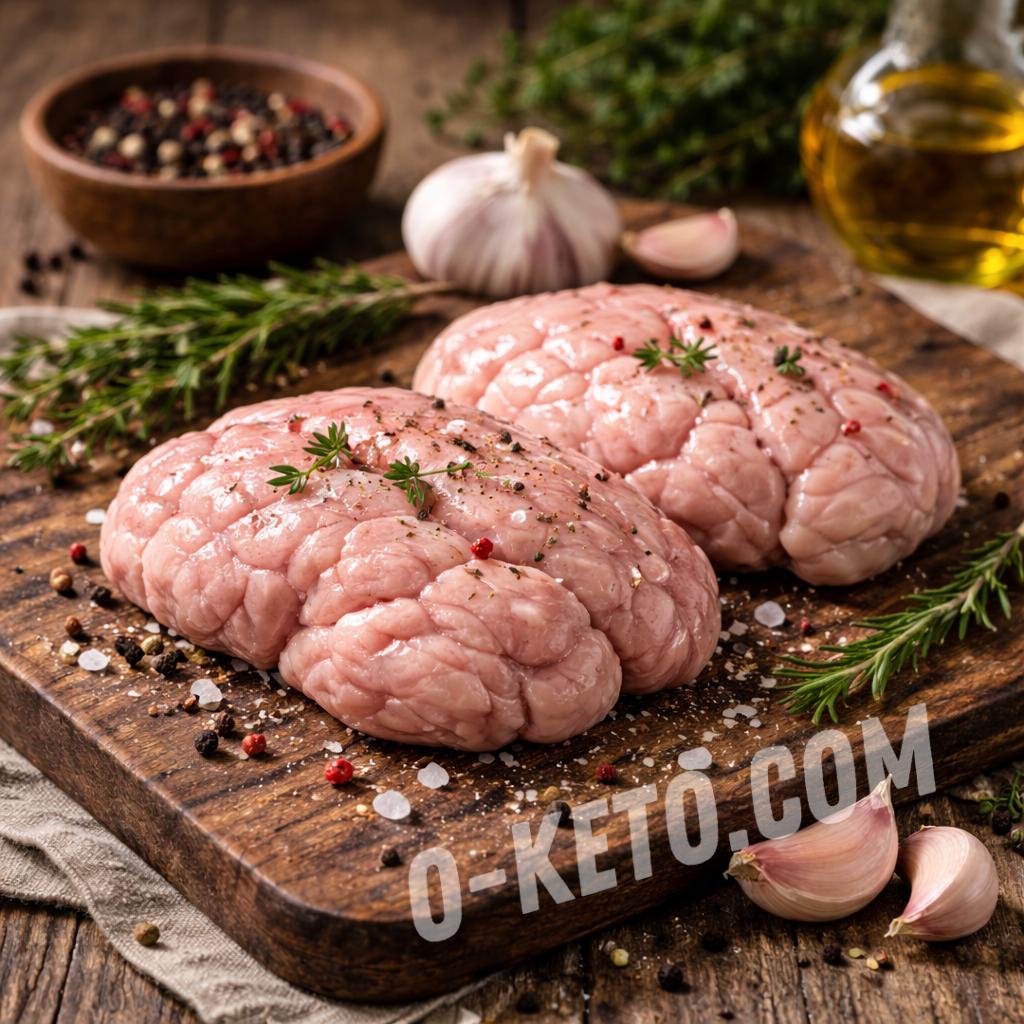

Beef brains are a delicate offal product with a soft creamy texture and mild flavor. In traditional cuisines, they are boiled, fried, added to pâtés, omelets, and fillings. Today this product is less common, so many people are unsure how to handle it: it needs careful preparation, short cooking, and very fresh raw material.
In composition, brains differ from ordinary meat. They contain moderate protein, enough fat, phospholipids, choline, vitamin B12, pantothenic acid, phosphorus, and selenium. Carbohydrates are practically absent, so the product itself does not disturb a low-carb diet. Cooking method matters more: breading, flour, and sweet sauces change the dish much more than the offal itself.
Nutritional value
Average values per 100 g of raw or cooked product depend on the table and preparation method, but are usually around 130–150 kcal, 10–12 g of protein, 10–12 g of fat, and 0 g of carbohydrates. The glycemic load is zero because there is no starch or sugar.
There is less protein here than in lean beef, while the texture is much fattier and more tender. So brains should not be treated as a direct replacement for steak. They are a separate product, closer to delicacy offal used in small portions.
Is it suitable for keto?
For keto and LCHF, beef brains fit by macronutrients: almost zero carbohydrates, soft fatty taste, and good pairing with eggs, butter, herbs, and low-starch vegetables. They can be served with salad, cucumbers, cauliflower, mushrooms, or a cream-based sauce without flour.
Problems usually come not from the product but from the recipe. Classic frying in breadcrumbs or flour is no longer a strict keto option. If a crust is wanted, better options are egg, a little almond flour, grated hard cheese, or simply frying in well-heated fat without breading.
How to prepare them
Before cooking, brains are usually rinsed in cold water and carefully cleaned of membranes, clots, and large vessels. Sometimes they are soaked in cold water for 30–60 minutes, changing the water, so the flavor becomes milder. Work gently: the product is fragile and falls apart easily.
A common method is to briefly simmer the brains in salted water with bay leaf, pepper, onion, or a little vinegar, then cool them and only then fry. This helps pieces hold their shape. If raw brains are fried immediately, they may spread and stick.
How to cook them
Beef brains do not like long heat. They are simmered, quickly fried in butter or ghee, added to omelets, or combined with cream, herbs, and spices. Parsley, green onion, garlic, black pepper, lemon juice at the end, and mild sugar-free mustard support the flavor well.
The main mistake is drying the product out or covering it with too heavy a coating. Finished brains should remain tender. If unsure, cook a small portion first: this offal has a specific texture, and not everyone likes it.
How to choose
It is better to buy brains from a reliable butcher or a place with quick turnover. The raw material should be pale, without sharp smell, stickiness, gray-green spots, or dried edges. Frozen product should not have a thick layer of ice or signs of repeated freezing.
For offal, origin, freshness, and cold chain are especially important. If the package is damaged, there is a lot of unpleasant-smelling liquid, or the date is doubtful, it is better not to buy it.
Limitations
Beef brains are not an everyday product. They are fatty, delicate, and quite rich, so the portion is usually small. Caution is needed with poor tolerance of offal, strict limits on animal fats, gout, special medical diets, and during pregnancy, when raw material quality and full cooking matter more.
Raw or poorly heated offal should not be used. Knives, boards, and hands should be washed thoroughly after cutting, and cooked brains should not be kept at room temperature for long.
How to store them
Fresh brains are best cooked on the day of purchase. In the refrigerator, keep them in a closed container on the coldest shelf and do not store beyond the short period stated by the seller. Freezing works for longer storage, but after thawing the texture becomes even more fragile, so cook the product right away.
What can replace them?
Veal or lamb brains are closest in texture. If a keto offal idea is needed, kidneys, heart, tongue, beef cheek, or pâté without flour and sugar can work, but flavor and density will be different. In omelets and creamy starters, soft cheese, eggs, and mushrooms can partially replace the texture when the goal is tenderness rather than offal itself.


