


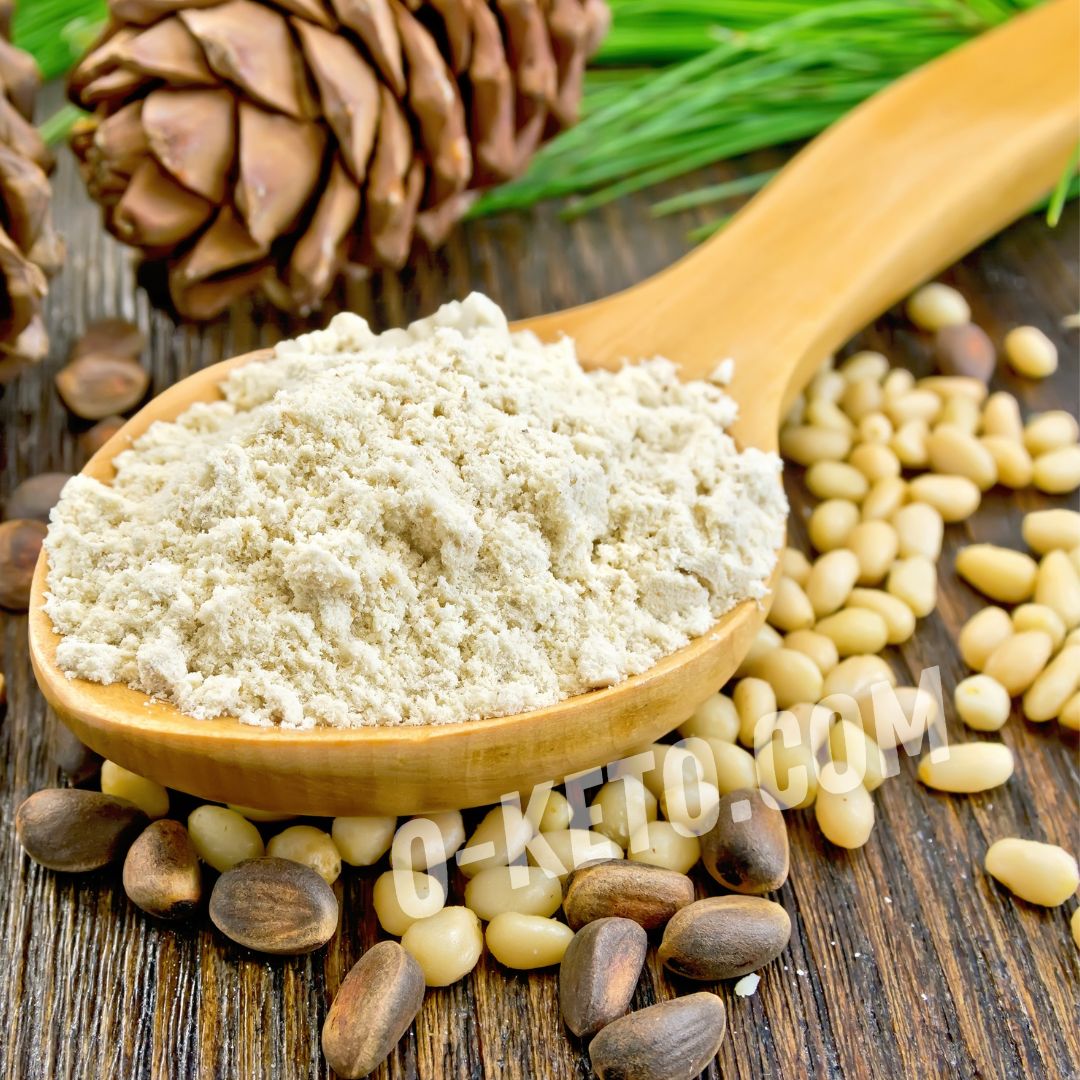

Pine nut flour is made from ground pine nuts or from the press cake left after oil extraction. It has a clear nutty flavor, high calorie density and no gluten. In low-carb cooking it is used not as a one-to-one replacement for wheat flour, but as an aromatic addition to dough, breading, sauces and desserts.
Composition depends on the raw material. Flour from whole nuts is fattier, while press-cake flour is drier, higher in protein and less oily. The numbers on the package matter more than the general name “pine nut flour.”
Nutrition
The older description listed approximate values per 100 g: about 600 kcal, 20 g of protein, 50 g of fat and 20 g of carbohydrates, with a glycemic index around 25. For whole-nut flour, this means a very calorie-dense product with a lot of fat. Defatted press-cake flour may differ.
Pine nuts contain vitamin E, magnesium, zinc, iron, phosphorus, plant protein and fatty acids. This is a nutritious food, but not a special functional supplement. Its keto value is flavor, fat, texture and the ability to reduce grain flour in recipes.
Is It Keto-Friendly?
Pine nut flour can fit keto in moderate amounts if the label shows low available carbohydrates. But a 30-50 g portion, mentioned in the older text, can already be meaningful for strict keto. It is better to start with 10-20 g in a recipe and count carbohydrates from the specific package.
It does not behave like wheat flour: it has no gluten, holds structure less well and can make baking crumbly. For dough, it is often combined with eggs, psyllium, almond flour, coconut flour or a cheese-based mixture.
How to Use It
Pine nut flour gives a mild nutty flavor and works best where aroma matters more than rise. It can be added to keto cookies, sugar-free cheese pancakes, breading for fish, sauces, creams and savory flatbreads.
Practical options include:
- part of a keto baking mix;
- breading for fish or chicken without breadcrumbs;
- an addition to cottage cheese dough;
- thickening a nut sauce;
- a pinch in a cream and cocoa dessert.
How to Choose and Store
Check what the product is made from: whole nuts, press cake or a mix. It should not contain sugar, wheat flour, starch or flavorings. The smell should be fresh and nutty, without rancidity or dampness.
Because of its fat content, pine nut flour spoils easily. Store it tightly closed in a cool dark place; after opening, refrigeration is often more convenient. A large package is worth buying only if it will be used often.
Limits and Substitutes
Pine nuts can cause allergies, and flour made from them is very calorie-dense. A large portion easily makes baked goods heavy and fatty. If weight loss is the goal, weigh the flour instead of adding it by eye.
Substitutes include almond flour, hazelnut flour, sesame flour, coconut flour or ground seeds, but proportions must change. Coconut flour absorbs much more moisture, while almond flour behaves more similarly in dough.
Portion and Baking Mistakes
Pine nut flour is aromatic, so a lot is rarely needed. If the share is too large, baking can become heavy, oily and expensive without improving structure. Often it is enough to replace 10-20% of the dry mix while leaving the base to almond, flax or another more predictable flour.
In sweet recipes, pine flavor works with vanilla, cocoa, lemon zest and a pinch of salt. In savory recipes, it pairs with cheese, rosemary, thyme, garlic and fish. If the flour feels too fatty, use it in breading or cream rather than airy dough.
Another mistake is keeping an opened package for months in a warm cupboard. Nut oils oxidize quickly, and the flavor becomes bitter. For occasional baking, buy a small amount or freeze part of the flour.
How to Work It Into a Recipe
Pine nut flour is best treated as a flavor layer rather than the only dry base. In a new recipe, start with one or two spoonfuls added to a familiar mix and let the batter rest for 5-10 minutes. The flour will absorb some moisture, and the texture will be easier to judge. After that, decide whether the recipe needs an egg, a spoonful of cream, a little psyllium or more dry ingredients.
In breading, avoid overheating it: nut particles brown quickly and may turn bitter. For fish, chicken and cheese, use medium heat, a short cooking time and a thin coating. In sauces, pine nut flour blends more smoothly if it is first stirred into a small amount of cold cream, broth or water and only then added to the hot base.
Substitution options in recipes
Cashews. In the form of flour, plus 5% cedar oil. Cashews are close in fat content, but lower in protein. The addition of oil brings back a pine resin note; reduce the liquid in the dough by 5%.


