


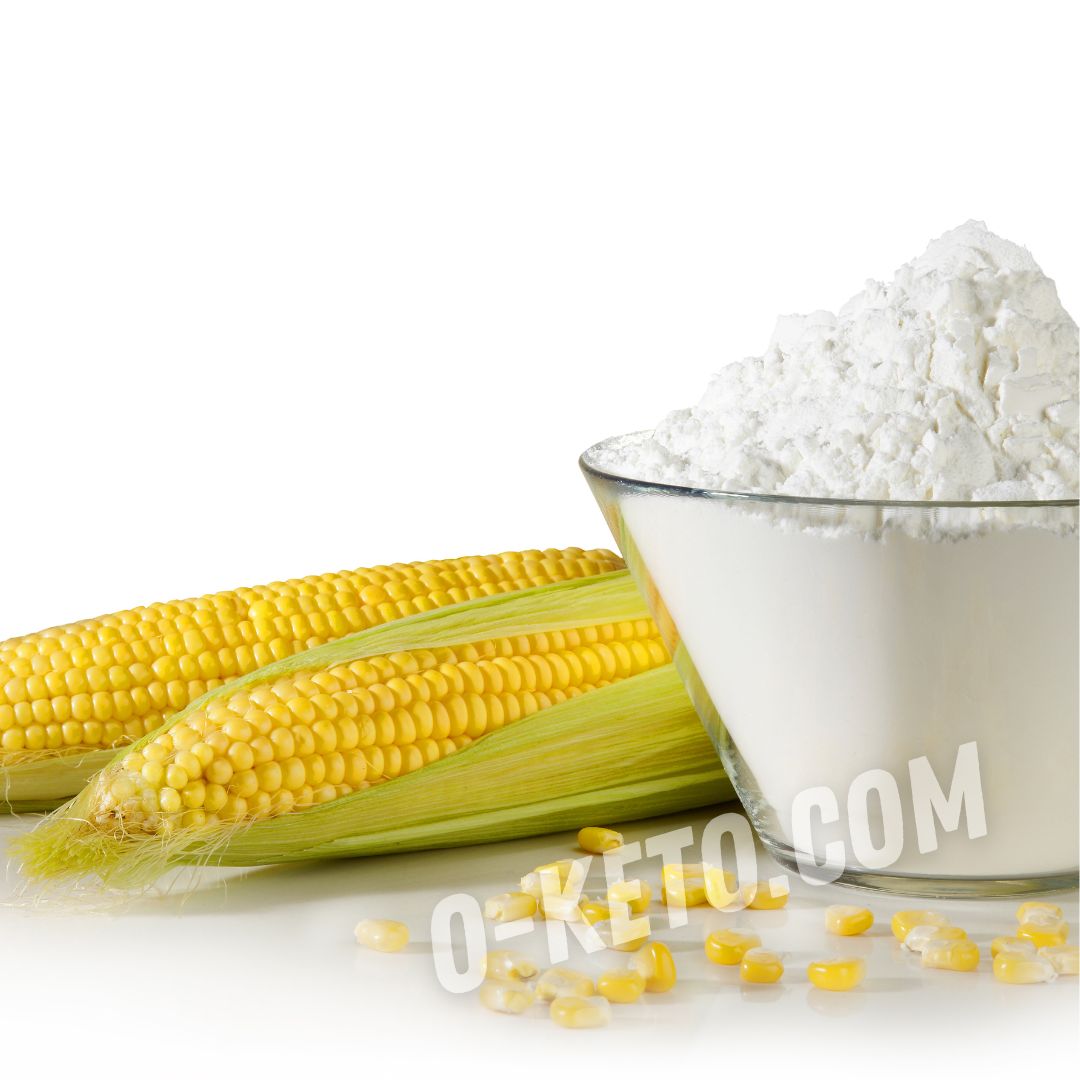

Corn flour is made from ground corn kernels. It can be white, yellow, and sometimes blue or purple, depending on the corn variety. The taste is usually mild, sweetish, with a characteristic corn note. It is used for flatbreads, polenta, breading, sauces, porridges, bread, and other baked goods.
It is important to distinguish corn flour from corn starch and cornmeal. Flour contains the whole ground kernel or a significant part of it, so it has more protein, fiber, and flavor than starch. Starch is almost entirely carbohydrate and is usually used only for thickening.
Nutritional value
In 100 g of corn flour there are usually about 360–370 kcal, roughly 7 g protein, 1–2 g fat, and about 75–77 g carbohydrates. The glycemic index is often listed around 70, and the glycemic load of a large serving is high. For keto, this is the key problem.
Corn flour contains B vitamins, magnesium, phosphorus, potassium, iron, and some fiber, but these facts do not cancel its carbohydrate density. Gluten-free status also does not make it low-carb: absence of gluten and keto compatibility are different things.
Corn flour differs strongly from fresh corn by density. In grain, and especially in flour, there is almost no water, so carbohydrates are packed compactly. Because of this, a small-looking dry portion can provide more carbohydrates than expected from spoon volume.
Is it suitable for keto?
For strict keto, corn flour usually does not fit. Even 1–2 tablespoons can noticeably raise recipe carbohydrates, and a full flatbread, porridge, or breading based on corn flour is already a grain dish. In relaxed LCHF, a small amount is sometimes used for flavor, but only with portion calculation.
If corn flour appears in a finished product, check its position in the ingredient list. In a sauce or spice blend, it may be a thickener in a small dose; in crispbreads, chips, crackers, and breadings, it often becomes the main carbohydrate part.
Breading is especially easy to underestimate. A thin layer of flour on one portion of fish or cheese looks minor, but during frying part of the flour remains on the product and absorbs fat. If the dish is repeated often, another crust is more practical.
How to use it
In ordinary cooking, corn flour suits polenta, tortillas, mamaliga, corn bread, fritters, fish breading, and thickening sauces. It gives golden color, sweetish taste, and crumbly texture. The finer the grind, the softer the result; coarse grind is closer to meal.
In low-carb recipes, it can only be used as a small aromatic addition if it consciously fits the daily limit. For example, a pinch in a spice blend or a teaspoon in a large sauce portion gives fewer carbohydrates than using it as a full dough base.
When thickening sauce, corn flour gives a grainier texture than starch. It is better first mixed with cold liquid, then added to the hot base in a thin stream. If poured directly into boiling sauce, lumps and a raw flour taste can appear.
How to choose
Good corn flour smells like fresh corn, without dampness, mold, or rancid oil. The ingredient list should be simple: corn or corn flour without sugar, wheat flour, baking powders, and flavorings. For people reacting to gluten, separate labeling matters because grain traces are possible.
Color depends on corn variety and does not always show quality. Yellow flour is usually more aromatic, white flour milder, while blue and purple are rarer and give a darker shade. Fine grind is better for thin sauces; coarser grind suits porridge and polenta.
Limitations
The main limitation is the high carbohydrate share. Corn flour can also form lumps quickly when added to hot liquid, so it is introduced gradually or first mixed with a cold part of the liquid. With an individual reaction to corn, the product is excluded.
Ready products made with corn flour often also contain sugar, vegetable oils, starch, rice flour, or wheat blends. So a tortilla, chips, or corn bread should be assessed not as “a little flour” but as a separate high-carbohydrate product.
How to store it
Corn flour is stored tightly closed, in a dry cool place. Whole-grain flour with more germ ages faster because of residual fats. If a musty smell, bitterness, insects, or moisture traces appear, the product is better discarded.
What can replace it?
For keto, almond flour, coconut flour, flax meal, psyllium, bamboo fiber, grated cheese, or crushed pork rinds for breading are more common. Xanthan gum, guar gum, psyllium, or reducing a sauce work for thickening. No substitute fully repeats corn flavor, so the recipe needs adjustment.
Corn flour and corn starch
Corn flour contains milled grain, so it retains some protein, fibre and minerals. Corn starch is much more refined and consists almost entirely of carbohydrate; it is mainly used for thickening. Neither is a regular keto flour, but the distinction matters when calculating a recipe and choosing a substitute.
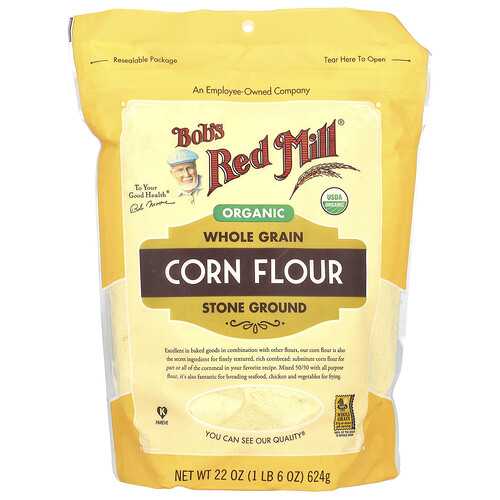
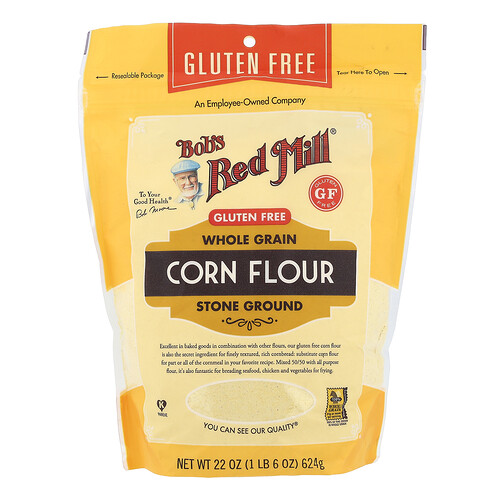
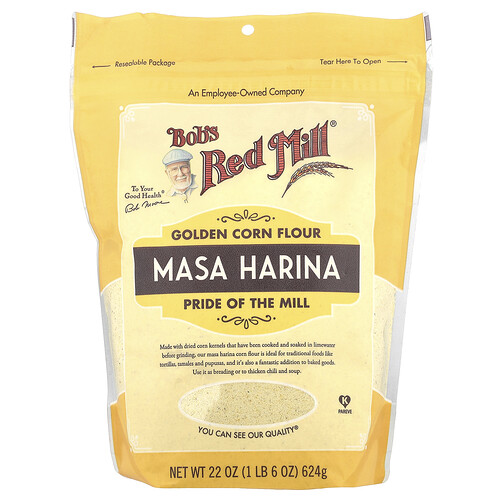
Substitution options in recipes
Sunflower seeds. 3 cups of ground seeds plus 2 cups of flaxseed flour. Sun-flour adds a sweet corn note, while flax adds elasticity and fiber. In the flatbreads, add ¼ tsp of turmeric to enhance the yellow hue of the "polenta."


