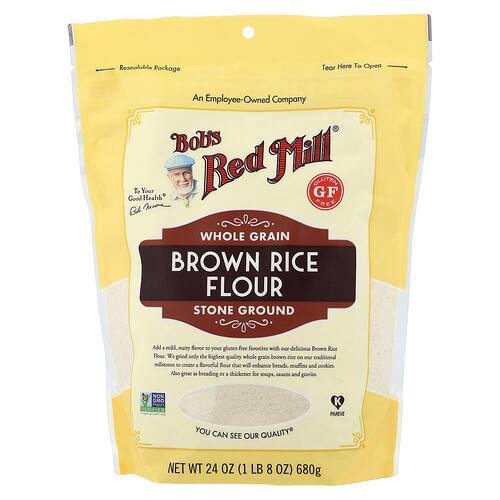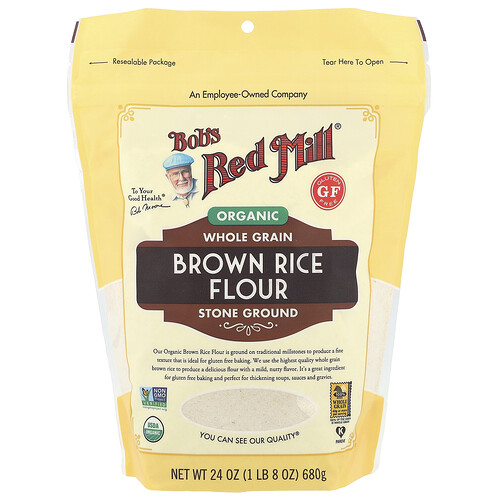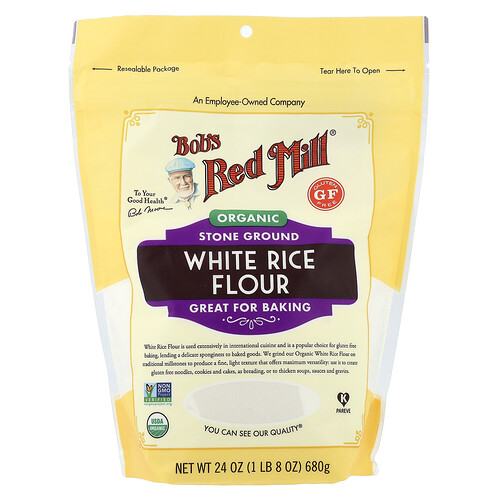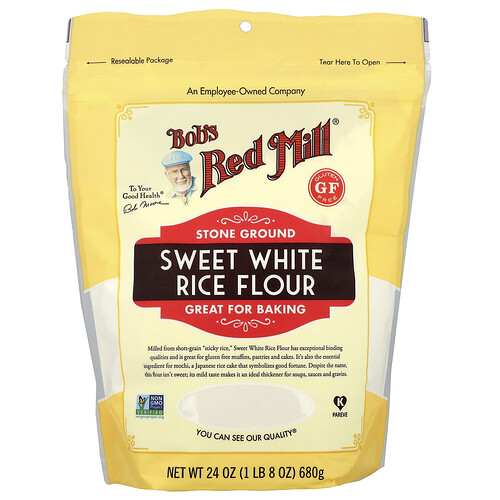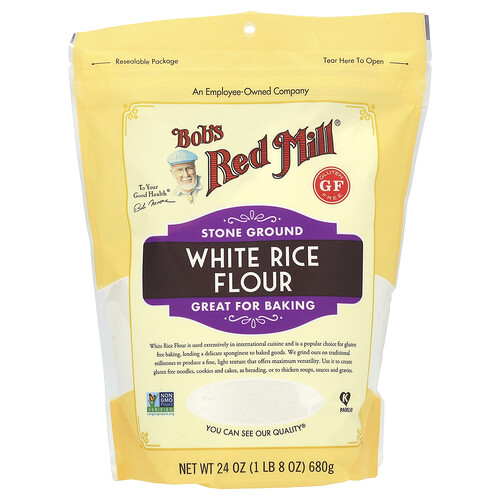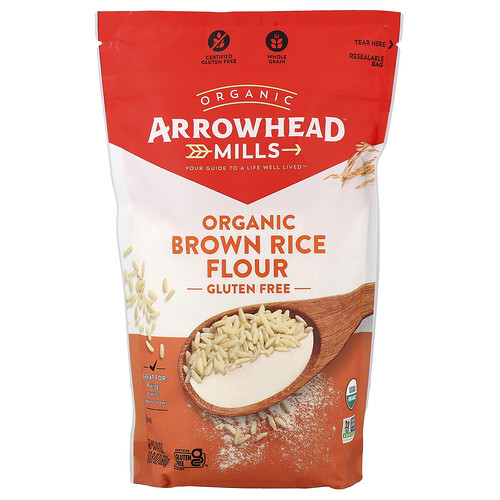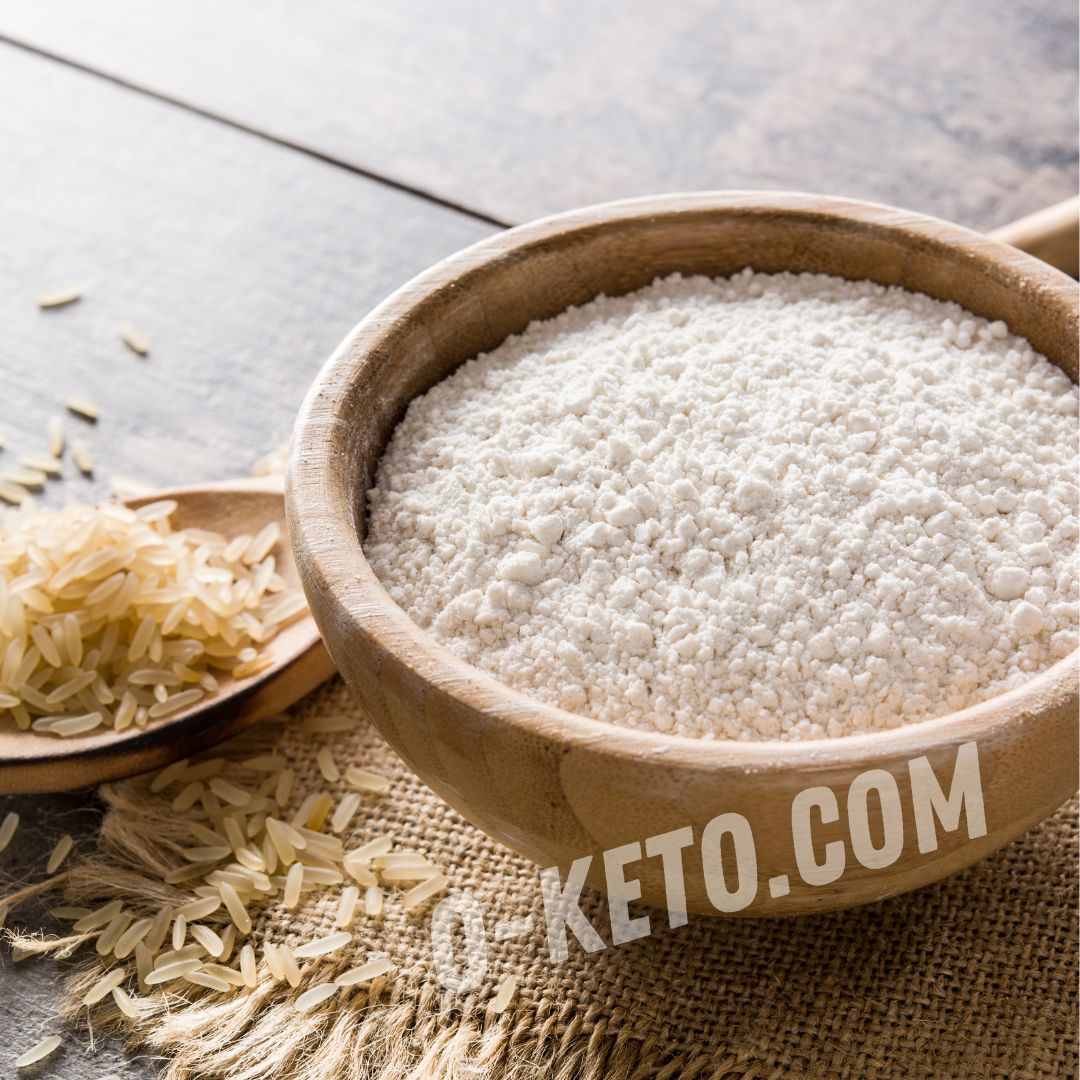

Rice flour is finely ground rice. It can be made from white rice, brown rice, or glutinous rice, and each type behaves a little differently. White rice flour is neutral and soft, brown rice flour has a more noticeable taste and slightly more fiber, while glutinous rice flour creates a chewy texture in many Asian desserts.
Rice flour is widely used around the world: rice noodles, mochi, dim sum, pancakes, cookies, coatings, and thickeners for soups and sauces can all contain it. It contains no gluten, which is why it is common in gluten-free blends. But for keto, that does not automatically make it suitable: the product is still mainly starch.
Nutrition
A 100 g portion of rice flour usually has about 360-370 kcal, roughly 6-7 g of protein, less than 1-2 g of fat, and about 75-82 g of carbohydrates. Values vary by rice type and grind, but the overall profile is similar: it is a high-carbohydrate flour with little protein and almost no fat.
The glycemic index of rice flour is usually high or moderately high. Fine grinding makes starch more accessible, so foods made with this flour can add carbohydrates quickly. Brown rice flour contains more of the grain outer layers, but the difference does not make it low-carb. Glutinous rice flour is not keto either: “glutinous” refers to sticky starch texture, not to gluten.
Is it suitable for keto?
Rice flour is usually not suitable for keto or strict LCHF. Even a small 20-30 g serving can add a noticeable amount of carbohydrates, and in baked goods or coatings those portions are easy to reach without noticing. If the daily carbohydrate limit is low, rice flour is usually better replaced with other ingredients.
The only exception may be a very small amount as a technical ingredient, if it is counted intentionally. For example, a pinch used to thicken a dish divided into several servings gives less carbohydrate per plate than a rice-flour pastry. But in most keto recipes, almond flour, coconut flour, psyllium, flax meal, cheese, eggs, or creamy sauces are easier choices.
How it is used
In regular cooking, rice flour is valued for its neutral taste and soft texture. It works in thin pancakes, noodles, rice cakes, mochi, gluten-free blends, and light coatings. In sauces, it can act as a thickener: starch swells with heat and makes liquid denser. If too much is used, the sauce can become cloudy and slightly sticky.
In gluten-free baking, rice flour is often mixed with starches, eggs, xanthan gum, psyllium, or other flours. On its own, it can create a dry, crumbly, or sandy texture. A very fine grind suits delicate desserts, while a coarser grind can feel gritty. For frying, rice flour gives a light crisp coating, but the carbohydrates in that coating still need to be counted.
How to choose
The choice depends on the task. White rice flour is the most neutral and works for pale dough, sauces, and coatings. Brown rice flour has a stronger taste and spoils faster because the grain outer layers contain more fat. Glutinous rice flour is needed for mochi, dumplings, and chewy dishes; it does not always replace ordinary rice flour.
On the package, check not only the name but also grind, country of origin, expiration date, and possible additives. In a gluten-free diet, certification or cross-contact information matters, because rice flour may be packed on lines that also handle wheat. For keto, the key point is different: no added sugar does not make the product low-carb, so the carbohydrate table must be checked.
Limits
The main limit is the high starch content. Rice flour quickly raises the carbohydrate level of bread, noodles, cookies, and desserts. It can be useful in gluten-free cooking, but gluten-free and low-carb are not the same thing. In a keto menu, it is usually excluded or kept only in tiny amounts.
Another feature is modest nutrient density compared with whole foods. If a dish is built almost entirely on rice flour, it brings a lot of starch and limited satiety per gram of carbohydrate. Even outside keto, it is often better paired with protein, fat, and vegetables rather than eaten as the main base.
Storage
Keep rice flour in a dry closed container, away from moisture and strong odors. Brown rice flour is better stored cooler and used faster because it can turn rancid. If the flour smells stale, tastes bitter, clumps from moisture, or shows insects, discard it.
Substitutes
In keto recipes, rice flour is usually replaced with almond flour, coconut flour, flax meal, psyllium, bamboo fiber, cheese, eggs, or a blend of these. Substitution is not one-to-one: coconut flour absorbs a lot of liquid, almond flour adds fat and softness, psyllium binds water, and eggs provide structure. For thickening sauces, use cream, egg yolk, cream cheese, xanthan gum, or a small amount of psyllium.