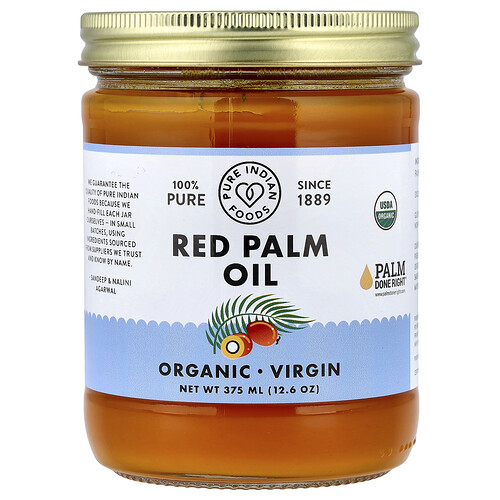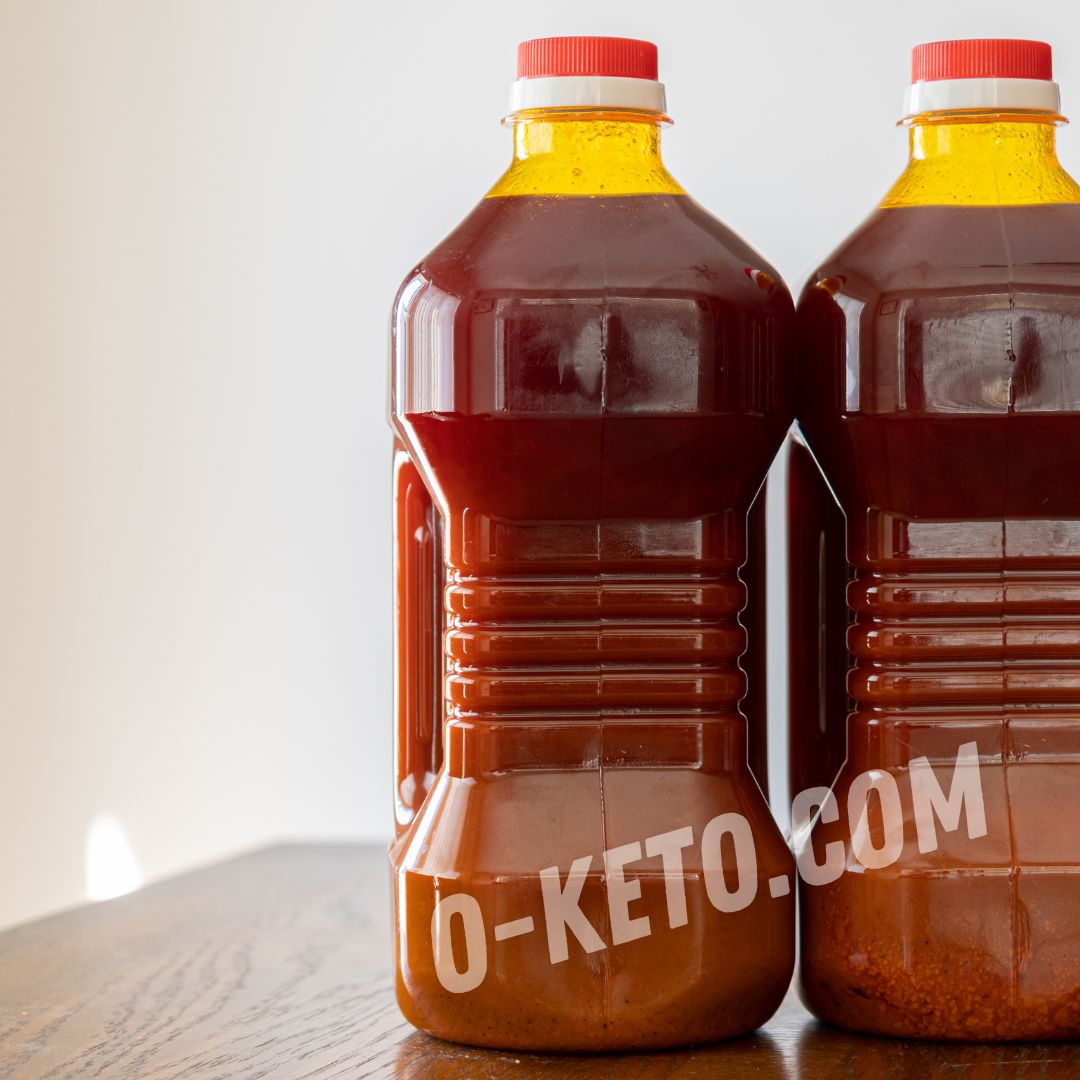

Palm oil is obtained from the flesh of oil palm fruit. It is not the same as palm kernel oil: the latter is made from the kernel, and its fatty acid profile is different. Palm oil is widely used in cooking and food production because it is heat-stable, stores well, gives dense texture, and contains no carbohydrates.
Refined palm oil and red unrefined palm oil are both available. Refined oil is almost neutral in taste and is used more often for frying, baking, and industrial products. Red palm oil has clear color and flavor, contains carotenoids and vitamin E as tocopherols and tocotrienols, but it does not suit every dish.
Nutritional value
Like any pure oil, palm oil provides about 884 kcal per 100 g. It contains 100 g of fat, 0 g of protein, and 0 g of carbohydrates. Glycemic index and load are zero because there is no sugar or starch. The main fatty acids are palmitic, oleic, and linoleic, while exact proportions depend on raw material and processing.
Palmitic acid is a saturated fat, while oleic acid is monounsaturated. So palm oil should not be treated as the same thing as olive oil or butter: it has its own taste, technical role, and fatty acid balance.
Is it suitable for keto?
For keto and LCHF, palm oil fits by macronutrients: there are no carbohydrates, and fat is easy to count. This does not mean it must be added deliberately. In home cooking, oil is usually chosen by task: butter for flavor, olive oil for salads, coconut oil for coconut aroma, and palm oil when heat stability and dense texture are needed.
If palm oil is already present in a ready-made product, the whole ingredient list matters more. Keto does not make a cookie, glaze, or bar suitable only because it contains palm oil. Sugar, flour, syrups, and starch in such products remain the main issue.
How to use it
Refined palm oil is used for frying, stewing, baking, fillings, and products where a stable fatty base is needed. It holds structure well in creams and fillings, but in home cooking its taste may feel too neutral or heavy. Red palm oil is better in dishes where color and characteristic aroma are welcome: vegetable stews, hot sauces, and some African or Asian recipes.
For frying, it is important not to heat any oil until it smokes. Even stable fat deteriorates with poor storage, repeated heating, and contact with food residues in the pan. Oil from deep frying should not be reused endlessly.
In cold dishes, palm oil is used rarely: at cool temperature it thickens and may feel waxy. For salad, mayonnaise, or a soft dressing, liquid oils are usually easier. But in dense sugar-free fillings and glazes, palm oil is sometimes chosen exactly because it holds shape.
How to choose
For neutral cooking, choose refined edible oil with a clear date, sealed package, and no foreign smell. For red oil, freshness, protection from light, and absence of rancid notes matter. If the oil smells like paint, old fat, or tastes bitter, it is better not to use it.
Origin is a separate issue. Palm oil production can be linked to forest clearing and ecosystem pressure. If this factor matters, look for RSPO labeling or other signs of controlled production, not only a low price.
Limitations
Palm oil is very calorie-dense, so it is easy to pour too much. One tablespoon adds roughly 120 kcal. People advised to limit saturated fat or total calories should count the portion. Ready-made products with palm oil often also contain sugar, flour, and flavorings, so the whole label should be judged.
For everyday cooking, it is more reasonable to keep it as one possible fat, not as the only base for all dishes.
How to store it
Keep the oil tightly closed, away from light, heat, and moisture. Refined oil usually stores longer, while red oil loses fresh taste and color faster. Do not leave the bottle beside the stove: heat speeds up heavy odor. If the oil changes smell, becomes sticky, or tastes unpleasantly bitter, discard it.
What can replace it?
For frying, use ghee, clarified butter, cooking olive oil, avocado oil, or coconut oil if its flavor fits. For salads, palm oil is usually not the best choice: olive oil, avocado oil, or nut oils work better. For dense texture in desserts, cocoa butter, coconut oil, or butter are sometimes used, but the result will be different.