


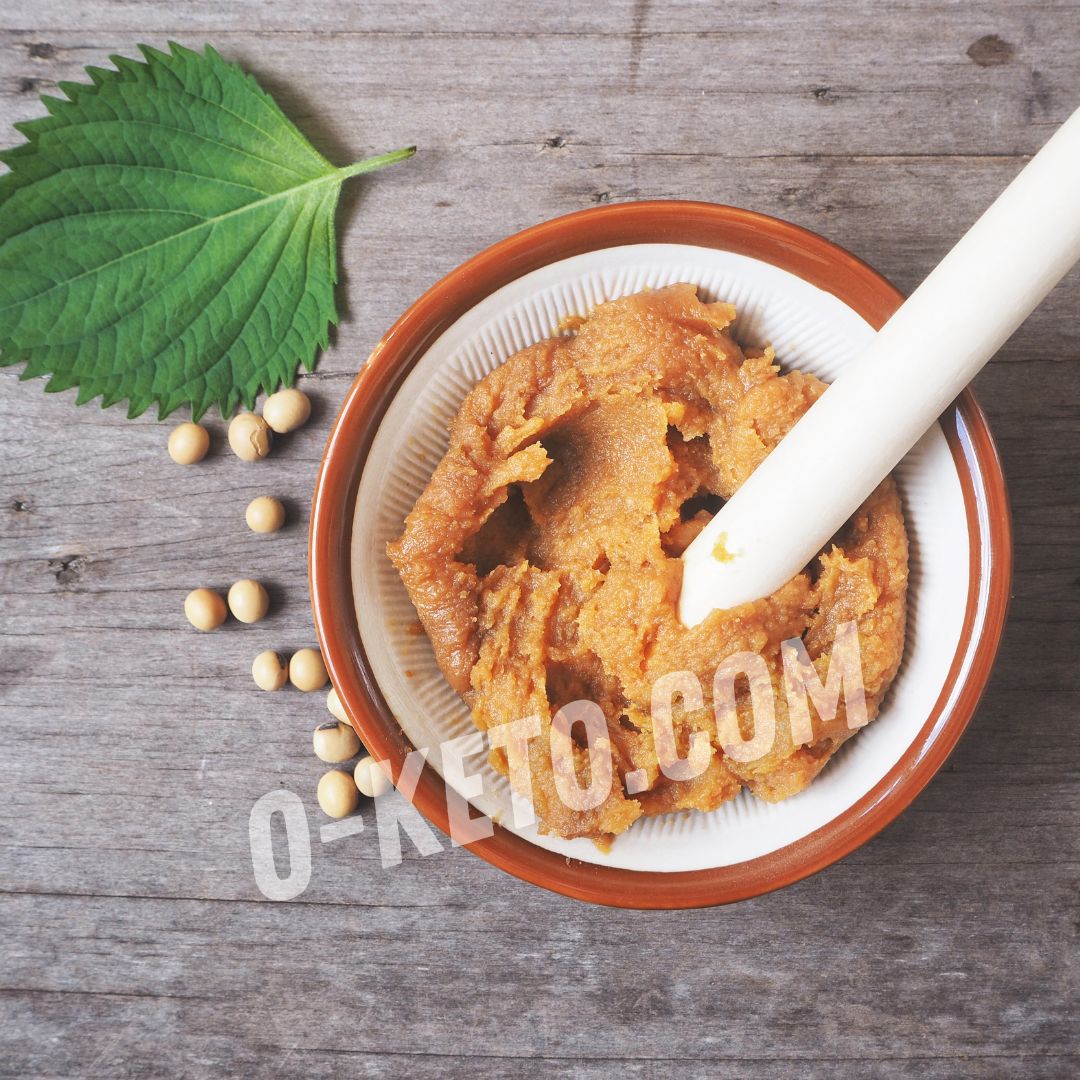

Miso paste is a thick fermented paste made from soybeans, salt, and koji culture, most often Aspergillus oryzae. Depending on the recipe, rice, barley, or other grains may be added. Miso gives a salty, deep umami taste and is used in soups, sauces, marinades, dressings, and glazes.
It is not simply a “soy dish”, but a concentrated seasoning. It is not eaten by large spoonfuls as a side dish: 5–20 g per serving is often enough. Flavor depends on fermentation time, salt level, type of koji, and raw materials. White miso is milder and sweeter, red miso is denser, saltier, and deeper, while mixed awase stands between them.
Nutritional value
In 100 g of miso there may be roughly 190–220 kcal, 11–15 g of protein, 5–7 g of fat, and about 20–25 g of carbohydrates. But an everyday serving is usually much smaller: a teaspoon, a tablespoon, or an amount for a pot of soup. So the carbohydrate contribution depends on how much paste actually reaches the plate.
Miso contains salt, amino acids, fermentation products, some B vitamins, and minerals. Composition differs greatly: rice miso is usually softer and may contain more carbohydrates, soy miso is denser and saltier, and barley miso has its own grain note. For accurate counting, the label of the specific jar matters most.
Is it suitable for keto?
For keto and LCHF, miso can work as a seasoning in a small portion. It gives umami and saltiness, making soup, sauce, or marinade deeper without sugar or flour. The key is not turning miso soup into a dish with noodles, rice, sweet glaze, or many starchy additions.
For strict keto, choose paste without sugar, syrups, starch, and unnecessary additions. A 5–10 g serving in sauce or broth is usually easier to count than 30–40 g in a sweet marinade. It is also worth remembering salt: miso can noticeably change the salinity of the whole dish.
How to use it
Miso is better not boiled for a long time. For soup, it is convenient to loosen it in a small amount of warm broth, then return it to the pot near the end. This keeps the flavor softer. In marinades, the paste is mixed with oil, ginger, garlic, lemon, sugar-free rice vinegar, sesame, or sugar-free soy sauce.
Miso works well with fish, chicken, pork, eggplant, mushrooms, cauliflower, spinach, eggs, tofu, and seaweed. In keto sauces, it can be combined with butter, sugar-free mayonnaise, sour cream, or tahini, but it is better to start with a small amount because the paste quickly dominates.
For a quick sauce, miso can be mashed with soft butter, hot water, or full-fat unsweetened yogurt, then finished with ginger, garlic, or green onion. For fish and chicken, the paste is better applied thinly: because of the salt, it quickly changes the surface flavor and may overpower a delicate product.
How to choose
The ingredient list should include soy, salt, koji, and, if the type requires it, rice or barley. The shorter and clearer the composition, the easier it is to control flavor and carbohydrates. If a clean product for keto cooking is needed, avoid pastes with sugar, glucose syrup, starch, and many flavorings.
White shiro miso is mild, light, and slightly sweet. Red aka miso is darker, saltier, and more intense. Awase miso is a mix of different types and is convenient for general use. Unpasteurized miso may have a livelier aroma, but it needs careful storage.
Limitations
The main limitation of miso is salt. When sodium is controlled or salty foods are poorly tolerated, the serving should be chosen carefully. Soy products do not suit everyone; barley may also cause issues if it is present. People with a celiac condition need gluten-free miso and clear labeling.
If miso is used in ready soups and sauces, sugar, noodles, starch, and flavor enhancers often come with it. Such a mixture is already different from simple fermented paste and needs separate manual counting from the label.
How to store it
Opened miso is kept in the refrigerator, tightly closed, with each serving taken by a clean spoon. The surface is better leveled so less air remains inside. Darkening over time is possible, but mold, a sharp unpleasant smell, or gas pressure in the jar is a reason to discard the product.
What can replace it?
For salty umami, sugar-free soy sauce, tamari, sugar-free coconut aminos, fish sauce, anchovy paste, or a little aged cheese can work. They do not fully repeat miso: it has fermented depth and a thick texture, so replacement depends on the dish.
Substitution options in recipes
Tahini. Plus soy sauce (one to one). Soy sauce provides a salty-umami base, while tahini adds a distinctive fermented nutty depth. The mixture is slightly thinner than miso — this is not important in soups, but in glazes, reduce the other liquids by 5%.


