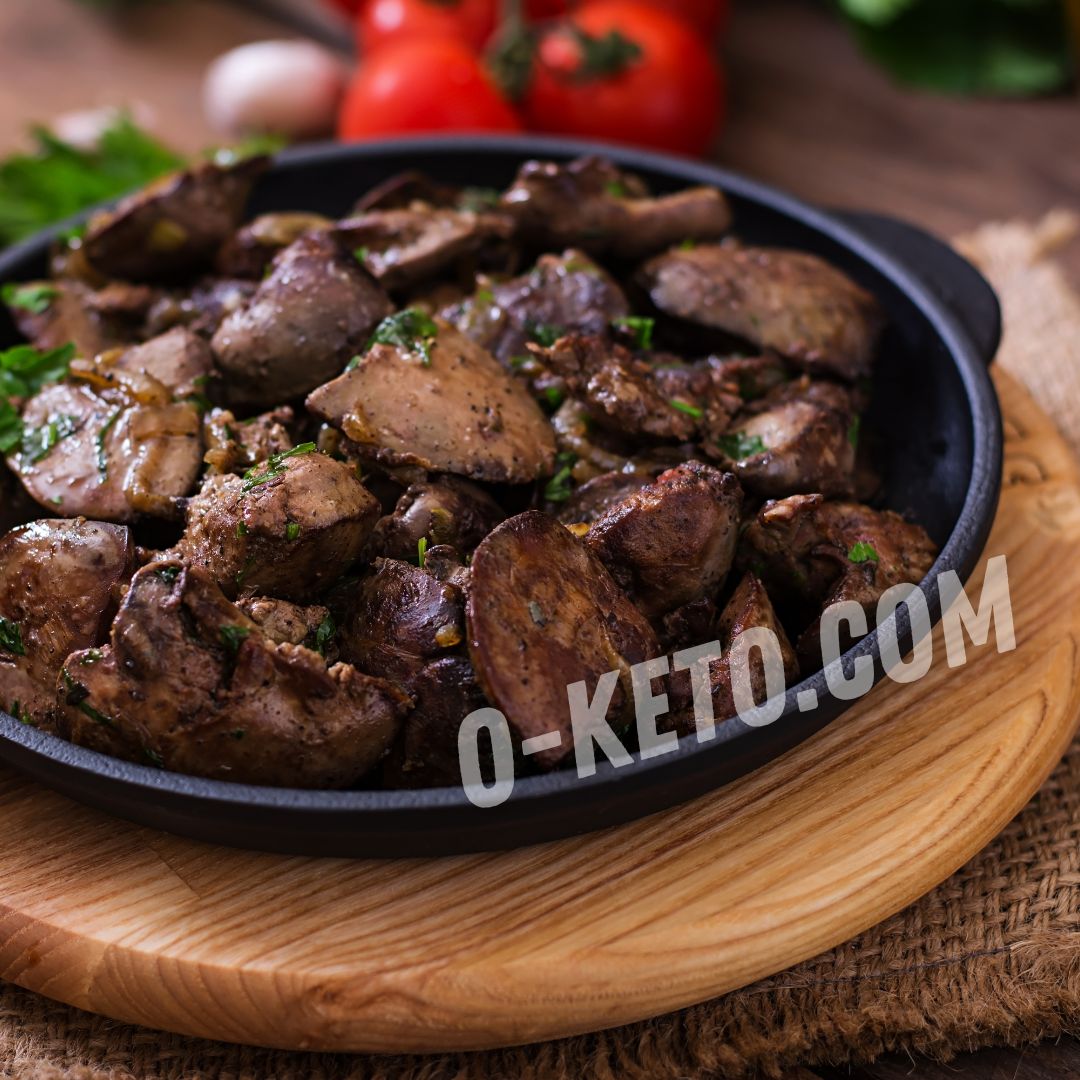

Chicken liver is a tender offal product with rich flavor, short cooking time, and high nutrient density. It is fried, stewed in cream or sour cream sauce, used for pâté, warm salads, fillings, and quick skillet dishes. Compared with pork or beef liver, it is softer, cooks faster, and accepts spices more easily.
For keto and LCHF, chicken liver is convenient because it contains almost no carbohydrates and provides plenty of protein with moderate fat. But it is not a product for unlimited daily portions: liver contains a lot of vitamin A, B12, iron, folate, selenium, and other micronutrients, so frequency, serving size, and raw material quality matter.
Nutrition profile
In 100 g of chicken liver there are usually about 120–140 kcal, roughly 17–20 g protein, 4–6 g fat, and minimal carbohydrates. Glycemic load in plain liver is practically absent. Exact values depend on the bird, processing, remaining moisture, and cooking method.
Vitamin A, B12, riboflavin, folate, iron, zinc, selenium, and phosphorus are especially notable. The fat profile depends on the bird feed, but in an ordinary serving, freshness and cooking method matter more than fatty acid percentages. Frying with flour, sweet onion, or ready sauce changes the carbohydrate count.
Is it suitable for keto?
Chicken liver fits keto well when cooked without breading, flour, sugar, and starchy sides. Good options include frying in butter, stewing in cream or sour cream without flour, pâté with butter, salad with greens and egg, or serving with mushrooms, cucumber, cauliflower, or zucchini.
Liver itself is fairly lean, so a keto dish often needs a fatty component: butter, ghee, cream, sour cream, bacon, sugar-free mayonnaise, or an egg-yolk sauce. If the flavor seems too strong, cream, moderate onion, thyme, marjoram, black pepper, or a little lemon juice at the end can soften it.
How to cook it
Clean chicken liver of greenish areas, membranes, and large vessels, then pat it dry. Green bile stains should be cut away completely because they give strong bitterness. Cook pieces quickly in a well-heated pan so the surface sets while the center stays tender instead of turning dry and grainy.
Overheating is the main mistake. Long cooking without sauce makes the texture grainy, while very high heat with a raw center creates an unpleasant contrast. For pâté, cook the liver until done, then blend with butter, cream, salt, and spices. For a smooth texture, pass the mixture through a sieve.
Chicken liver pairs with mushrooms, bacon, onion, garlic, cream, sour cream, sage, thyme, marjoram, parsley, egg, cucumber, and leafy salad. In keto serving, use cucumber, celery, lettuce leaves, keto crackers, or fried mushrooms instead of bread.
How to choose
Fresh chicken liver should be moist but not sticky, with an even burgundy-brown color and meaty smell. Sour smell, ammonia, gray spots, green streaks, a lot of cloudy liquid, and loose texture are unwanted. Shelf life is especially important for chilled liver because it spoils faster than muscle meat.
Frozen liver is better chosen without a thick ice crust and signs of refreezing. After thawing, cook it the same day. Small uneven pieces work for pâté, while whole lobes of similar size are more convenient for frying.
Limits
Because of the high vitamin A content, chicken liver should be eaten moderately. Pregnant women and people with limits on vitamin A, iron, copper, purines, or offal should discuss portions with a qualified professional. With individual intolerance, gout, or specific medical restrictions, offal may be unsuitable.
Chicken liver must be fresh and sufficiently cooked. Raw or questionable liver is not suitable for home serving. Spices, cream, and soaking do not fix a product with a sharp smell, stickiness, or gray-green spots.
Storage
Chilled liver is best cooked on the day of purchase. Before cooking, keep it in the coldest part of the refrigerator, away from ready-to-eat food. Thaw frozen liver in the refrigerator, not on the counter. Cooked dishes should be stored briefly and reheated gently because strong reheating dries the texture.
What can replace it?
The closest substitutes are turkey, duck, pork, veal, or beef liver. Turkey liver is similar in softness, duck liver is fattier, while pork and beef liver are denser and stronger. For pâté, chicken liver can be mixed with a little other liver; if only a protein-rich offal is needed, heart or tongue can work, but the flavor will be very different.