


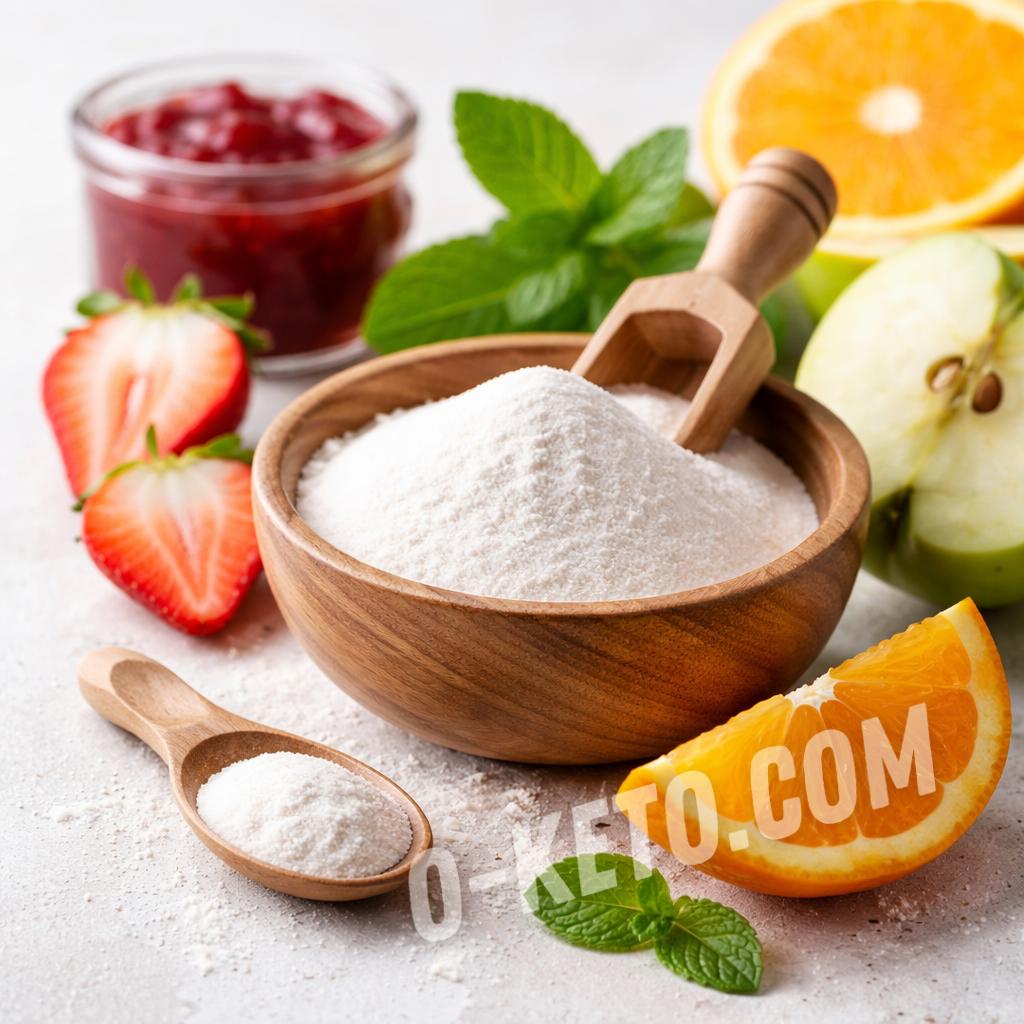

Pectin NH is a low-methoxyl pectin used for pastry fillings, fruit inserts, coulis, jellies, glazes, and mousses. It differs from ordinary apple or citrus pectin because it can work with less sugar and creates a thermoreversible gel: the mass can be heated, stirred, and cooled again while keeping structure.
In recipes, pectin NH is not a food on its own but a precise technical ingredient. It binds water, makes a fruit base more stable, reduces filling leakage, and creates a soft flexible texture. For keto and LCHF, it is interesting because it can work in desserts without a large amount of sugar.
What it is
Pectin is a plant dietary fiber obtained from fruit raw material, often apple pomace or citrus peel. NH usually refers to amidated low-methoxyl pectins. These pectins gel differently from classic high-methoxyl pectin used for jam with a lot of sugar.
To work well, pectin NH needs water, heat, even dispersion, and suitable acidity. In many recipes, calcium ions also help the structure hold. The result depends not only on grams of powder but also on fruit puree, sweetener, acid, dry matter, and temperature.
Is it suitable for keto?
Pectin NH itself is used in small doses, usually a few grams per hundreds of grams of base, so its carbohydrate contribution per serving is modest. But it is often used in fruit fillings where carbohydrates come from berries, fruit, puree, or sweeteners with carriers. For keto, the whole recipe needs counting, not only the pectin.
Pectin NH works well for low-carb berry layers, sauces for sugar-free cheesecake, mirror elements, jelly inserts, and fillings that need to hold shape after cooling. It does not replace gelatin one to one: the texture is more fruity, soft, and elastic, not protein-like and springy.
How to use it
Pectin NH is almost always mixed first with the dry part: sugar, erythritol, allulose, or another dry mix. If poured straight into hot puree, it easily forms lumps. After even distribution, the powder is added to the warm or hot base with active mixing, heated to the required temperature, and then cooled.
A common dosage range is about 5–10 g per 1 kg or 1 l of base, but the specific formula matters more than the general number. Acidic berries, purees with different moisture, alcohol, fatty cream components, and different sweeteners change the result. A small test is better than fixing a whole cake.
Common mistakes
The most common mistake is poor mixing with dry ingredients. The second is insufficient heating: pectin does not fully disperse and the structure remains weak. The third is too much acid or liquid without recalculating the formula. Pectin NH also does not make a watery mass firm instantly; final texture appears after cooling.
If the gel is too firm, reduce the dose next time or add more base. If it is too soft, check heating, acidity, dry matter, and powder freshness. Old pectin that has stood open in a damp kitchen may work worse.
How to choose
The package should clearly say “Pectin NH”, not just “pectin”. Ordinary jam pectin may behave differently. Producer, packing date, suggested dosage, and intended use matter. For professional recipes, replacing NH with apple pectin without recalculation is risky.
The powder should be dry and free-flowing, without clumps or foreign smell. If it is moved into a jar, write the date and name on it because white powders in the kitchen are easy to confuse with gelatin, agar, inulin, or xanthan.
Storage and substitutes
Keep pectin NH in a dry place, tightly closed, away from steam and wet spoons. Not every thickener can replace it. Gelatin gives another, more elastic texture; agar gives a more brittle gel; xanthan gives viscosity without a clean fruit cut; ordinary pectin may require more sugar and different acidity. The substitute should be chosen for the specific task: filling, sauce, jelly, or cream.
If a recipe comes from a professional pastry source, use the exact pectin type named by the author whenever possible. Similar brands can differ in gel strength and may need small adjustment.


