


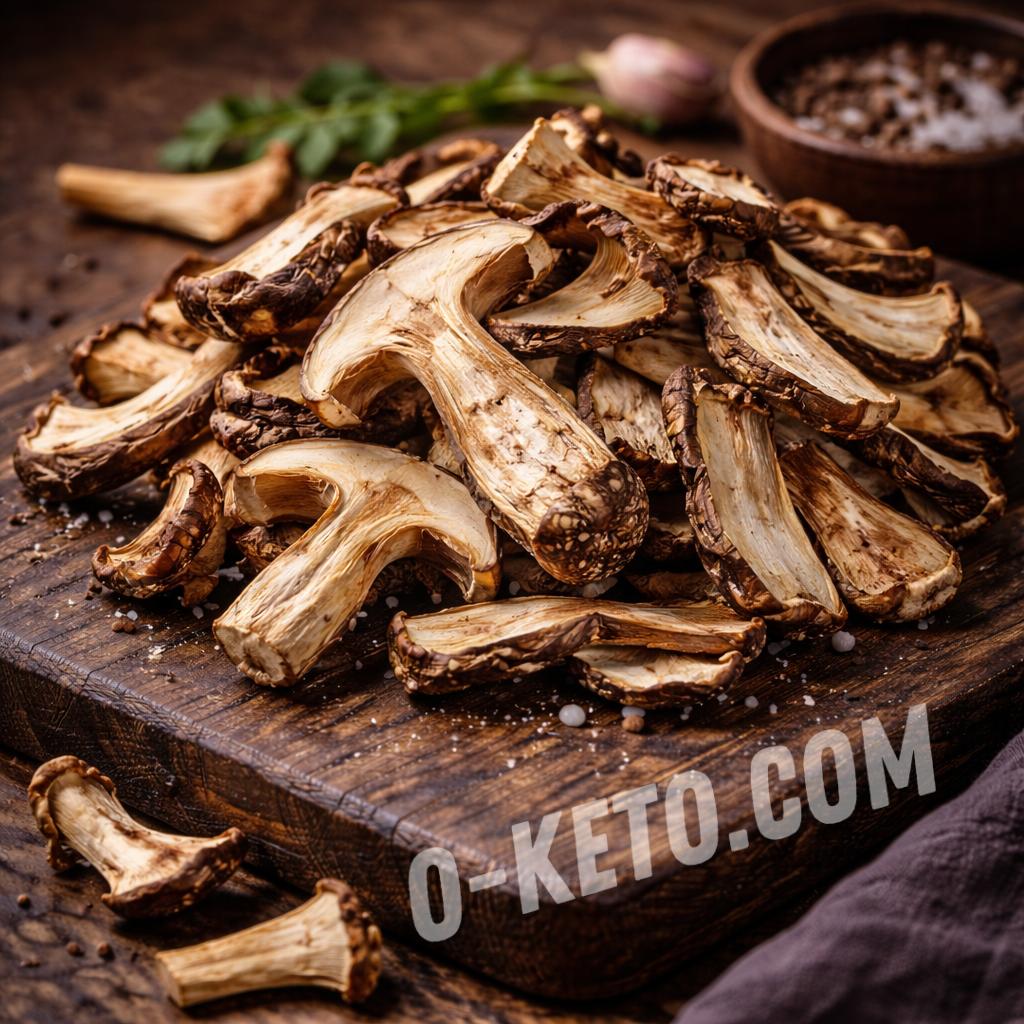

Dried birch boletes are dried Leccinum mushrooms that, when fresh, often grow near birch trees. They are recognized by a brown or gray-brown cap, a light stem with dark scales, and a mild forest aroma. After drying, the mushrooms become darker, lighter in weight, and much more concentrated in flavor.
In cooking, dried birch boletes are used for soups, sauces, stews, mushroom gravies, and fillings. They give a calmer aroma than porcini and suit everyday cooking well. The key is to rehydrate them properly and remember that the dried product is much denser than fresh mushrooms.
Nutritional value
In 100 g of dried birch boletes there may be about 280–300 kcal, 25–30 g of protein, 3–4 g of fat, and 30–40 g of carbohydrates, much of which is connected with mushroom fibers. But the recipe portion is usually much smaller: 10–20 g of dry mushrooms is enough for a sauce or pot of soup.
They contain mushroom fibers, B vitamins, small amounts of vitamin D, potassium, phosphorus, magnesium, iron, and aromatic compounds. For keto, the important point is not the table for 100 g of dry product, but the actual amount of mushrooms in a portion and the absence of flour, potatoes, or noodles in the dish.
Are they suitable for keto?
Dried birch boletes can be used in keto and LCHF as an aromatic addition. A small amount deepens the taste of broth, cream sauce, meat, poultry, eggs, cauliflower, or stewed cabbage. Large portions of dry mushrooms should already be counted for carbohydrates.
The best keto approach is to use the mushrooms for depth of flavor while building the volume of the dish from a low-carb base. For example, sauce can be made from mushroom liquid, cream, butter, and meat, thickened with xanthan gum instead of flour. This keeps the forest aroma without a starchy gravy.
If dried birch boletes are added to soup, they do not need to be used in large amounts. A small handful flavors the broth, while satiety is better built with meat, poultry, egg, cream, or low-carb vegetables. This approach is especially convenient when mushroom taste is wanted without a large portion of the dry product.
How to prepare them
Before cooking, dried mushrooms are sorted, quickly rinsed, and soaked in warm water for 20–40 minutes. If the pieces are large or very dry, more time will be needed. After soaking, rinse the mushrooms and strain the liquid through a fine sieve or cheesecloth.
The soaking liquid can be used in soup or sauce if the mushrooms were clean and high quality. Sediment from the bottom is better left out. Rehydrated birch boletes should be cooked fully: boiled, stewed, or fried after soaking. This is especially important for mushrooms gathered by hand.
How to use them
Dried birch boletes work well in mushroom soup without potatoes, cream sauce for meat, stewed cabbage, omelets, ragouts, sauce for patties, and fillings for low-carb baking. They can be paired with onion, thyme, black pepper, cream, beef, pork, chicken, and cauliflower.
If a stronger mushroom taste is wanted, part of the rehydrated mushrooms can be finely chopped and fried in butter, while some are left in pieces. But they should not be overfried: the aroma becomes rougher and the texture tougher.
Compared with porcini, birch boletes are usually softer and calmer in aroma. They are good where the mushroom taste should support the dish rather than completely cover meat, cream, or spices. If a main accent is needed, they can be mixed with a small amount of porcini or orange-cap boletes.
How to choose
Good dried birch boletes smell cleanly mushroom-like, without mold, dampness, smoke, or mustiness. Pieces should be dry but not crumble into dust. It is normal if caps are darker than stems; it is bad if the product is damp, sticky, sour-smelling, or has insect traces.
When buying from a private seller, trust in the picker matters. Dried mushrooms are harder to identify than fresh ones, so species, collection area, and drying conditions are important. Very fine crumbs are often lower quality because they contain more dust and random impurities.
How to store them
Dried mushrooms are kept in a dry dark place, in a jar, paper bag, or container with a tight lid. They should be protected from moisture, pantry moths, sunlight, and strong odors. If the mushrooms become damp or develop a mold smell, they should not be used.
What can replace them?
The closest replacements are dried porcini, orange-cap boletes, bay boletes, slippery jacks, or shiitake. Porcini give a stronger and more noble aroma, orange-cap boletes give a brighter forest taste, and shiitake adds a deep umami note. Fresh champignons replace volume but not the same depth.


