


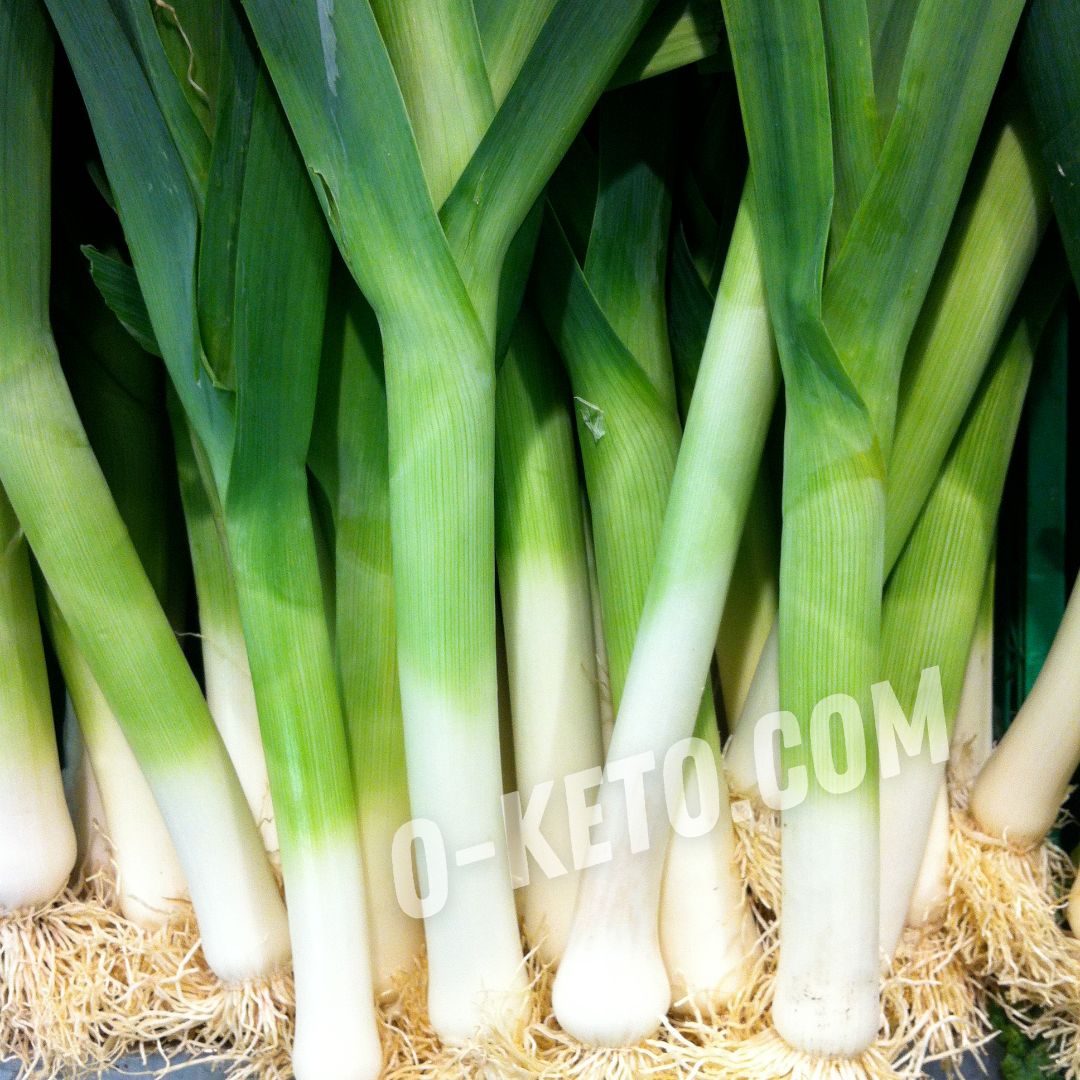

Leek is an onion-family vegetable with a long white stem and green leaves. It tastes milder than bulb onion: less sharp, with more sweet and creamy notes after cooking. It is used in soups, sauces, omelets, casseroles, side dishes, fillings and as an aromatic base for fish, poultry and meat.
For keto, leek is not as unrestricted as leafy greens. It contains more carbohydrates than dill, lettuce or Napa cabbage, so portion matters. In small amounts, however, it is very useful: it adds onion flavor without needing sweet sauces or flour thickeners.
Nutrition
Per 100 g, leek contains about 60 kcal, around 1.5 g of protein, 0.3 g of fat and about 14 g of carbohydrates, some of which is fiber. Values vary slightly by plant part and cooking method. The white part is usually tenderer and sweeter; the green part is tougher and more aromatic.
Leek contains vitamins A, C and K, folate, iron, magnesium, manganese and sulfur compounds typical of onion-family plants. In keto cooking, though, its main role is aroma and flavor depth, not being a major vitamin source.
Is Leek Keto-Friendly?
Leek can fit keto when used moderately. It is not a large-portion vegetable for strict keto, but 20-50 g in soup, omelet or sauce often gives enough flavor without overloading the day with carbohydrates. Eating a whole large leek as the main vegetable is a different story.
Leek should be counted especially carefully in cream soups, where a large amount can be hidden by the texture. If the soup also contains carrot, potato, milk or flour, it can easily stop being low-carb.
How to Use It
Leek often holds sand between its layers, so it should be cut lengthwise and washed well. The white and light-green parts are usually cooked gently: sautéed in butter, added to soups and sauces. Dark green leaves are tougher and can be used for stock or long cooking.
Keto options include:
- omelet or frittata with leek and cheese;
- cream sauce for fish or chicken;
- soup with cauliflower instead of potato;
- sautéed leek as a small addition to meat;
- filling with egg, cheese and herbs without a flour base.
How to Choose and Store
Good leek is firm, without slime, mold or dry hollow layers. The white part should be clean and crisp; green leaves should not be strongly yellowed. Store leek whole in the refrigerator and avoid cutting it in advance, because the aroma becomes stronger and juiciness is lost faster.
Portion and Pairings
Leek works best as an aromatic addition rather than the main side dish. It pairs with butter, cream, eggs, cheese, chicken, turkey, white fish, salmon, mushrooms and cauliflower. Fat softens the onion flavor and makes the dish more filling.
When fried, leek quickly becomes sweet, so dark caramelization is unnecessary. For keto, gentle cooking until soft and fragrant is enough, without sugar or flour.
Limitations and Substitutes
Onion-family vegetables may cause bloating in people sensitive to FODMAPs. If leek is poorly tolerated, try a smaller portion, use only the green part for aroma, or replace it with chives, green onion, celery, fennel, garlic-infused oil or herbs. For stricter carbohydrate reduction, use lower-carb vegetables and keep leek as a seasoning.
Common Mistakes
Leek is easy to underestimate because its flavor is mild. After cooking it tastes almost creamy and less onion-like, but the carbohydrates do not disappear. In keto recipes, measure it as an ingredient, especially when the dish makes several servings and contains no other low-carb vegetables.
Another mistake is using only the white part and throwing away all the greens. Dark leaves are tough, but they add good aroma to stock, stews and sauces. They can be removed after cooking like a bay leaf if the texture is not wanted.
White and Green Parts
With leek, it helps not to treat all parts the same. The white and light-green section is softer, cooks faster and works better in omelets, cream sauces and cauliflower soups. Dark green leaves are tougher but add good aroma to stock, stews and roasting. If their texture is unwanted, cook them in large pieces and remove them before serving.
After slicing, rinse leek again because sand often hides deeper than it seems from the outside. For a mild flavor, cook it over moderate heat without browning it hard. In a keto dish, this gives onion depth without sugar, flour or a large amount of sweeter onion.


