


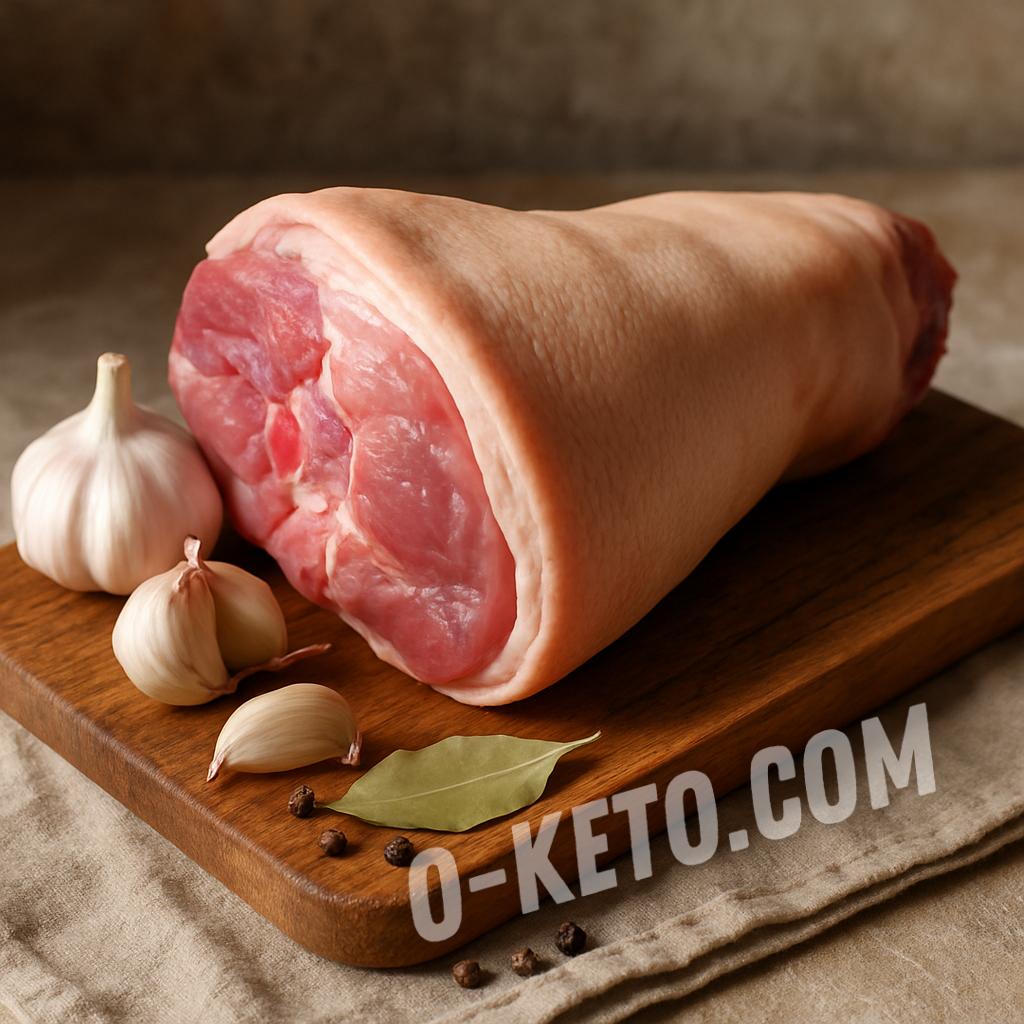

Pork knuckle is the lower part of the pig leg with skin, bone, fat, and a large amount of connective tissue. It is a cut for long roasting, simmering, smoking, and braising, where collagen and skin create the characteristic rich sticky texture.
The weight of one knuckle varies a lot by animal size and butchery, so “1 piece” is only a rough guide. For macro calculation, it is better to use the raw weight and remember that a meaningful share is bone and skin.
Nutrition
Pork knuckle provides complete protein, a substantial amount of fat, and collagen-rich tissue. It contains no carbohydrate in plain form, so the cut itself works well in keto and LCHF.
The dish profile changes because of sweet glaze, beer, honey, sugar in marinade, starchy sides, or breading. In simple roasted or simmered form, it is a low-carb meat product.
How to Cook
Knuckle is often simmered first and then roasted to finish the crust. It also works well in slow cooker, pressure cooker, and rich stock dishes.
It pairs well with garlic, caraway, sugar-free mustard, sauerkraut, cauliflower, horseradish, and dense meat sauces. If crisp skin is the goal, dry the surface well before the final roast.
Choosing and Storage
A good knuckle should smell clean, have intact skin, and not look dried out on the cut surface. Excess cloudy liquid or sour notes are not desirable.
Store like other bone-in meat cuts: briefly refrigerated or airtight frozen. Drying and salting ahead of cooking can help improve the crust.


