


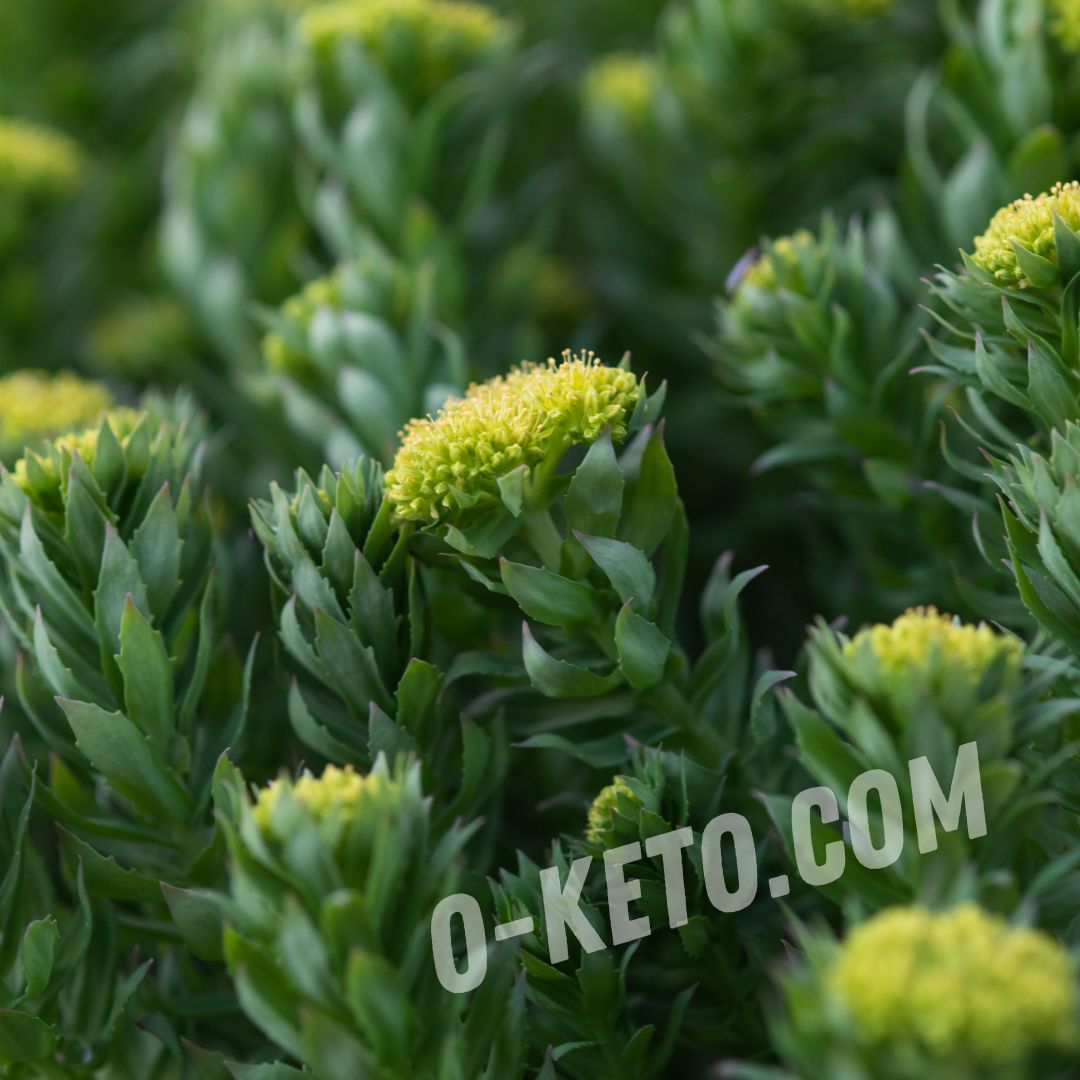

Rhodiola rosea powder is made from dried roots and rhizomes of Rhodiola rosea, also known as golden root. The plant grows in cold and mountainous regions of Europe, Asia, and North America. In food use, it is not an ordinary plate ingredient but a botanical material with a pronounced bitter, astringent taste.
The powder has an earthy, root-like, slightly tart aroma. It may be added to water, tea, capsules, tinctures, smoothies, or unsweetened fermented dairy products, but the amount is usually measured in hundreds of milligrams, not teaspoons. For keto and LCHF, the important points are composition, carriers, sweeteners, and making sure the powder does not become part of a sugary drink or bar.
Composition and nutrition
Rhodiola roots are described as containing rosavins, salidroside, flavonoids, polyphenols, organic acids, and mineral traces. These compounds are often used to standardize extracts, but whole-root powder and concentrated extract are different products. The label should show whether it is “root powder”, “extract”, or “standardized extract”, and which marker percentages are listed.
Calories and carbohydrates in a usual serving are small because the serving is small. At 250-500 mg, the contribution to the menu is almost invisible. In drink mixes, however, there may be sugar, maltodextrin, fruit powders, flavorings, and acids. In that case, the whole product needs to be counted, not rhodiola alone.
Rhodiola is not a meaningful source of protein, fat, or fiber in a usual dose. It should not be treated as a replacement for food, electrolytes, caffeine, sleep, or a proper breakfast. Its practical role is a botanical addition with strong taste and small dosing.
Keto and LCHF use
Pure rhodiola powder without sugar can fit keto and LCHF because the usual serving is very small and barely changes carbohydrate counting. Problems more often come not from rhodiola itself but from ready “energy” blends where the botanical powder is combined with syrups, juice powders, oat flour, or sweet fillers.
If rhodiola is added to yogurt, smoothie, or a drink, the base is better unsweetened: water, tea, plain Greek yogurt, unsweetened coconut milk, lemon, ginger, cinnamon. The taste is noticeable, so it is usually balanced with acidity, spices, or a small amount of a suitable sweetener.
How to use it
Rhodiola powder is easier to measure with accurate scales or by using ready capsules, because a household spoon is too imprecise for small doses. A range of 250-500 mg per day is often seen on labels, sometimes more, but botanical supplement dosing is best checked against the specific label and a qualified professional.
Rhodiola is usually taken in the first half of the day because evening intake may disturb sleep in sensitive people. The powder can be stirred into a little water and swallowed, added to tea after it cools, mixed with plain yogurt, or placed into empty capsules. It is less often added to hot coffee because of bitterness and sharp taste.
It is not wise to combine several stimulating supplements and large doses of caffeine at once when personal response is unknown. If anxiety, tremor, palpitations, headache, or insomnia appears, the dose should be reduced or use stopped.
How to choose
A good product should show the Latin name Rhodiola rosea, plant part, country of origin, serving size, and type of material. For extracts, standardization by rosavins and salidroside matters; for ordinary powder, clean composition and absence of sweeteners matter more.
The powder color may range from beige to brownish, and the smell should be root-like and tart. Musty odor, damp clumps, mold, and unclear composition are reasons not to use it. If a blend promises too many effects at once, the ingredient list deserves extra attention.
Limits
Rhodiola may not suit people with anxiety, insomnia, high excitability, uncontrolled blood pressure, bipolar disorder, pregnancy, or breastfeeding. Interactions with antidepressants, stimulants, blood pressure medication, and other drugs are possible, so regular use is better discussed with a physician.
Unwanted reactions are often related to dose and sensitivity: irritability, headache, nausea, dry mouth, overexcitement, and sleep disturbance. This is not a product to keep increasing “for a stronger effect”. With botanical supplements, starting with the lowest dose is more reasonable.
Storage and substitutes
Rhodiola powder should be stored tightly closed in a dry dark place, away from steam, light, and heat. Moisture spoils powders quickly and makes the taste harsher. The jar should be opened with a dry spoon, and the product should not be moved to an unlabeled container.
There is no direct culinary substitute for rhodiola. If a bitter botanical note is needed, a little ginger, green tea, lemon zest, or eleuthero can be used, but these are different plants. If the goal is simply a sugar-free drink, rhodiola does not have to be replaced at all: water, tea, coffee, or a sugar-free electrolyte drink is often more practical.


