


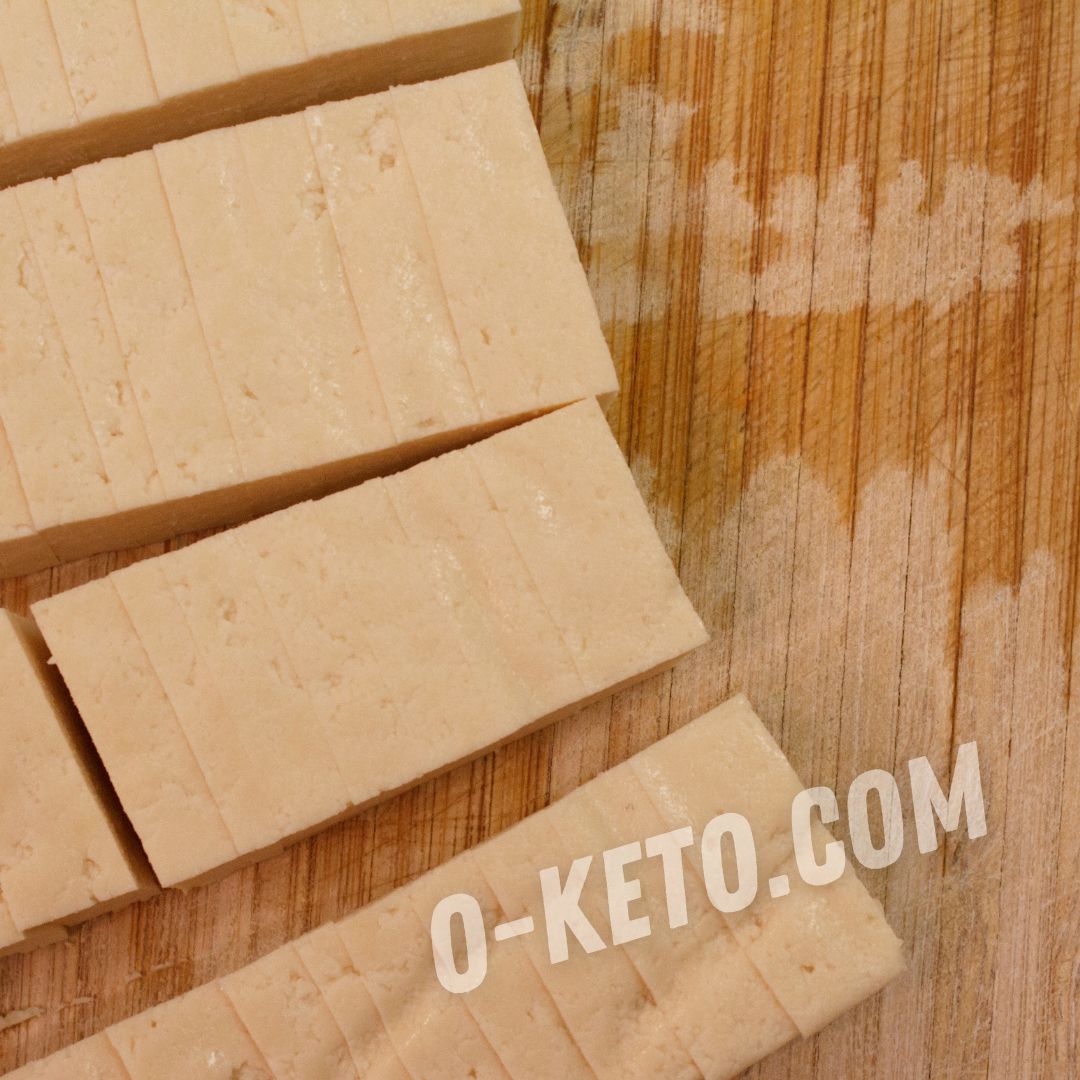

Pressed tofu is a dense soy product made from soy milk after the protein is coagulated and extra moisture is removed. The stronger the pressing, the less water remains inside and the better the tofu holds its shape when sliced, fried, or baked. Compared with soft silken tofu, it does not fall apart in sauce, browns more easily, and suits main dishes, salads, bowls, and low-carb sides.
The flavor of pressed tofu is fairly neutral, with a light soy and nutty note. It is valued less for its own strong aroma and more for its ability to absorb marinades, spices, sauces, and fats. This is convenient in a low-carb menu: the same product can become spicy, creamy, smoky, Asian-style, or almost neutral without adding sugar or starch.
Nutrition
Values depend on density and producer. In 100 g of pressed tofu there are often about 120-170 kcal, 12-18 g of protein, 7-10 g of fat, and roughly 1-3 g of carbohydrates. If the tofu is made with a calcium coagulant, it may contain more calcium; if magnesium salts are used, the mineral profile differs. The label matters more than general tables.
Tofu contains plant protein, soy fats, a little fiber, iron, phosphorus, magnesium, calcium when the coagulant provides it, and isoflavones. It does not replace every animal food at once, but it is a useful protein base for people who eat less meat, rotate protein sources, or cook without dairy.
Place in keto and LCHF
Pressed tofu fits keto and LCHF well when it contains no sugar, starch, or sweet marinades. A normal serving has few carbohydrates, and the protein makes the meal more filling. A practical portion is 100-180 g, depending on the rest of the menu and personal protein needs.
The main mistake is treating every soy product as equally low-carb. Breaded tofu, sweet teriyaki, ready-made sauces, soy desserts, and dishes served with rice belong to a different category. For stricter keto, choose a plain tofu block and add flavor yourself: salt, spices, garlic, ginger, chili, sugar-free soy sauce, sesame oil, or olive oil.
How to prepare
Even pressed tofu often contains some moisture. Before frying, pat it dry, cut it into cubes or slabs, and let it sit for 10-20 minutes under a light weight. The drier the surface, the better the crust. For a firmer texture, freeze the tofu, thaw it, and squeeze it out; the structure becomes spongier and absorbs marinade more actively.
A marinade should add flavor without extra sugar. Soy sauce or tamari, lemon juice or vinegar, garlic, ginger, smoked paprika, chili, coriander, sesame oil, and a little erythritol for balance all work well. For a creamy version, cook tofu with sour cream, unsweetened coconut cream, or a tahini-based sauce.
How to cook
In a pan, tofu is best cooked over medium or medium-high heat without crowding. If the pieces are packed too closely, they steam instead of browning. For the oven, use cubes lightly coated with oil and spices; bake until the edges are firm, then add sauce near the end or after cooking.
Pressed tofu can be added to vegetable stews, soups, salads, dairy-free omelets, shirataki noodles, dishes with mushrooms, cabbage, spinach, broccoli, eggplant, and zucchini. It likes acidity, heat, and fat; without them the dish may taste flat.
How to choose
A good ingredient list is short: soybeans, water, coagulant, and sometimes salt. If the product is already marinated, check for sugar, syrups, starch, flour, and thickeners. The package should not have a sour smell, gas, damage, or cloudy liquid with an unpleasant tone. After opening, plain tofu should smell neutral and fresh.
For frying, choose firm or extra firm. For creams and sugar-free desserts, soft tofu works better, but it behaves like a different product. If ecological or production details matter to you, check organic labeling and soy origin, but remember: even an organic marinade can be sweet.
Limits and storage
Soy is a common allergen, so tofu is unsuitable for anyone who reacts to soy products. With thyroid-related restrictions, prescribed therapy, or a need to limit soy in the diet, regular large servings should be discussed with a qualified professional. In sensitive people, tofu may cause bloating, especially when eaten rarely and then in a large portion.
Opened tofu should be kept in the refrigerator in clean water, changed daily, and eaten within a short time. Fried tofu holds its shape better but still needs refrigeration and a closed container. By culinary role, it can be replaced with tempeh, eggs, chicken, halloumi, fish, or, for plant-based options, lupin and hemp seeds, but flavor and texture will differ.


