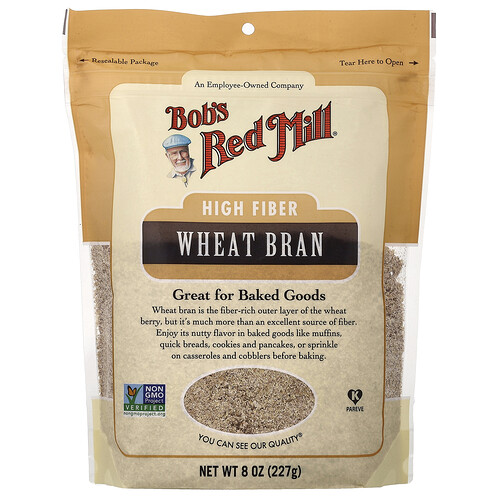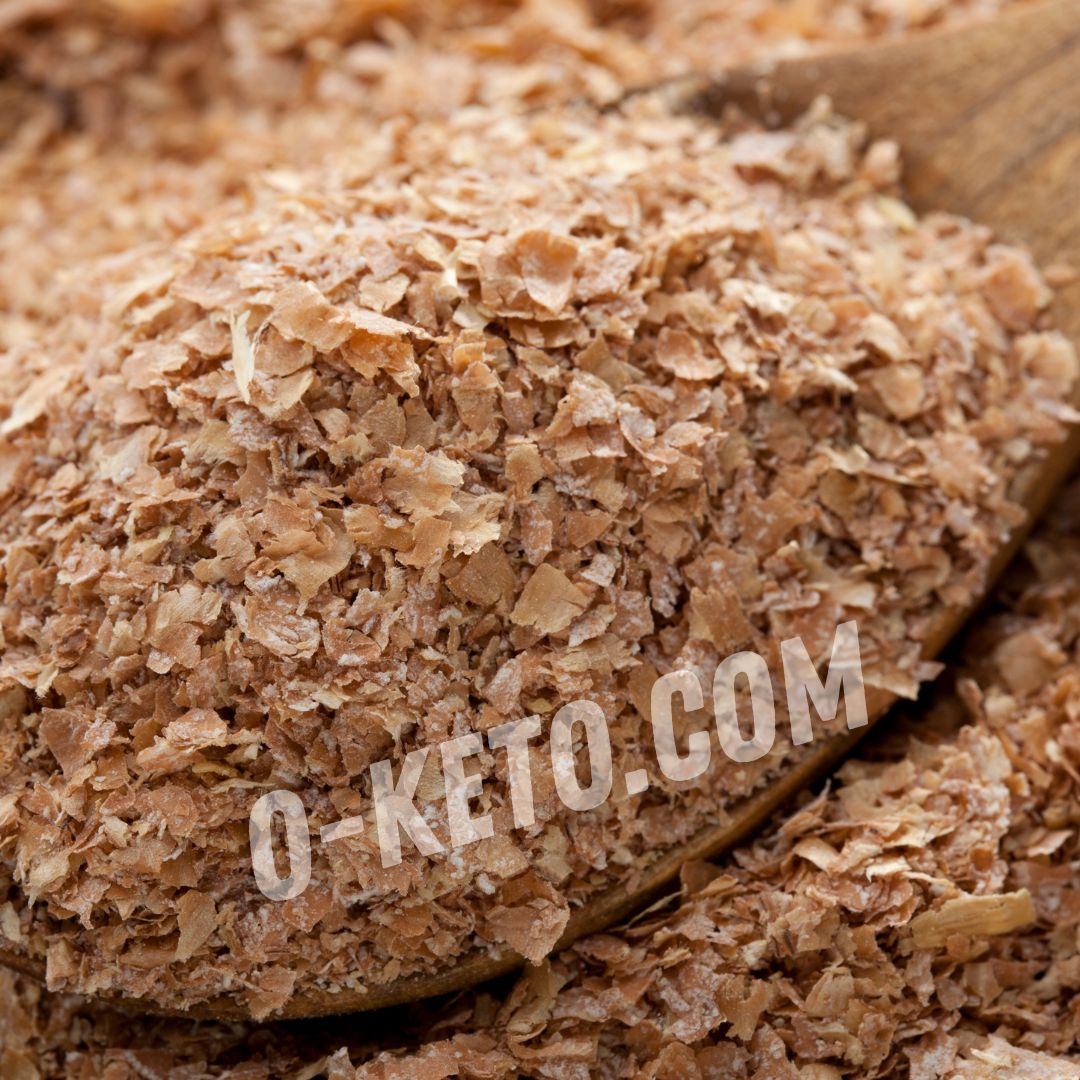

Wheat bran is the outer layer of the wheat grain separated during milling. It is not flour and not a starchy cereal, but the coarse fibrous part of the grain with a pronounced wheat taste. Bran is added to baking, porridge, minced meat, breading, yogurt, cottage cheese, and blends with low-carb flours when fiber and a denser texture are needed.
For keto, wheat bran is ambiguous. It contains a lot of fiber, but also digestible carbohydrates and gluten. So it should not be treated as a fully neutral addition. A small spoon may be appropriate in a recipe, but a large portion quickly changes the carbohydrate level of the dish.
Nutritional value
Average values per 100 g are about 200–220 kcal, 14–17 g protein, 4–5 g fat, and roughly 60–65 g total carbohydrates, a significant part of which is fiber. Some older tables show about 14 g fiber, but numbers vary by producer. For keto, available carbohydrates matter more than only the total product weight.
Wheat bran contains B vitamins, magnesium, phosphorus, iron, zinc, and other minerals. It is not used as a fat source; its role is to add fiber, grain flavor, and moisture-holding ability. A tablespoon contains far fewer calories and carbohydrates than 100 g, but the exact calculation depends on spoon weight.
Is it suitable for keto?
In strict keto, wheat bran is used carefully or replaced with lower-carb fiber sources. In moderate LCHF, 1–2 teaspoons or a small tablespoon in a large recipe may fit if carbohydrates are counted for the whole portion.
Bran does not make bread or cake keto if the recipe contains ordinary flour, sugar, or a lot of starch. It only adds coarse structure and some fiber. For low-carb baking, it is usually more convenient to combine it with almond flour, flax, psyllium, eggs, and cheese rather than use it as the main bulk of the dough.
How to use it
Wheat bran absorbs liquid and swells. If added to dough, the dough should rest for 10–20 minutes; otherwise the finished bake may turn dry and crumbly. In minced meat, bran can replace a small part of bread crumbs, but the taste becomes more grain-like and the texture denser.
It is added to savory pancakes, low-carb flatbreads, patties, sugar-free cottage cheese pancakes, yogurt, cottage cheese, cream soups, and breading. It is better to start with a small portion and drink enough water. A large amount of fiber without fluid often causes heaviness.
How to choose
Good bran is dry, loose, and free from old-oil smell, mold, and dampness. The grind can be coarse or fine: coarse bran is more noticeable in a dish, while fine bran is easier to mix into dough or minced meat. Check fiber, available carbohydrates, expiration date, and absence of sugar, flour, flavorings, and sweet additives.
Wheat bran contains gluten. If a gluten-free product is needed, it is unsuitable even in small amounts. It is also important not to confuse bran with wheat fiber: fiber is usually more purified and may have a different carbohydrate profile.
What to pair it with
In low-carb recipes, bran is combined with eggs, cottage cheese, unsweetened Greek yogurt, cheese, minced meat, flax, psyllium, almond flour, sesame, and spices. In sugar-free sweet recipes, the taste can be softened with cinnamon, vanilla, or lemon zest.
Limitations
The main limitations are gluten, fiber, and carbohydrates. With a sensitive intestine, bran may cause bloating, cramps, or discomfort, especially if the portion is increased sharply. When wheat, FODMAPs, or coarse fiber need to be limited, another option is better.
How to store it
Bran is kept in a dry cool place, tightly closed. After opening, it is better transferred to an airtight container so it does not absorb moisture and smells. If used rarely, it can be stored in the refrigerator or freezer. Bitterness, mustiness, or damp lumps are reasons to discard the package.
What can replace it?
For low-carb cooking, psyllium, ground flax, chia seeds, gluten-free oat fiber if tolerated, almond flour, coconut flour, or wheat fiber are more common replacements. They do not work one to one: psyllium binds much more water, coconut flour dries dough, flax has its own taste, and almond flour adds fat.