


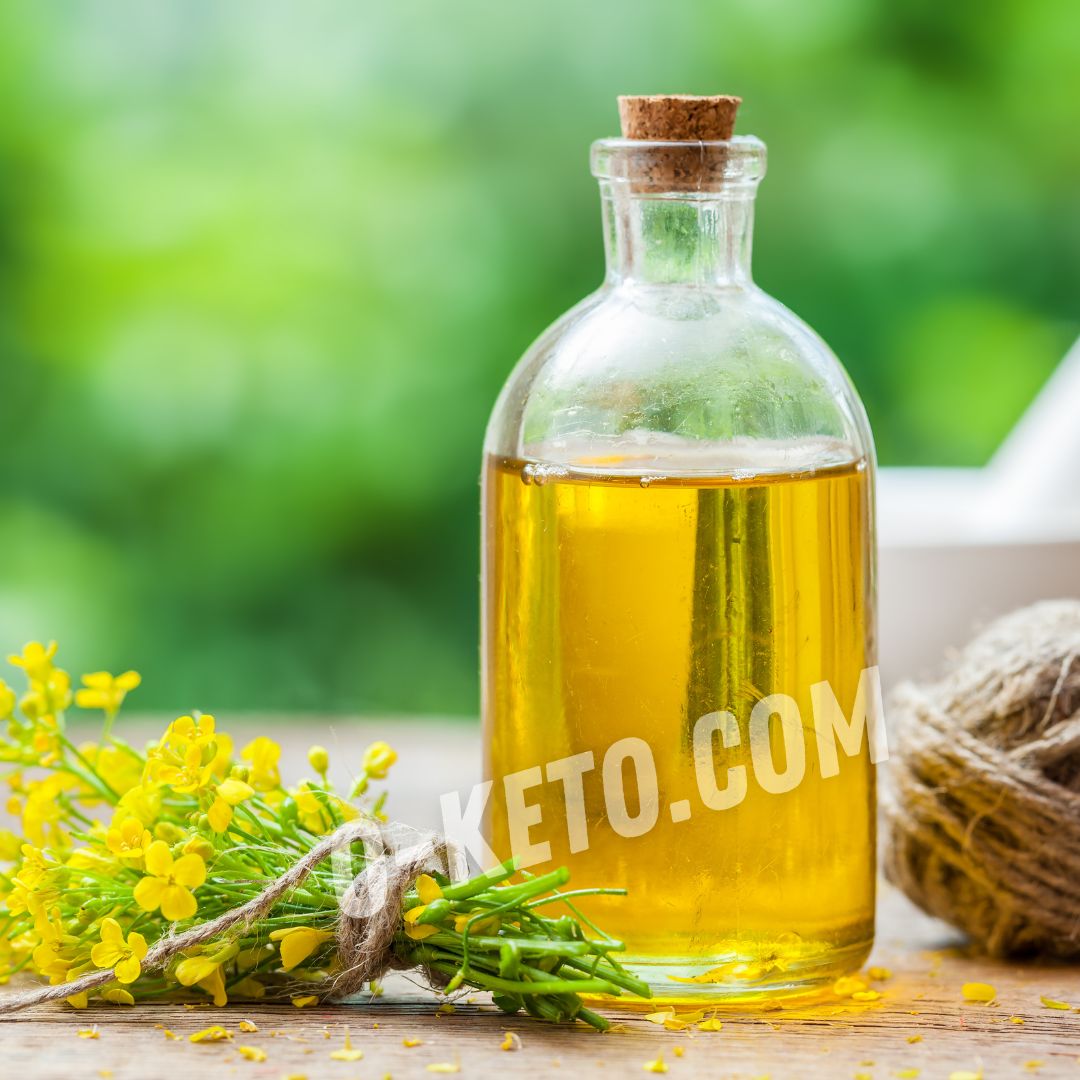

Rapeseed oil is obtained from rapeseed. Stores sell refined oil with a neutral taste and unrefined or cold-pressed oil with a more noticeable nutty-grassy note. In Northern Europe and Canada, it is a common kitchen oil for frying, baking, dressings, and industrial food production.
Modern edible rapeseed oil is made from varieties with low erucic acid. In English-speaking countries, the word canola is often used for a similar product. For the buyer, the important point is the oil type: refined for heating, unrefined for cold dishes, clear shelf life, and no rancid smell.
Nutritional value
Like any oil, rapeseed oil consists almost entirely of fat. In 100 g there are about 880–900 kcal, 100 g fat, 0 g protein, and 0 g carbohydrates. One tablespoon usually contains about 120 kcal. The glycemic index is zero because the oil contains no sugar or starch.
The fatty acid profile usually includes about 7% saturated fat, a lot of monounsaturated fat, and a noticeable share of polyunsaturated fat. Labels often show roughly 9% ALA omega-3 and about 20% LA omega-6, but exact values depend on variety and processing. Tocopherols and small amounts of vitamin K may also be present.
Meta-analyses of controlled trials have compared canola oil with other edible fats and found small improvements in total cholesterol and LDL cholesterol. These findings concern replacing one fat with another, not a treatment effect of the oil itself.
Is it suitable for keto?
By macronutrients, rapeseed oil fits keto and LCHF: it has no carbohydrates. It can be a working fat for a pan, oven, or dressing if the taste and product quality suit the person. But a keto diet does not need to be built specifically on it: olive oil, avocado oil, butter, and animal fats can do similar jobs.
The main issues are amount and heating method. Oil is very calorie-dense, so it is better counted by spoons. For regular frying, refined oil with a neutral taste is more convenient. Unrefined oil is better used cold or with gentle heating so the aroma is not spoiled.
How to use it
Refined rapeseed oil is suitable for frying eggs, fish, poultry, patties, vegetables, low-carb flatbreads, and oven dishes. It does not dominate the taste of food, which is useful when a strong olive or coconut flavor is not wanted.
Unrefined oil is better added to salads, cold sauces, cooked cauliflower, braised cabbage, herbs, cucumbers, or fish after cooking. If the smell becomes sharp, fishy, paint-like, or rancid, the oil is not used.
How to choose
Check the oil type, production method, expiration date, storage conditions, and country of origin. For frying, refined deodorized oil is more practical. For salads, cold-pressed oil can be chosen, but the bottle should be dark or otherwise protected from light.
Modern edible oil should meet limits for erucic acid. If a product is intended for technical use rather than food, it must not be used in the kitchen. Oil in a clear bottle that has stood in light for a long time more often loses freshness.
What to pair it with
Rapeseed oil pairs with eggs, fish, chicken, turkey, cabbage, cauliflower, broccoli, zucchini, mushrooms, leafy salads, sugar-free mustard, sugar-free vinegar, lemon, dill, and parsley. In sugar-free baking it adds softness but not a buttery taste.
Limitations
Limitations are mostly related to calorie density, freshness, and individual attitude to plant oils. The oil should not smell rancid and should not be repeatedly overheated. If a person prefers fewer seed oils, rapeseed oil can be replaced with other fats without changing the low-carb logic.
How to store it
A closed bottle is kept in a cool dark place. After opening, the oil is best closed tightly and used within a reasonable time. Unrefined oil is more sensitive to light and air, so refrigeration may be appropriate if the producer allows it. Do not pour oil into a dirty bottle or keep it near the stove.
What can replace it?
For frying, avocado oil, cooking olive oil, beef tallow, duck fat, lard, or clarified butter can replace it. For salads, extra virgin olive oil, walnut oil, flaxseed oil, or avocado oil are closer if they fit the taste. Replacement changes aroma but not necessarily carbohydrates.
Sources
Key sources on the product composition, safety, and use:
- The effects of Canola oil on cardiovascular risk factors: A systematic review and meta-analysis with dose-response analysis of controlled clinical trials
- Effects of Canola Oil Consumption on Lipid Profile: A Systematic Review and Meta-Analysis of Randomized Controlled Clinical Trials


