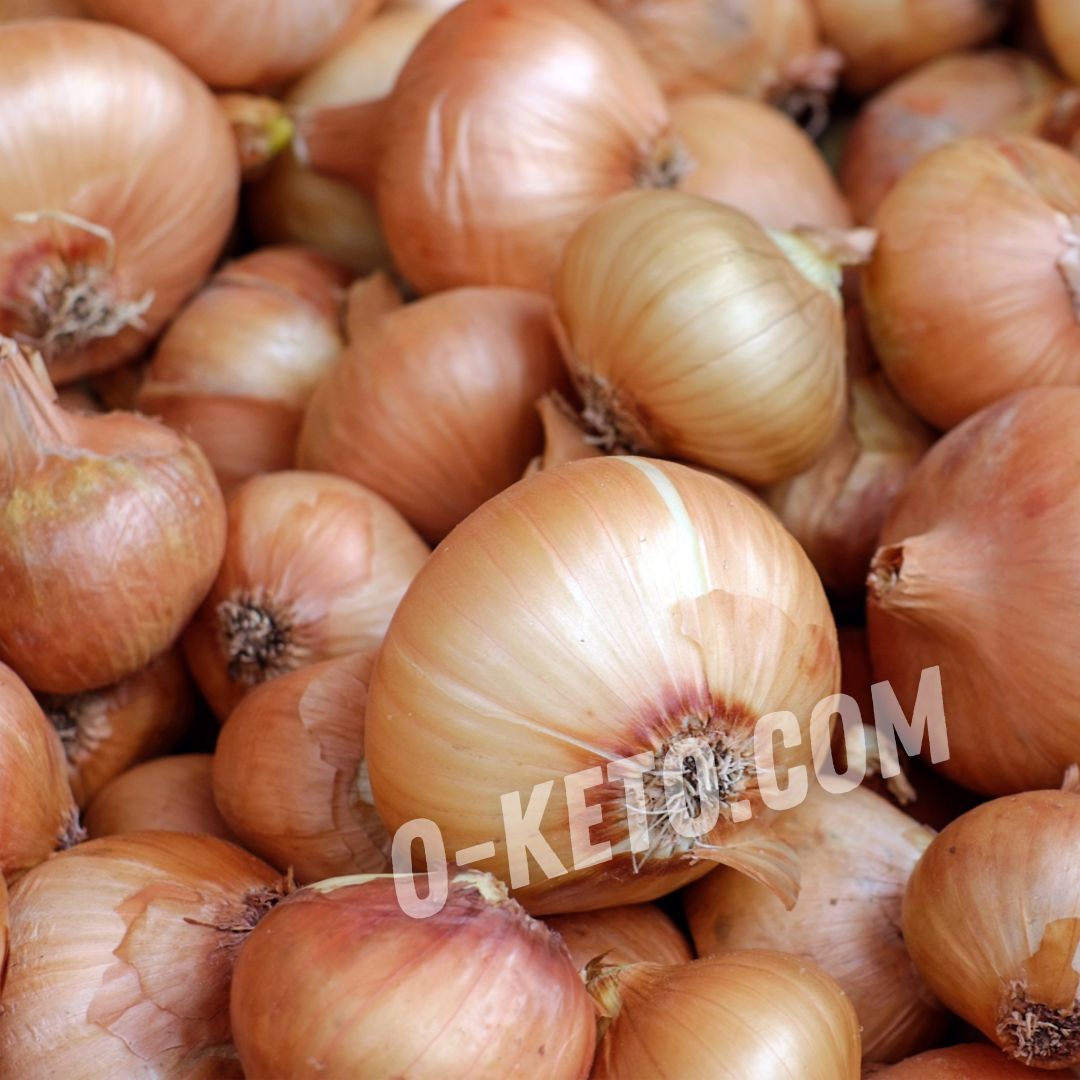

Yellow onion is a basic vegetable-seasoning with a firm bulb, sharp aroma and sweetness that becomes stronger with heat. It is used raw, fried, stewed, baked, added to broths, sauces, minced meat, salads and side dishes. In everyday cooking, onion often builds the flavor base, but on keto it is better treated as an aromatic ingredient rather than the main vegetable on the plate.
The key issue is quantity. A few grams of onion in a patty, soup or salad barely change the dish, while a large sauté made from two onions already brings a noticeable share of carbohydrates. So onion does not need to be excluded automatically, but it should be added deliberately and preferably measured in grams.
Nutrition
Per 100 g, yellow onion usually has about 40 kcal and roughly 8-10 g of carbohydrates, with part of that coming from fiber. The glycemic index is often listed as low, around 10, but for low-carb eating the real portion and cooking method matter more. After long stewing or frying, water leaves, the flavor becomes sweeter and a large portion is easier to eat.
Onion provides vitamin C, some B vitamins, potassium, phosphorus, small amounts of calcium, fiber and flavonoids, including quercetin. These compounds are a normal part of a vegetable diet, but onion should not be turned into a product with treatment claims. Its strength in the kitchen is different: aroma, sweet depth, juiciness in minced meat and a base for sauces.
Is It Keto-Friendly?
Yellow onion fits keto in moderate amounts. For strict keto, small portions are usually used: a tablespoon of fine dice in minced meat, a few thin slices in salad, part of an aromatic base for soup or sauce. If onion becomes the main volume of the dish, carbohydrates rise too quickly.
Caramelized onion needs special attention. Even without added sugar, long cooking concentrates sweetness and makes the portion very easy to overeat. Sugar, honey, sweet balsamic, ready-made sauces and ketchup together with onion are usually unnecessary for keto.
How to Use It
Raw onion gives bite and crunch, fried onion gives sweetness and depth, and stewed onion creates a soft base for sauce. In low-carb dishes, it is often enough to reduce the amount of onion and increase flavor with spices, herbs, vinegar, lemon, celery, mushrooms or garlic-infused oil without garlic pieces.
Practical options include:
- a little onion in patties without bread or breading;
- thin slices in salad with egg, fish or meat;
- an aromatic base for soup without potatoes or grains;
- quick frying with mushrooms, meat and herbs;
- sugar-free pickled onion for steak, kebab or aspic;
- onion juice and fine dice in minced meat when flavor is needed without large pieces.
Portion
Recipes often say “one onion,” but onions vary widely. A small bulb may weigh 50 g, while a large one may weigh 180-250 g. For keto this is a major difference, so strict tracking is better done by weight. For a whole dish with several servings, 20-40 g of onion is often enough, especially when spices, mushrooms, celery or herbs are also used.
If onion aroma is needed in broth, the bulb can be boiled in large pieces and removed before serving. Some flavor will pass into the liquid while the amount of onion actually eaten stays lower. For minced meat, grate or chop onion very finely: the flavor spreads more evenly and less product is needed.
How to Choose
A good bulb is dry, firm and heavy for its size, without soft spots, mold, wet skin or sticky dark patches. A rotten or sour smell means it should not be used. Sprouted onion is not always spoiled, but the green shoot takes some juiciness away and the flavor becomes rougher.
Yellow varieties are convenient for frying and stewing because they give familiar sweetness and aroma. White onion is sharper and more watery, while red onion is better kept for salads and quick pickles. If the dish is counted for carbohydrates, the variety does not remove the need to measure the portion.
How to Store It
Whole onions should be stored in a dry, dark and ventilated place, away from potatoes and moist vegetables. Uncut bulbs often become damp and spoil faster in the refrigerator. Cut onion should be placed in a closed container, refrigerated and used within a few days.
Limits and Substitutes
Yellow onion can cause bloating in people sensitive to FODMAPs. Cooking sometimes makes it easier to tolerate, but not always. If onion does not work, part of the aroma can come from small amounts of green onion, chives, parsley, dill, asafoetida, lemon, pepper and garlic-infused oil without garlic pieces.
For a side dish, cabbage, zucchini, mushrooms, spinach, cauliflower or salad leaves are better than a large amount of onion. This is not a one-to-one flavor replacement, but the dish gets volume without extra onion sweetness. The onion itself can remain as an accent.
Common Mistakes
The first mistake is making a large onion sauté and then treating it as a neutral base. Long cooking removes water, concentrates flavor and quietly increases the amount eaten. The second mistake is adding onion “by eye” to every dish during the day: a little in an omelet, a little in a salad, a little in patties, and the total becomes noticeable.
The third mistake is compensating for less onion with sweet sauces. For keto, it is better to use acidity, salt, spices, pepper, herbs and a fatty base. This keeps the dish expressive while onion plays its role without becoming the main source of carbohydrates.