


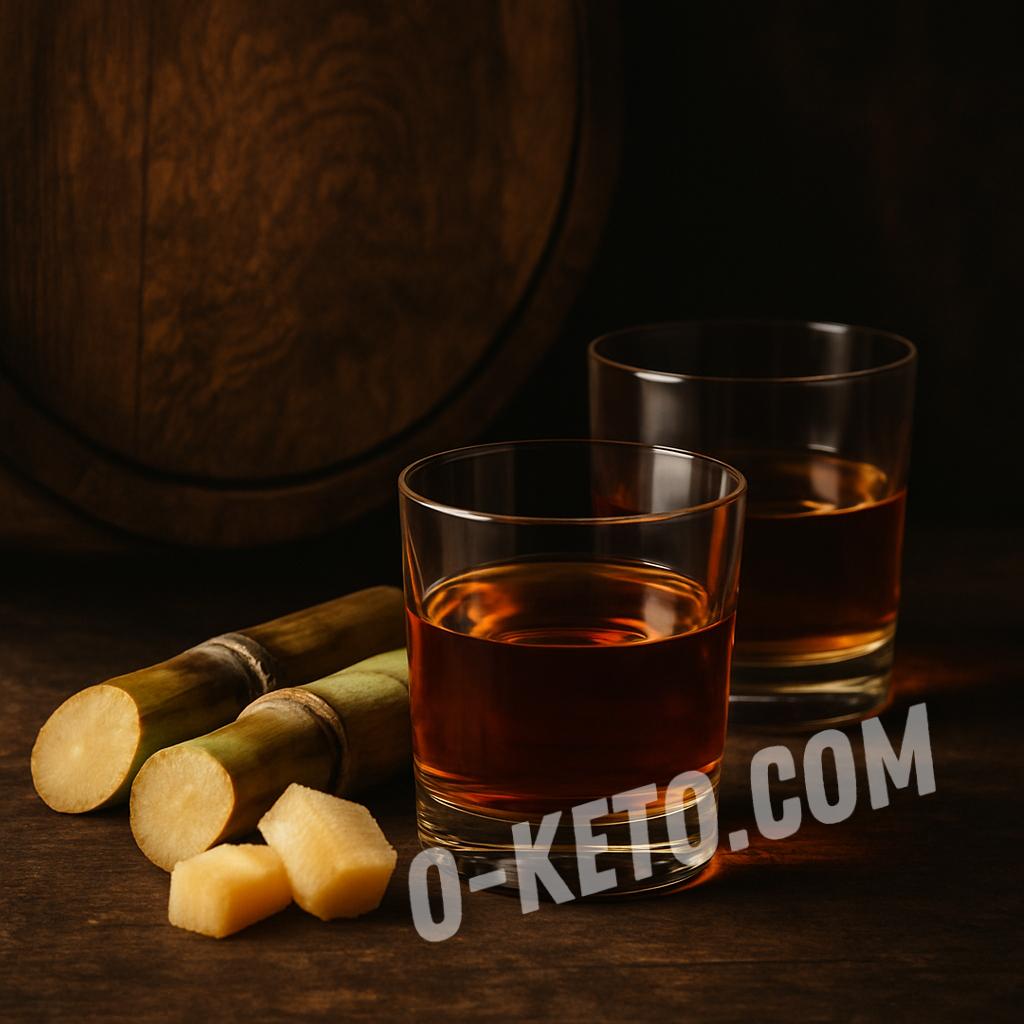

Rum is a strong distilled alcoholic beverage made from sugarcane products: most often from molasses, less frequently from fresh juice or syrup. Although it is primarily associated with the Caribbean in popular perception, rum is also produced in Latin America, Central America, the islands of the Indian Ocean, and several Asian countries. Therefore, under one name, there can be very different styles of drinks: from relatively neutral white rum to rich aged rum with woody, caramel, and spicy notes.
For consumers, not only the country and brand matter, but also the type of rum, aging period, presence of flavorings, sugar, caramel coloring, and other additives. From a nutritional and keto perspective, this is especially important: pure distillate and sweet rum drink are not the same, even if they sit side by side on the shelf and are both called rum.
How Rum is Made
The majority of commercial rum starts with the fermentation of molasses—a thick byproduct of sugar production. After fermentation, the raw material is distilled, and then the future drink may be aged in oak barrels, filtered, blended, diluted to the desired strength, or further flavored. White rum is usually lighter and drier in taste, while golden and dark rums often provide more woody, caramel, and spicy nuances, and aged versions become deeper and smoother.
The taste is influenced not only by the raw material and barrel but also by the distillation style. Light column rums are often cleaner and more neutral, while heavier ones, especially from traditional distillers, may have pronounced notes of cane syrup, dried fruits, spices, smoke, and oak. Therefore, one rum may be suitable for a cocktail with lime and soda, while another is better enjoyed in small sips or used in rich sauces and desserts.
Taste and Culinary Uses
Rum can exhibit notes of caramel, vanilla, cane syrup, toasted sugar, oak, spices, dried fruits, banana, coconut, and citrus zest. In cooking, it is added to marinades, glazes, sauces, infusions, creams, chocolate and coffee desserts, as well as dishes with richer meats and seafood, where a warm sweet-spicy accent is needed.
Rum is most often used in combinations with the following flavors and products:
- lime, lemon, orange zest, pineapple, coconut;
- vanilla, cinnamon, clove, nutmeg, ginger;
- coffee, cocoa, dark chocolate, caramel desserts;
- pork, duck, shrimp, creamy and buttery sauces;
- ice, soda water, and unsweetened mixers in drier cocktail variations.
When cooking, it is important to remember that rum is not just a flavoring. If added to a dessert, sauce, or glaze, the final dish may not only gain aroma but also extra sweetness, especially if a sweetened or spiced version of the drink is used.
Rum on Keto: Is it Allowed and Does it Kick You Out of Ketosis?
Pure rum without sugar and sweet additives usually contains almost no proteins, fats, or carbohydrates, but this does not make it a neutral product for keto. Alcohol provides a noticeable amount of calories on its own, and the body primarily switches to processing it. While the liver is busy with alcohol, the oxidation of fats and the normal rhythm of ketogenesis may temporarily slow down.
In practice, this means the following: a small portion of pure rum does not necessarily “kick you out of ketosis” instantly like a sweet dessert would, but alcohol can worsen appetite control, increase food cravings, provoke overeating, and make a person less sensitive to their own limitations. If rum is consumed in a cocktail with juice, syrup, cola, tonic with sugar, or sweet liqueur, the risk of exiting ketosis and glucose spikes is much higher and is specifically related to the carbohydrate load of the drink.
From a practical keto perspective, the safest scenario is a rare moderate portion of pure rum or a simple dry cocktail without sugar. However, even in this format, it does not enhance ketosis or metabolic health, but may simply be a less problematic option compared to sweet alcohol.
Health and Limitations
Rum is an alcoholic beverage, so evaluating it solely based on carbohydrates is incorrect. Even if it contains almost no sugar, alcohol can increase the risk of overeating, worsen sleep, enhance dehydration, irritate the gastrointestinal tract, overload the liver, and hinder recovery after workouts. For sensitive individuals, it can also provoke increased anxiety, mood swings, and a more pronounced appetite the next day.
Particularly cautious consideration should be given to rum in cases of fatty liver disease, pancreatitis, gastritis, GERD, migraines, sleep disorders, eating disorders, taking certain medications, and any situation where stable control of glucose, appetite, and behavior is important. Rum is not suitable for intermittent fasting: it is not a drink that can be considered compatible with fasting.
How to Choose and Store
When purchasing, it is useful to immediately understand the purpose of the rum: for cocktails, for cooking, or for rare consumption neat. For drier low-carb scenarios, simple options without syrups and dessert additives are usually better. For flavored, spiced, and liqueur versions, it is always necessary to check the composition and look for mentions of sugar, caramel, honey, syrups, and other sweeteners.
Rum should be stored tightly closed, away from direct sunlight and strong heat. After opening, the bottle usually does not require refrigeration, but prolonged contact with air gradually flattens the aroma. If the drink is needed for cooking, it is wise to consider not only its flavor but also how it will fit into the overall composition of the dish and whether it will add unnecessary sweetness.


