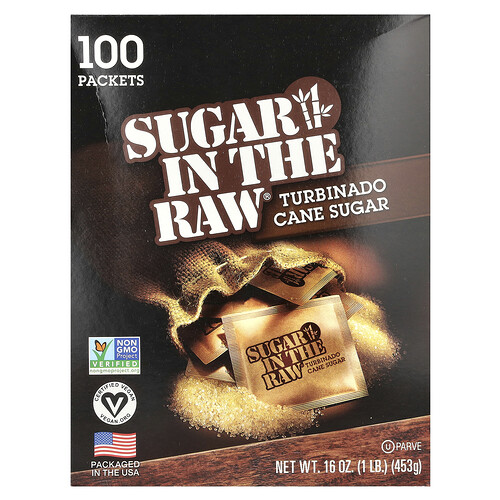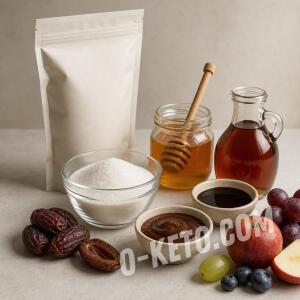

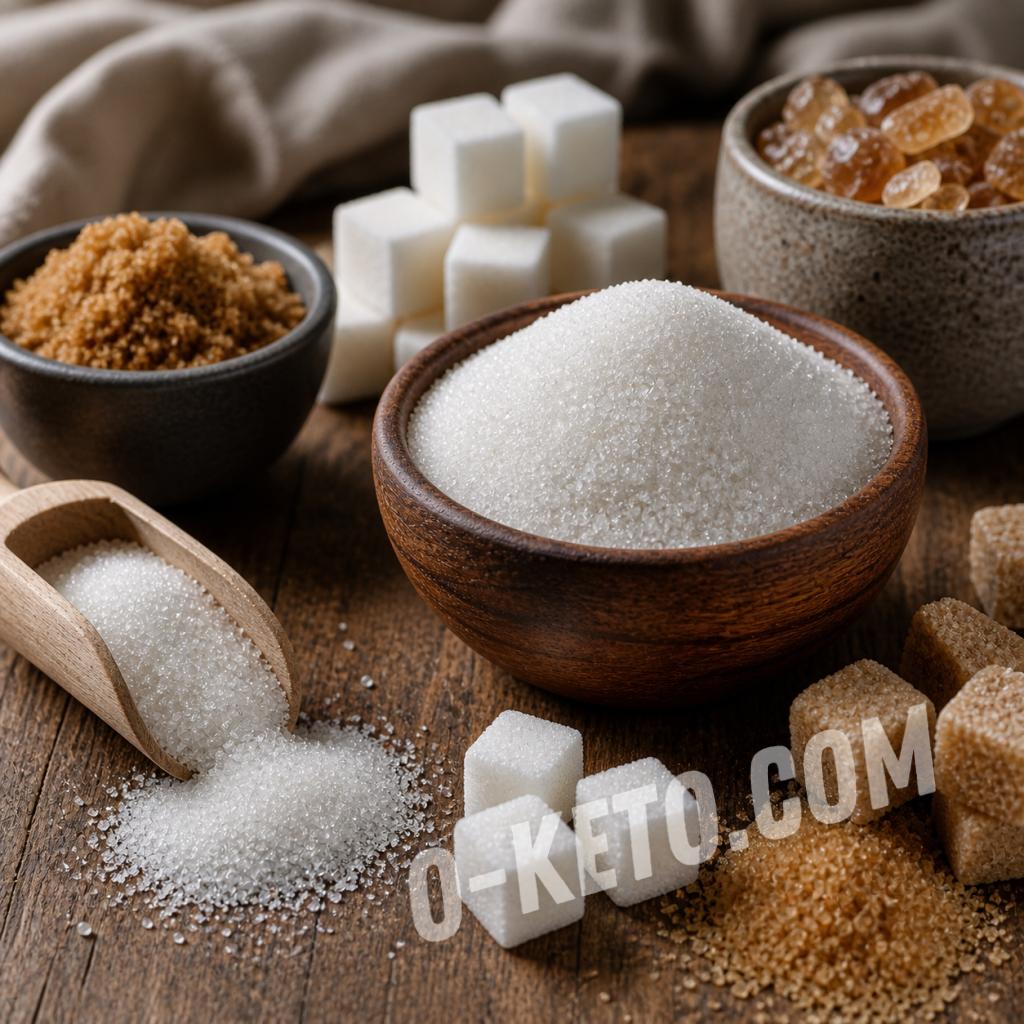

Sugar is the common kitchen name for sucrose, a sweet crystalline carbohydrate made from beet or cane. In everyday language, sugar usually means white granulated sugar, but the same topic includes brown sugar, powdered sugar, cubes, syrups, caramel, and many sweet additives in prepared foods.
The main feature of sugar is that it consists almost entirely of quickly available carbohydrates and provides no protein, fat, or fiber. It makes food sweet, helps caramelization, holds moisture in baked goods, and affects the texture of ice cream and jam. But for keto and LCHF, it is one of the most problematic ingredients.
Nutrition
In 100 g of white sugar there are about 400 kcal and almost 100 g of carbohydrates. A level teaspoon usually contains about 4 g of sugar, and a tablespoon about 12-15 g. Even a small addition can quickly take a large part of the daily carbohydrate limit on strict keto.
Sucrose consists of glucose and fructose parts. The glycemic index of sugar is high or moderately high depending on the method, and the glycemic load easily becomes large because the product is dense. Unlike berries or vegetables, sugar contains no water or fiber to increase portion volume.
Fit for keto and LCHF
Ordinary sugar does not fit keto as a regular ingredient. It quickly adds carbohydrates to drinks, desserts, sauces, and marinades. Even when the portion looks small, several spoonfuls through the day can quietly push the diet beyond the chosen limit.
In more flexible LCHF, rare small amounts of sugar inside a complex dish may sometimes be accepted, but this is a compromise, not a staple. For someone keeping strict ketosis, sugar is usually replaced with sweeteners that add no meaningful carbohydrate load, or the sweet taste is reduced altogether.
Where sugar hides
Sugar is easy to notice in candy, cakes, cookies, sweet soda, and juices. It is harder to see in ketchup, mustard sauces, marinades, sausages, yogurts, sweet curd snacks, breakfast cereals, bars, muesli, canned vegetables, and fitness products. The important thing is not the front label but the nutrition table and ingredient list.
On labels, sugar can appear under many names: sucrose, dextrose, glucose, fructose, syrup, molasses, maltose, caramel, juice concentrate, invert syrup, cane sugar, coconut sugar, and honey. A natural-sounding name does not make a product low in carbohydrates.
Brown, coconut, cane, and raw sugar differ in taste, moisture, and trace residues, but for carbohydrate counting they remain sugar. Syrups are similar: maple syrup, date syrup, agave, and honey sound different, but in a low-carb menu they use the same carbohydrate budget.
How to handle it in recipes
In some recipes, sugar is needed not only for sweetness but also for structure: it holds moisture, helps yeast, gives a crust, and reduces hardness in frozen desserts. That is why a simple one-to-one replacement does not always work. Erythritol, allulose, stevia, and monk fruit behave differently.
If the goal is a low-carb version, first identify sugar’s role. For a drink, a sweetener may be enough. For caramel, ordinary sugar substitutes may not give the same result. For yeast dough, it is often easier to choose another recipe than to preserve the classic technique.
If sugar is needed only to balance acidity, sweetness is not always the only solution. Fat, salt, or spices can soften a sharp taste: a sour berry sauce may become rounder with butter, cream, cinnamon, or zest instead of a spoonful of sugar. This is especially useful in meat sauces and cottage cheese desserts.
How to choose an alternative
Stevia is very sweet and needs precise dosing, but it may leave an herbal aftertaste. Erythritol is convenient in baking, but it can crystallize and give a cooling effect. Allulose is closer to sugar in sauces and soft desserts, but it is not available everywhere. Sweetener blends are often easier than single sweeteners when the ingredients are clear.
It is important to check not only the name but also the filler. Powdered sweeteners may contain maltodextrin, dextrose, or sugar alcohols that do not suit everyone. For strict control, choose a product with clear carbohydrates per serving and test tolerance with a small amount.
Limits and storage
Sugar is easy to overeat because it quickly increases sweetness and gives almost no satiety by itself. In a low-carb diet, it is more practical not to keep it as an everyday ingredient and to decide in advance which dishes remain exceptions and how often they can appear.
Sugar should be stored dry, in a closed container, away from moisture and strong odors. It absorbs water and clumps. If sugar is needed only for guests or rare recipes, a small package is better than a large bag that is always within reach.