


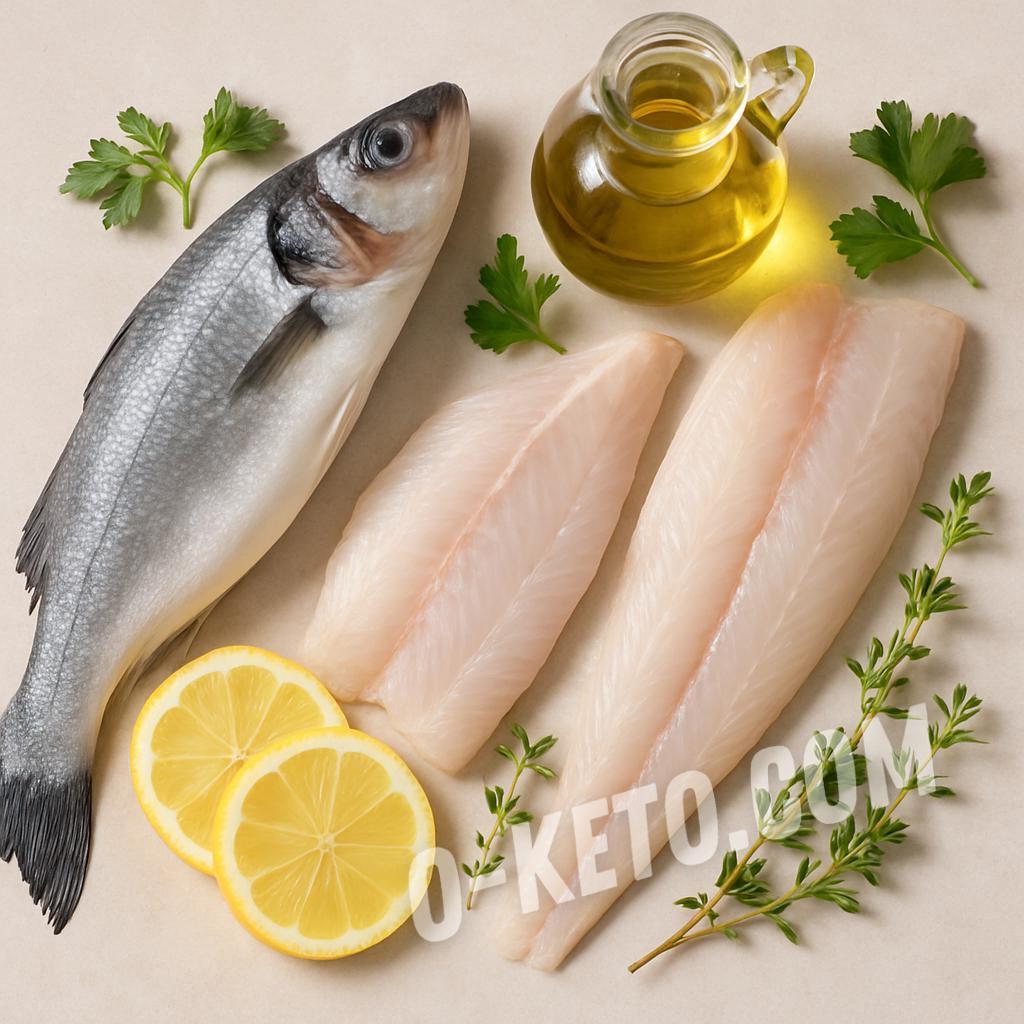

Sea bass is a convenient white marine fish for keto meals: it provides complete protein, has no carbohydrates, and has a mild enough flavor to work in simple home cooking as well as richer sauces.
What it is
Sea bass is a culinary name used for several marine fish with firm, white, mildly flavored flesh. Depending on the market, it may mean European seabass, black sea bass, another bass-like fish, a whole fish for roasting, or frozen fillets. That is why the exact species, origin, cut, skin, and amount of ice glaze matter when you compare labels.
In the kitchen, sea bass is valued for a clean taste without an aggressive fishy note. It works well with lemon, herbs, butter, olive oil, garlic, thyme, rosemary, and gentle spices. The flesh cooks quickly and can dry out, so keto cooking often pairs it with butter sauce, olive oil, egg-yolk sauces, avocado, olives, or another fatty side.
Nutrition and keto context
Sea bass contains virtually no carbohydrates, so its glycemic load is zero in a plain portion. Its main nutritional value is complete animal protein, phosphorus, selenium, vitamin B12, and a modest amount of omega-3 fatty acids. It is leaner than mackerel, sardines, or salmon, so on a ketogenic diet it is usually better as the protein part of the plate, not as the main fat source.
The values used here are based on an average raw “sea bass, mixed species” profile. Real fish can vary: wild and farmed fish, skin-on fillets, whole fish, frozen products, and specific species will not be identical. If a package gives a reliable nutrition label, use that label for that exact product.
How to choose
Fresh fish should smell clean and marine, not sour or ammonia-like. Whole fish should have clear eyes, bright gills, and firm flesh. Fillets should look moist but not slimy, without yellow dried edges or heavy ice. With frozen fish, check the glaze: a lot of ice means less actual fish by purchased weight.
A 300-600 g whole fish is convenient for roasting because it is harder to overcook than a thin fillet. For quick pan cooking, choose fillets of similar thickness. If the label names a specific premium species, such as Chilean sea bass or black sea bass, treat it as a separate product in terms of price, taste, sustainability, and sometimes mercury guidance.
How to cook
Sea bass is best with short cooking methods that preserve moisture:
- roasting with lemon, herbs, and butter;
- pan-searing skin-on fillets until the skin is crisp;
- poaching in cream, coconut milk, or unsweetened tomato sauce;
- steaming and finishing with olive oil and spices;
- making fish stock or soup from the bones and head when using a whole fish.
A common safe target for cooked fish is about 63 °C internally, but the practical sign is texture: the flesh should flake easily while staying juicy.
Limits and safety
Sea bass, like other fish, can trigger allergy. People who eat fish often, children, and pregnant people should rotate species and follow local mercury guidance for the exact fish being used. For raw preparations, use only fish sold for that purpose; ordinary retail fillets should be cooked.
Keep chilled fish in the coldest part of the refrigerator and cook it quickly. Thaw frozen fillets slowly in the refrigerator, then pat them dry before cooking so they sear better and do not water down the sauce.


