


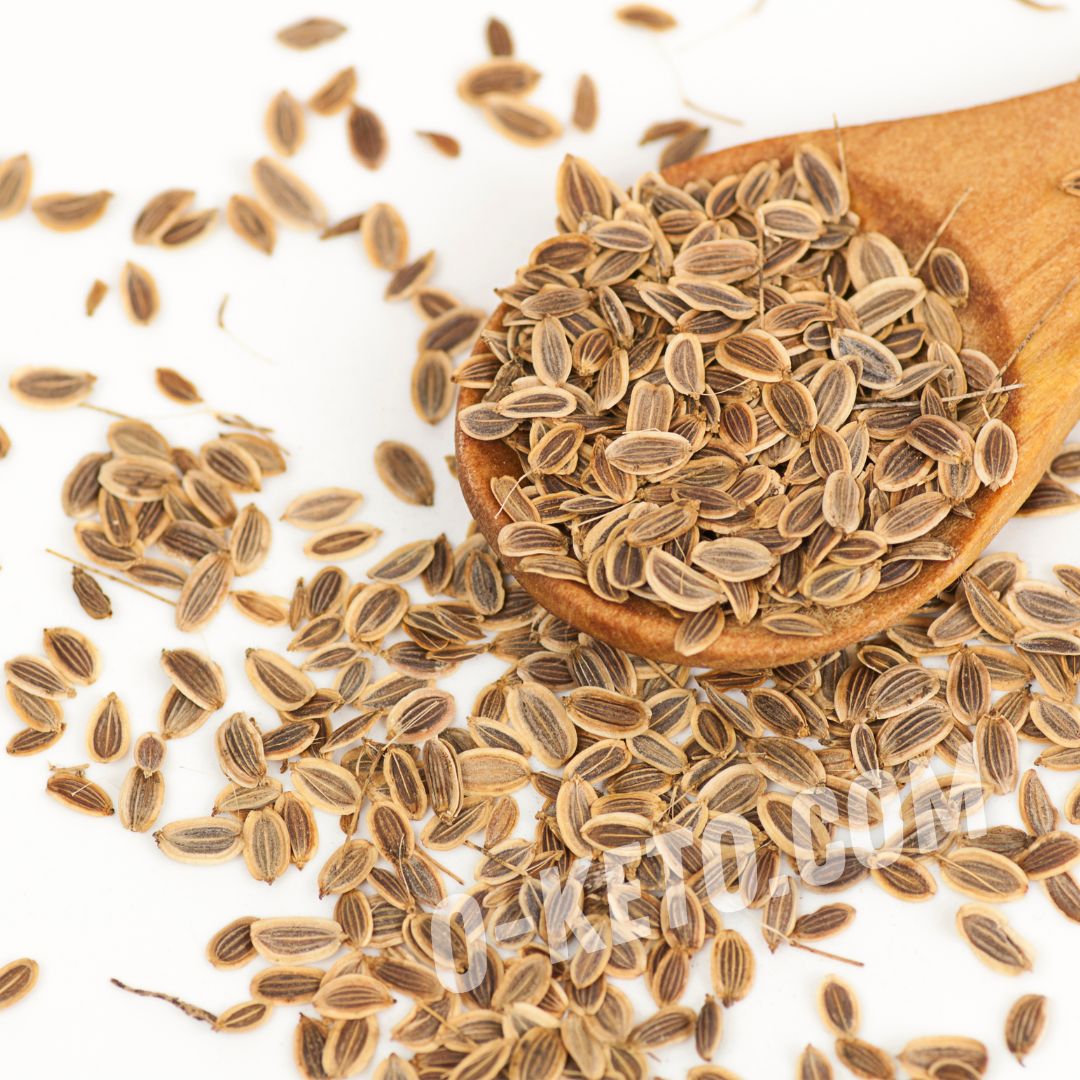

Dill seeds are the dried fruits of Anethum graveolens, denser and spicier in taste than fresh dill leaves. They have a warm herbal note, light sweetness, a hint of anise, and a clear essential-oil aroma. The seeds are used in marinades, brines, fish, meat dishes, cabbage, cucumbers, sauces, grain-free crackers, and hot drinks.
Dill has been used in cooking for a very long time; its seeds have been found in ancient regions of Egypt and the Middle East. In modern cooking, however, they are first of all a spice. They do not replace fresh dill one-to-one: fresh leaves give brightness, while seeds give a deeper, drier, spicier aroma.
Nutritional value
Per 100 g, dill seeds contain about 375 kcal, around 18 g of protein, 15 g of fat, and 34 g of carbohydrates, including about 21 g of fiber. These numbers look large, but the real culinary portion is usually a pinch to a teaspoon. Therefore the contribution to calories and carbohydrates in a dish is small.
The seeds contain vitamin A, vitamin C, calcium, magnesium, and iron, plus essential oils including linalool and carvone. The oils create the characteristic smell and explain why the seeds lose aroma quickly when stored poorly. They should not be treated as a major vitamin source because the portion is too small, but their aromatic role is clear.
Are they suitable for keto?
For keto and LCHF, dill seeds work as a spice. In an ordinary culinary portion, they barely change the carbohydrate count of a dish while making food more expressive without sugar or ready-made sauces. They fit especially well with fish, eggs, cabbage, cucumbers, sour cream, cream cheese, meat, and sugar-free marinades.
The seeds themselves are rarely the issue; ready-made blends are. Pickling seasonings, marinades, and store-bought brines sometimes contain sugar, dextrose, starch, or sweet flavor additions. For strict carbohydrate control, it is easier to mix dill seeds yourself with salt, pepper, bay leaf, garlic, and mustard seeds.
How to use them
For marinades, add the seeds whole: they slowly release aroma into cucumbers, cabbage, mushrooms, fish, and brine. In hot dishes, crush them lightly in a mortar so the smell opens faster. If the seeds are heated in a dry pan for 20–30 seconds, the aroma becomes stronger, but do not overdo it: small seeds turn bitter quickly.
In sauces, dill seeds work well with sour cream, thick unsweetened yogurt, cream cheese, lemon, garlic, and black pepper. For fish, mix them with salt, lemon zest, and oil. In meat dishes, they suit pork, lamb, and minced meat, especially when cabbage or cucumber salad is served alongside.
Tea and infusions
Dill seeds can be used for a mild herbal infusion. Usually a small portion of seeds is lightly crushed, covered with hot water, and steeped for several minutes. The taste is warm, spicy, and slightly sweet without sugar. The drink can be taken on its own or mixed with mint, fennel, chamomile, or lemon.
It is important not to turn an infusion into a promise. It is simply an aromatic drink based on a spice. During pregnancy, breastfeeding, medicine use, or pronounced digestive complaints, regular use of concentrated infusions should be discussed with a professional.
How to choose
Good seeds are dry and aromatic, with no dust, mold, mustiness, or large amount of debris. The color can range from light brown to gray-green. If the seeds barely smell, they are old or were stored open. Ground seeds are convenient but lose aroma faster, so whole seeds are more practical.
When buying a pickling mix, read the full ingredient list. Sometimes sugar, flavor enhancers, and a lot of salt are already included with dill seeds. For flexibility, it is better to keep a separate jar of plain seeds.
Limitations
In culinary amounts, dill seeds are usually used without problems, but individual reactions are possible. Caution is needed with allergy to plants from the carrot family: dill, fennel, celery, carrot, parsley, or anise. Too much of the spice can irritate a sensitive stomach.
Concentrated infusions and extracts are not the same as a pinch in a marinade. They should not be used carelessly during pregnancy, breastfeeding, chronic conditions, or medicine use. If itching, swelling, rash, or strong discomfort appears after the product, remove it from the diet.
How to store them
Keep dill seeds in a tightly closed jar, away from light, moisture, steam, and the stove. Whole seeds keep aroma longer than ground seeds. Do not scoop them with a wet spoon or hold an open jar over a hot pot.
If the seeds have absorbed moisture, smell musty, or have become tasteless, replace them with fresh ones. For longer storage, keep a small spare package sealed and use the working jar more often.
What can replace them?
The closest replacements are fennel, caraway, anise, or coriander seeds, but each spice gives a different note. In marinades, dill seeds can be combined with or partly replaced by mustard seeds, bay leaf, garlic, and pepper. Fresh dill replaces only the green note and does not give the same dry spiciness.
Substitution options in recipes
Fennel seeds. 20% less in weight. Fennel is sweeter and provides a light anise background, so the dosage is reduced. It works great in marinades and baking.


