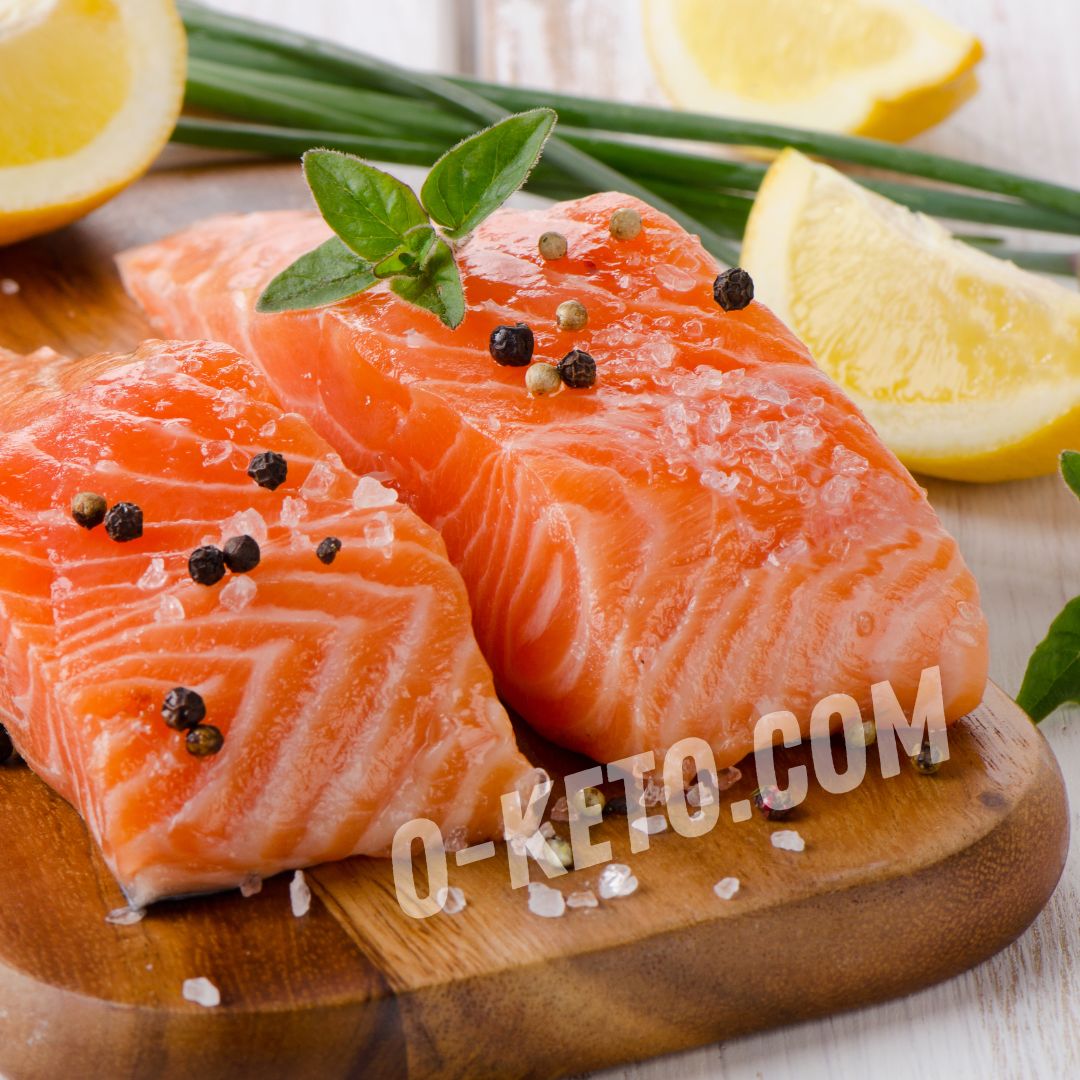

Atlantic salmon is a fatty fish from the salmon family. It is sold wild or farmed, chilled, frozen, lightly salted, smoked, as fillets, steaks, and trimmings. The flesh is usually pink-orange, tender, and fairly rich in fat.
For keto and LCHF, salmon is convenient: it has no carbohydrates, plenty of complete protein, and enough fat to keep the dish from being dry. At the same time, fish quality, curing method, sauce, and side dish strongly affect the final plate. Salmon with bread, sugar marinade, or sweet sauce is a different option.
Nutritional value
In 100 g of fresh salmon there are usually about 190–220 kcal, 20–25 g protein, and 7–15 g fat. Fattier belly pieces are higher, while tail pieces are lower. The glycemic index is zero because the fish contains no carbohydrates.
Salmon contains EPA and DHA omega-3, B vitamins, vitamin D, selenium, phosphorus, potassium, and astaxanthin, which is linked to flesh color. Wild and farmed fish can differ in fat content, shade, taste, and price. That does not automatically make one option better for every recipe.
Is it suitable for keto?
Salmon fits keto well if cooked without flour, sugar, and sweet sauces. It can be baked, pan-seared over moderate heat, steamed, cured, added to salads, omelets, pâtés, and potato-free soups. The fish’s fat helps build a filling dish without grains or bread.
Lightly salted and smoked salmon can also fit keto, but the ingredient list should be read carefully. Marinades sometimes contain sugar, syrup, dextrose, or sweet glaze. Ready fish is often salty too, so the portion and pairing with other salty foods matter.
How to cook it
Salmon is easy to overcook. For fillets, moderate temperature and short time work best: the fish should flake but remain juicy. Skin can be left on for frying: it protects the lower side and gives crispness. Salting shortly before cooking is more convenient so too much moisture is not pulled out.
Baking works well with lemon, dill, butter, garlic, sugar-free mustard, and herbs. For a pan, oil, salt, and pepper are enough. In soups, salmon is added closer to the end so the pieces do not fall apart and become dry.
How to choose
Fresh salmon smells of sea and fish, but not ammonia or sour brine. The flesh should be springy, moist, not sticky, and without gray coating. Fillets should not have dried edges or pools of liquid in the package. Frozen fish is better when the ice glaze is thin, without a snowy layer or signs of refreezing.
For lightly salted salmon, check the ingredient list: fish, salt, sometimes spices. The longer the additive list, the more carefully sugar, preservatives, and colorings should be checked. Sliced fish dries at the edges faster, so a whole piece often stores better.
What to pair it with
For keto, cucumber, avocado, leafy salads, eggs, cream cheese, sour cream, capers, dill, lemon, cauliflower, broccoli, spinach, and zucchini work well. Instead of potatoes or rice, serve green salad, cauliflower puree, or stewed vegetables.
Limitations
Salmon is unsuitable for people with fish allergy. Raw and lightly salted fish require reliable origin and correct storage. Pregnant people, children, older adults, and people with weakened body defenses are safer choosing well-cooked fish. Smoked versions are better eaten moderately because of salt.
How to store it
Chilled salmon is best cooked on the day of purchase or the next day if the package is fresh and the refrigerator is cold enough. Opened lightly salted fish is kept covered and eaten quickly. Fillets are better thawed in the refrigerator rather than on the counter; refreezing is undesirable.
What can replace it?
The closest replacements are trout, chum salmon, sockeye, coho, pink salmon, Arctic char, or mackerel. If a softer and fattier texture is needed, trout or char are better. If a budget option is needed, pink salmon works, but it dries out more easily, so sauce or oil matters more.