


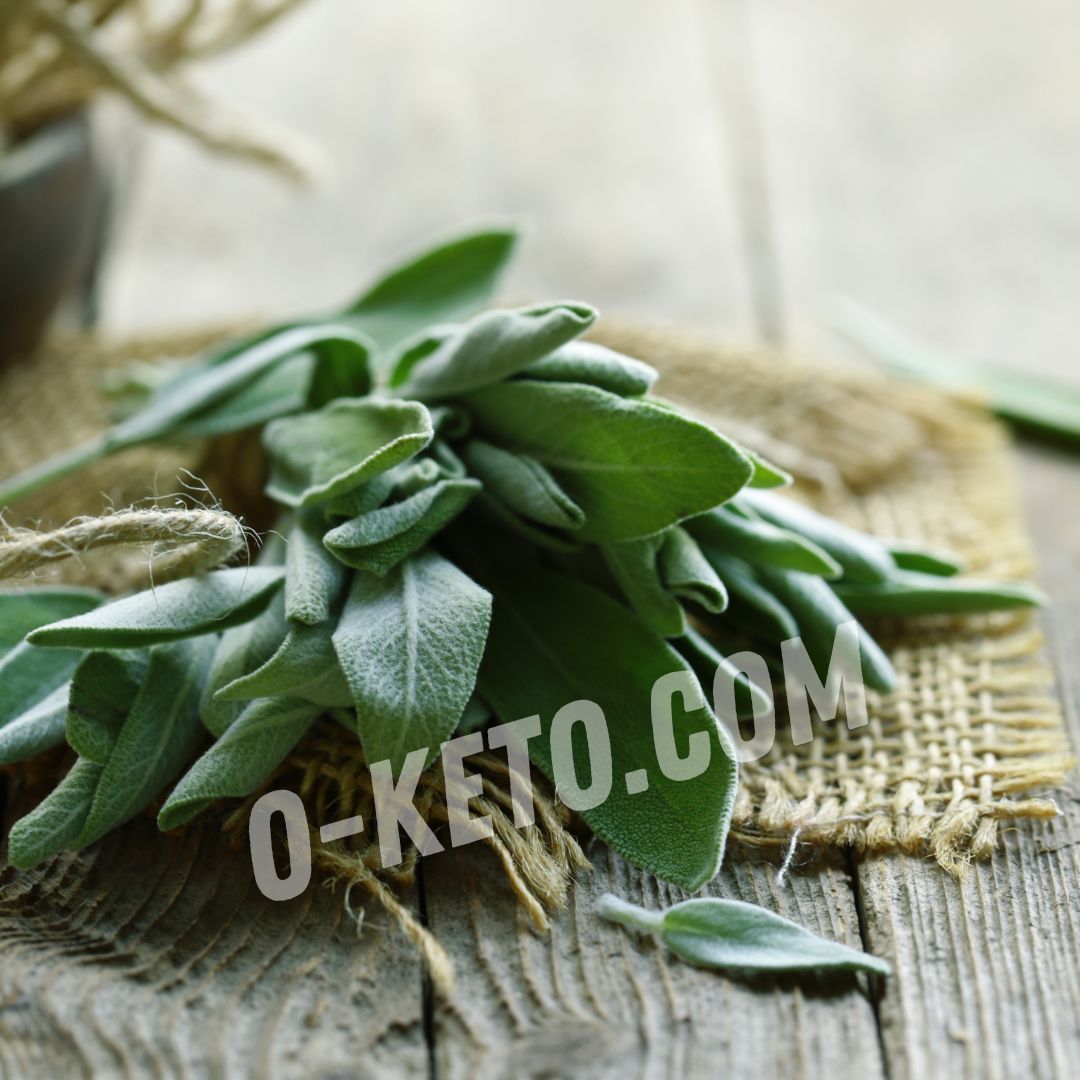

Fresh sage is a strong herb with a warm, slightly resinous aroma. Unlike parsley or dill, it is not usually added by the handful. A few leaves can already change a dish, bringing bitterness, camphor-like freshness, peppery depth, and a clear Mediterranean character. That is why sage works especially well where there is fat, butter, cheese, meat, eggs, or dense low-carb vegetables.
In a low-carb diet, fresh sage is useful as an aromatic ingredient. It is used in small amounts, so it barely changes the carbohydrate or calorie count of a dish. Its job is not to add bulk, but to make simple food more expressive: an omelet, chicken, pork, cauliflower, zucchini, mushrooms, a cream sauce, or a soft cheese spread.
Flavor and aroma
Fresh sage leaves are dense, velvety, and gray-green. Their aroma is often described as a mix of pine, pepper, mint, bay leaf, and mild bitterness. Heat softens the smell and makes it deeper, especially when the leaves are briefly warmed in butter. Raw sage is sharper, so it is usually sliced thinly and used with restraint.
Dried sage is not a one-to-one substitute for fresh leaves. It is more concentrated, rougher, and quicker to dominate a dish. If a recipe is written for fresh leaves, use much less dried rubbed sage or powder. The reverse substitution is also approximate: fresh sage gives more herbal volume and remains visible on the plate.
Keto and LCHF
Fresh sage fits keto and LCHF because of how it is used: the portions are small, it brings no sugar, and the glycemic load is practically irrelevant. It helps vary meals without sweet sauces, flour, starch, or breading. This is valuable when the menu is built from repeating staples and you want a different taste without changing the macro structure.
Sage opens up best in a fatty medium. A classic method is to warm whole leaves in butter until they become lightly crisp. That butter can be spooned over an omelet, mushrooms, chicken, pork, zucchini, cauliflower, or firm-textured fish. In cream, sour cream, or cheese sauces, add sage closer to the end so the aroma does not become heavy.
How to choose it
Choose firm leaves without dark slime, yellow spots, or dry brittle edges. Fresh sage should smell clearly even after a light rub. If the aroma is weak and the leaves are wet and limp, the bunch has been stored too long. Large old leaves can be tougher and more bitter; young leaves are usually softer but less intense.
The bunch should not be wet inside the package. Condensation speeds spoilage, especially on leaves with a velvety surface. If you buy sage in a pot, cut individual leaves as needed and avoid overwatering the plant. Too much moisture weakens the flavor and can damage the roots quickly.
How to use it
Fresh sage pairs with pork, poultry, rabbit, veal, eggs, cream sauces, hard cheeses, and soft cheeses. Among vegetables, it works best with cauliflower, zucchini, eggplant, mushrooms, leek, and a small amount of garlic. It is rarely used generously in salads because the raw leaf can taste too sharp.
For butter frying, the leaves can stay whole, which makes them easy to remove if the aroma becomes strong enough. For minced meat, rolls, and sauces, chop sage finely. Lemon makes it brighter, garlic makes it sharper, black pepper makes it warmer, and nutmeg makes it feel creamier. Sage combines well with rosemary and thyme, but the proportions should be calm because all three herbs are strong.
Storage
Keep fresh sage in the refrigerator, wrapped in a slightly damp paper towel and placed in a container or a bag with a little air exchange. Do not wash the leaves in advance: extra water makes them darken faster. Rinse them just before use and dry them well.
If the bunch is large, part of it can be dried or frozen. To freeze sage, spread the leaves in a thin layer first, then move them to a bag. After thawing, they will not look pretty enough for garnish, but they will work in butter, sauces, and stewed dishes. Store dried sage in a closed jar in a dark place and replace it once the aroma becomes flat.
Substitutes
There is no exact substitute for sage, but you can choose by role. For meat and poultry, thyme, rosemary, or marjoram can work. For cream sauces, try thyme with a small amount of nutmeg. For a fresher herbal accent, parsley with a little mint is possible, but the result will be a different flavor without sage’s characteristic bitterness.


