


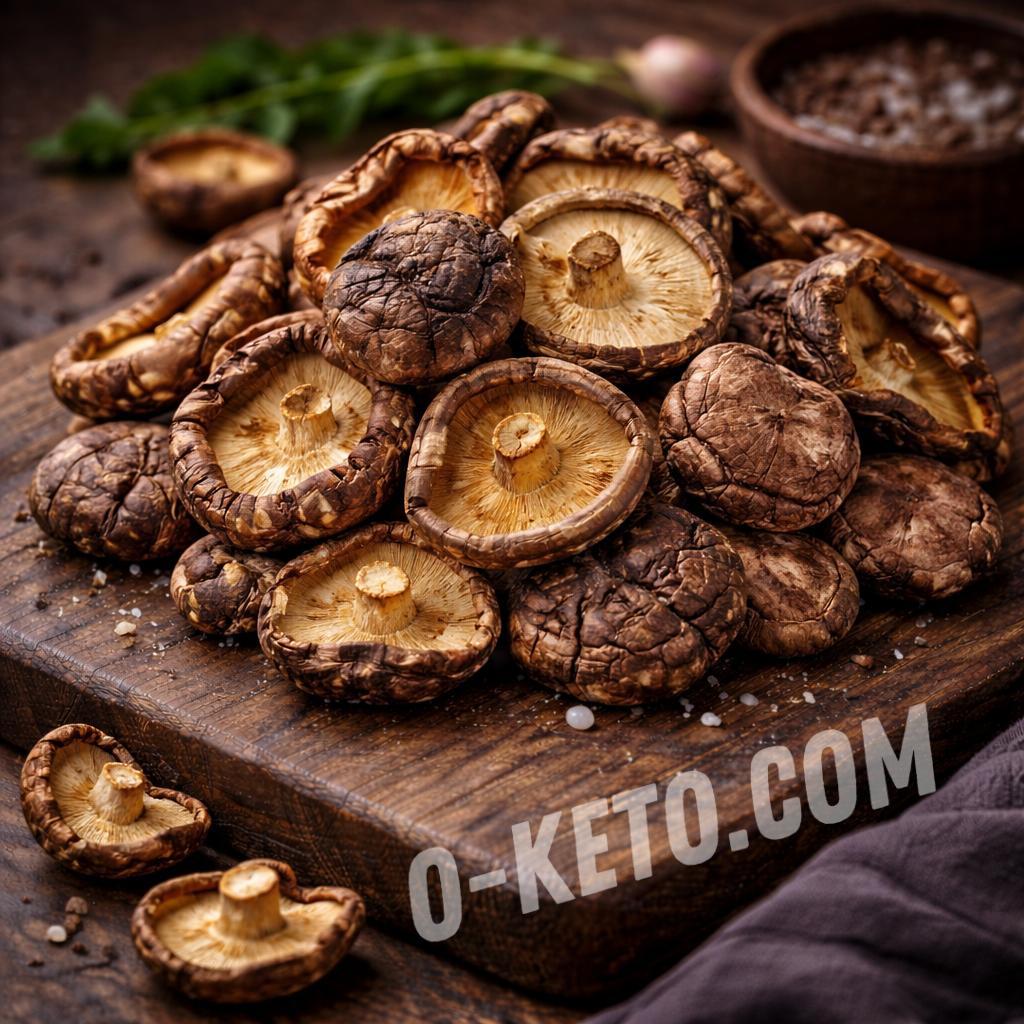

Dried shiitake are dried Lentinula edodes mushrooms, one of the most recognizable ingredients in East Asian cooking. After drying, the taste becomes deeper, the aroma darker and richer, and the texture after soaking remains firm. These mushrooms are used for soups, broths, sauces, stir-fries, stews, and fillings.
Shiitake have been cultivated in East Asia for more than a thousand years. Fresh ones are softer and lighter in flavor, while dried shiitake give a strong umami note and can replace part of meat or mushroom broth. It is important to remember that the dry product is much more concentrated than fresh: a small handful can strongly change a dish.
Nutritional value
In 100 g of dried shiitake there may be about 280–310 kcal, 14–18 g of protein, about 1 g of fat, and 60–65 g of carbohydrates, including a noticeable amount of mushroom fiber. But in a real recipe, usually 5–15 g of dry mushrooms is used per portion or per pot of soup, so the table for 100 g does not reflect an ordinary plate.
They contain B vitamins, copper, selenium, zinc, potassium, phosphorus, and natural mushroom polysaccharides. These compounds are interesting from a food standpoint, but dried shiitake should not be presented as a medicinal product. Their main kitchen role is taste, aroma, texture, and broth depth.
Are they suitable for keto?
Dried shiitake can be used in keto and LCHF as an aromatic addition. A small amount deepens the taste of soup, stewed meat, poultry, eggs, cabbage, cauliflower, mushroom sauce, or ragout. Large portions of the dry product should already be counted for carbohydrates.
The best approach is to use shiitake for umami while building the volume of the dish from protein, fats, and low-carb vegetables. For example, broth can be strengthened with mushroom soaking liquid, a little sliced cap can be added, and noodles or rice can be replaced with cabbage, egg, meat, tofu, or konjac noodles.
How to prepare them
Before cooking, dried shiitake are soaked in warm water for 20–40 minutes. Thick caps may require more time. After soaking, rinse the mushrooms, and the tough stems are often removed or used only for broth because they remain fibrous even after long cooking.
The mushroom liquid can be strained through a fine sieve or cheesecloth and added to soup, sauce, or stew. Sediment from the bottom is better left out. If the mushrooms smell damp, moldy, or like old oil, the liquid should not be used. After rehydration, shiitake should be cooked fully.
How to use them
Dried shiitake work well in sugar-free miso soup, chicken or beef broth, creamy mushroom sauce, fried cabbage, omelets, stewed pork, fish, and vegetable ragouts. Their flavor pairs with ginger, garlic, green onion, sesame oil, sugar-free tamari, chili, coconut milk, and cream.
If a soft background is needed, slice the mushrooms thinly and add them to the dish with the soaking liquid. If a bright accent is needed, fry the rehydrated caps in butter or coconut oil until lightly browned. They should not be overfried: the aroma becomes sharp and the edges tough.
In Asian soups, shiitake often work together with seaweed, ginger, and sugar-free soy sauces. In European-style dishes, they fit well into cream sauce, especially when mixed with button mushrooms or forest mushrooms. A small share of shiitake makes the taste deeper without turning the dish too heavy.
Mushroom powder made from dried shiitake can be used as a seasoning. Dry caps are ground and added by pinches to soup, minced meat, sauce, or an omelet. This method is convenient when depth of flavor is needed without large mushroom pieces.
In minced meat, it is especially good with beef, pork, and dark poultry meat.
How to choose and store them
Good dried shiitake smell cleanly mushroom-like, without mold or mustiness. The caps should be dry but not crumble into dust. Very dark, sticky, damp, or sour-smelling mushrooms are better avoided. Whole caps usually give a clearer texture than fine crumbs.
Dried shiitake are stored in a dry dark place, in a jar or container with a tight lid. They should be protected from moisture, pantry moths, and strong odors. After soaking, mushrooms are used at once or kept briefly in the refrigerator because the rehydrated product spoils faster than the dry one.
What can replace them?
For umami, shiitake can be replaced with dried porcini, birch boletes, bay boletes, button mushrooms with mushroom powder, or a small amount of sugar-free tamari. For texture, fresh shiitake, king oyster mushrooms, or firm button mushrooms are closest. Porcini give a more forest-like aroma, while shiitake give a darker East Asian note.


