


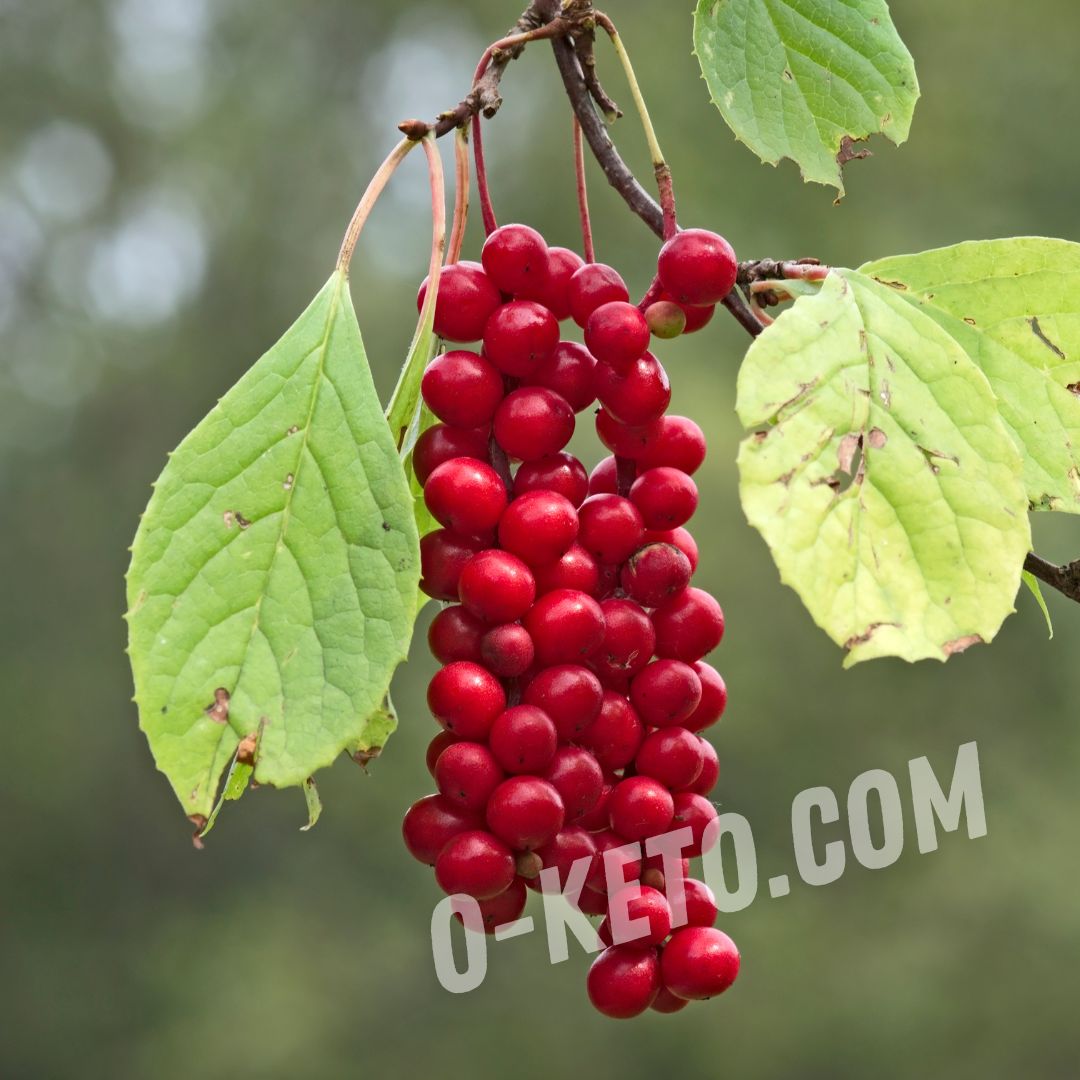

Schisandra, also known as Chinese magnolia vine, is a climbing plant with bright red berries that taste sour, tart, slightly bitter, and faintly sweet. In Asia and the Far East, the berries are used in infusions, syrups, dried blends, sauces, compotes, and extracts. In everyday food use, this is not a sweet berry like raspberry, but an intense sour ingredient added in small amounts.
Schisandra has a noticeable toning image, so it is often grouped with stimulating plant products. For a food description, however, the practical questions matter more: what it tastes like, how much sugar may be present in the ready form, how to use the berries in low-carb cooking, and when caution is reasonable.
Composition and food role
Schisandra berries contain organic acids, polyphenols, lignans including schisandrin compounds, and small amounts of vitamins and minerals. Dried berries taste very concentrated, so they are rarely eaten by the handful. More often, they work as an addition to a drink, infusion, or sauce.
Nutritional values depend on the form. Dried berries contain more carbohydrates per 100 g than an unsweetened infusion, because water is removed and dry matter becomes concentrated. An infusion made from a small amount of berries adds almost no calories if sugar, honey, or syrup is not added.
Fits keto and LCHF
Unsweetened schisandra infusion can fit keto and LCHF because only a small amount of berries is used and the finished drink does not have to contain sugar. Syrups, sweet extracts, compotes, and ready drinks often contain added sugar. The ingredient list of the final product determines whether it fits a low-carb diet.
For keto, dried berries are most convenient as a sour spice for tea, sauce, or marinade. If sweetness is needed, it is better adjusted separately with a small amount of a tolerated sweetener. Whole berries in large quantities are not as simple for carbohydrates, especially when combined with fruit or honey.
How to use
For infusion, use a small portion of dried berries, add hot water, and let them steep. The taste is sour, tart, and deep, with berry skin and a slight bitterness. If the drink feels too sharp, reduce the amount of berries or shorten steeping time instead of hiding the taste with sugar.
In sauces, schisandra pairs with duck, pork, beef, mushrooms, cheese, thick creamy bases, and spiced marinades. A few berries can be added during stewing and then removed or blended into the sauce. In sugar-free desserts, schisandra brings bright acidity, but the dose should be careful: too much quickly makes the flavor medicinal and bitter.
Flavor and pairings
Schisandra pairs with ginger, cinnamon, cardamom, clove, black and green tea, mint, lemon zest, cream, unsweetened coconut milk, cocoa, and small portions of dark berries. In savory dishes, it can be used instead of sour berries or vinegar when a more complex aroma is needed.
A good approach is to combine schisandra with fat and salt. Acidity highlights fatty meat and creamy sauces, while salt makes the berry taste less flat. A poor approach is adding a lot of schisandra to a light herbal tea: the flavor can become too sharp and astringent.
Limitations
Because of its toning profile, schisandra is better not used late in the evening, especially by people sensitive to stimulating products or those with sleep problems. Caution is reasonable during pregnancy, breastfeeding, chronic conditions, regular medication use, strong anxiety, unstable blood pressure, and a sensitive stomach.
Unwanted reactions are more likely with high concentration: irritability, fast heartbeat, insomnia, heartburn, or abdominal discomfort may occur. It is better to start with a small amount and not combine schisandra immediately with caffeine and other toning products.
How to choose and store
Dried berries should be clean, without mold, musty odor, or sticky moisture. The color may be dark red or brownish, but the aroma should remain sour-berry, not rancid. For powders, tinctures, and extracts, the ingredient list matters: sugar, syrups, and flavorings often change the food profile.
Store berries in a tightly closed container, in a dark dry place. Powder loses aroma faster than whole berries, so it is better bought in small packages. Prepared infusion should be kept in the refrigerator only briefly and discarded if it develops a fermented taste or unusual smell.


