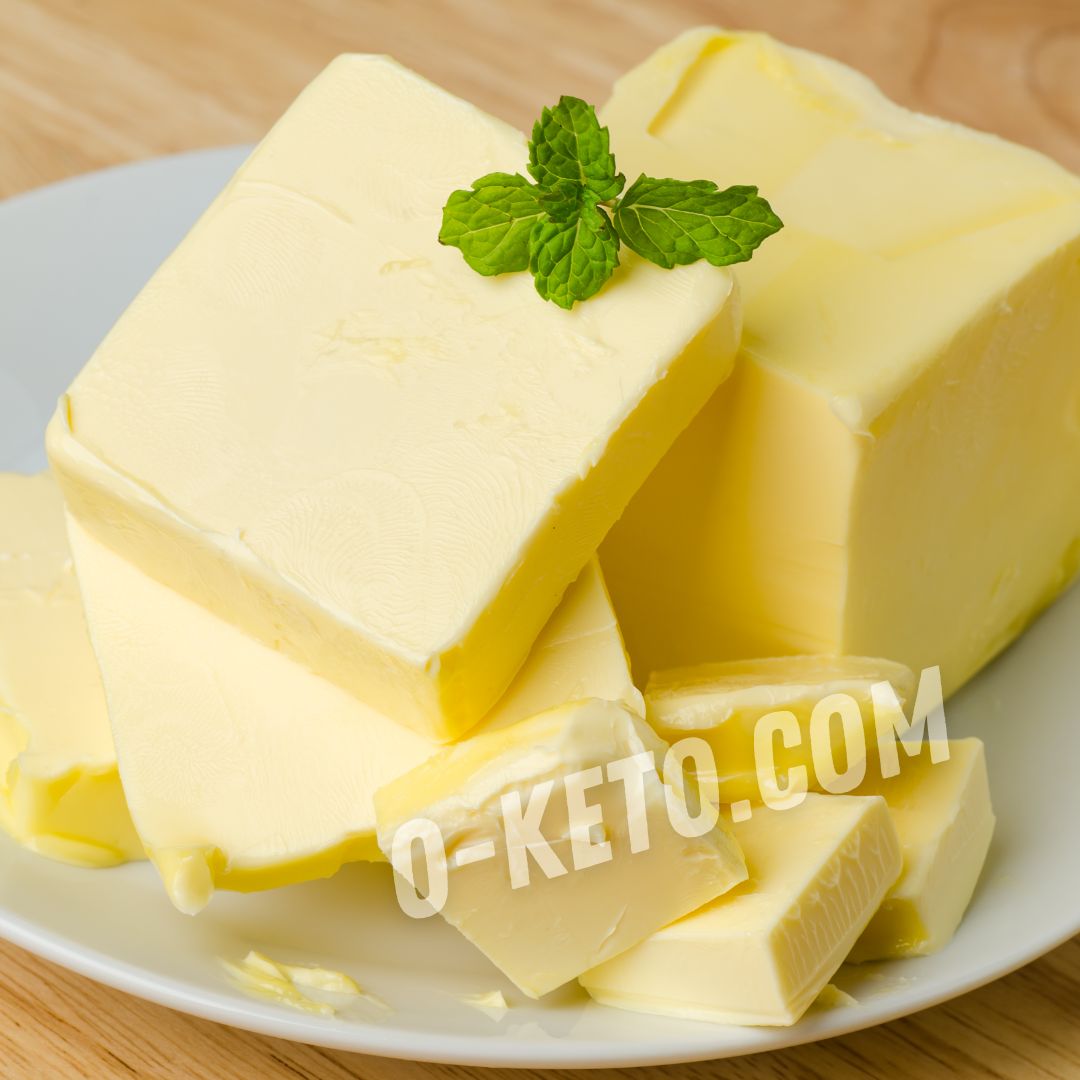

Butter is made from cream: during churning, milk fat separates from buttermilk and gathers into a dense, pliable mass. Good butter has a clean creamy smell, mild dairy flavor, and melts in the mouth without a waxy film. In home cooking, it is used for eggs, vegetables, fish, meat, sauces, baking, and hot drinks.
For keto and LCHF, butter is convenient because it is almost entirely fat and contains only traces of carbohydrates. But it is not a universal “more is better” ingredient. Butter gives flavor, calories, and fat-soluble texture, so it is best used where it truly fits the dish: in sauce, omelet, cauliflower mash, on steak, or in sugar-free baking.
Nutritional value
In 100 g of butter there are usually about 717 kcal, around 81 g of fat, about 0.5–1 g of protein, and trace carbohydrates. Exact numbers depend on fat content: classic butter is often 82–82.5% fat, while lighter versions contain more water and may behave differently in frying and baking.
Butter contains saturated, monounsaturated, and small amounts of polyunsaturated fatty acids. Vitamins A, D, E, and K may also be present, but their amount depends on milk, season, and animal feed. The glycemic load of butter is practically zero because it contains almost no sugar.
Is it suitable for keto?
Butter fits low-carb cooking well: it adds fat without sugar, makes lean foods more filling, and carries the flavor of spices. It pairs well with eggs, fish, meat, chicken, mushrooms, zucchini, cauliflower, broccoli, and herbs.
The main point is portion size. One tablespoon of butter adds roughly 100 kcal. If the dish already contains fatty meat, cheese, cream, or nut flour, extra butter may be unnecessary. Keto is not only about carbohydrates but also about the whole meal balance.
How to use it
For delicate flavor, add butter at the end of cooking: over hot vegetables, fish, steak, omelet, or into sauce. It works for medium-heat frying, but milk proteins and sugar can brown and burn. For higher heat, clarified butter or ghee is better because it has fewer milk solids.
In baking, butter gives crumbliness and aroma. In creams it holds shape, and in sauces it helps create a smooth texture. In hot drinks, use it only when the flavor fits and the fat portion fits the diet.
Cold butter makes dough crumbly, while softened butter whips more easily.
How to choose
Good butter should list cream or pasteurized cream, sometimes salt and culture for cultured butter. If the package lists vegetable fats, emulsifiers, and flavorings, it is no longer ordinary butter. Check fat percentage, date, storage conditions, and package integrity.
Salted butter is convenient for sandwiches and finishing, but in baking and sauces it is harder to control salt. Cultured butter has a more pronounced flavor and works well with fish, vegetables, and sauces.
Color alone does not always prove quality: it depends on animal feed and season. Clean smell, normal firmness, and absence of foreign taste matter more.
Limitations
Butter contains milk traces, so it may not suit people with allergy to milk proteins. With lactose intolerance, small portions of ordinary butter are often tolerated better than milk, but reactions are individual. In such cases, ghee is sometimes chosen because it contains fewer milk residues.
People advised to limit saturated fat or total calories should count portions. It is very easy to add butter by eye in an amount that strongly changes the calorie value of a dish.
How to store it
Butter absorbs odors quickly, so keep it covered. In the refrigerator, use a butter dish or tight wrapping; for long storage, freezing works. A small piece for daily use can be kept separately so the whole pack is not opened many times.
Rancid smell, dark surface, sour bitterness, or sticky texture are signs that butter has lost quality. It is better not to store it near fish, onion, or strongly scented spices.
What can replace it?
For frying, use ghee, clarified butter, cooking olive oil, avocado oil, or coconut oil if its flavor fits. For sauce, cream, cream cheese, or olive oil can work. In baking, replacement depends on the recipe: coconut oil, cocoa butter, or ghee give a different texture and aroma.
Sources
- USDA FoodData Central: composition of edible fats and oils
- Food safety and quality of fats and oils during heating and storage
- Saturated fatty acid intake and cardiovascular disease: systematic review and meta-analysis