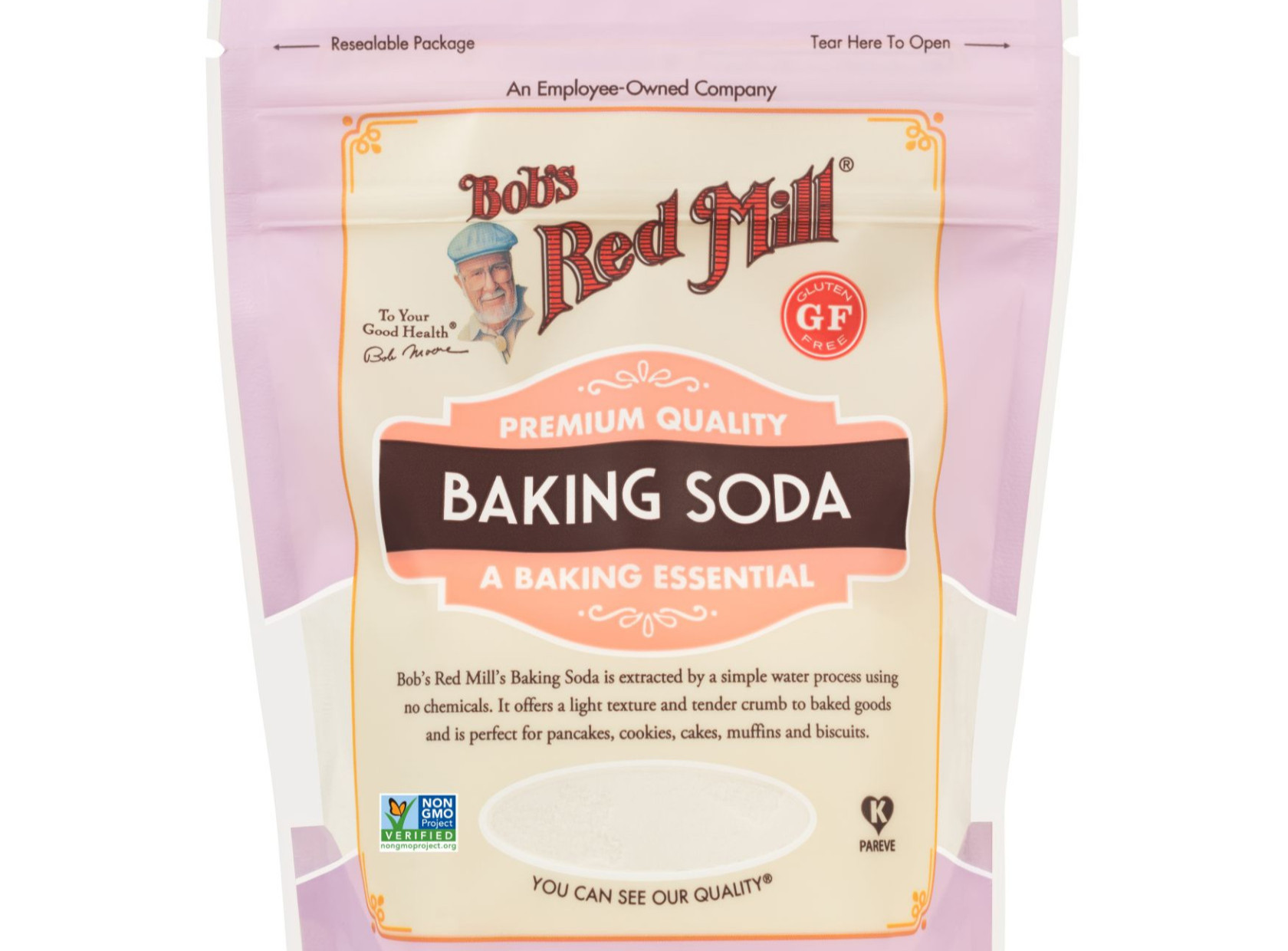

Baking soda, or sodium bicarbonate, is a fine white powder with an alkaline reaction. In cooking it is used mainly as a leavening agent, acidity regulator, and technical helper. Soda does not give baked goods flavor by itself, but it helps dough rise when acid and enough moisture are present.
It is not an ordinary spice or sweetener. Soda works chemically: it reacts with kefir, sour cream, lemon juice, vinegar, cocoa, cream of tartar, or other acidic ingredients. This releases carbon dioxide, which loosens the dough. If there is too little acid or too much soda, a soapy taste appears.
Nutritional value
Baking soda contains no protein, fat, sugar, or ordinary carbohydrates. Its calorie value is effectively zero, and so is the glycemic load. But soda contains sodium, and that matters: 1 teaspoon can provide a noticeable amount of sodium even though the serving has no calories.
Recipes usually use from a pinch to 1 teaspoon for a whole baking form. So from a keto point of view, soda does not interfere with the carbohydrate limit. The limitations are not carbohydrates, but taste, sodium, and tolerance of alkaline ingredients.
Is it suitable for keto?
Baking soda fits keto and LCHF as a cooking ingredient. It helps leaven dough without sugar and starch when a recipe is based on almond flour, coconut flour, eggs, cottage cheese, psyllium, or another low-carb base. But soda does not make baking low-carb by itself: the whole recipe matters.
In keto baking, soda is often paired with fermented dairy, lemon juice, apple cider vinegar, or baking powder. Sometimes baking powder is better because it already contains an acidic component. If the recipe is very acidic, soda can help soften the sharpness and create a milder taste.
How to use it
Baking soda is best measured precisely. A common guide is about 1/4 teaspoon per 120–150 g of dry mix if the recipe contains acid. For pancakes, muffins, and flatbreads, it is mixed with dry ingredients and then quickly combined with the wet part. After the reaction starts, the batter should not stand too long: gas escapes and the result becomes denser.
For vegetables, soda is sometimes added to water to speed softening and keep color bright. This should be done carefully: a pinch may help, while too much spoils taste and texture. For green vegetables, short cooking, salt, and quick cooling are often enough without soda.
A common mistake is to “quench” soda with vinegar in a spoon and then add the already reacted foam to the batter. Part of the gas is lost before baking. It is usually better to mix soda with the dry part and keep the acid in the wet part, so the reaction starts inside the batter.
Another mistake is replacing baking powder with soda in a recipe that has no acid. In such dough, soda may not react fully and can leave an unpleasant taste. If the recipe composition is unclear, baking powder is safer, or a small acidic ingredient should be added.
Limitations
Baking soda should not be used as a regular home remedy for stomach discomfort without medical advice. It can temporarily neutralize acid, but it adds sodium, creates gas, and can interfere with normal acidity. Extra caution is needed with prescribed sodium restriction, kidney issues, some medications, and pressure-related problems.
In baking, too much soda gives an alkaline taste, dark color, coarse pores, and a dry feeling. If the finished product smells of soda, the dose or acid balance was wrong. This is almost impossible to fix after baking, so it is better to start with a smaller amount.
How to choose and store it
For food, choose plain baking soda without fragrances or cleaning additives. The powder should be white and dry, without lumps, household-chemical smell, or foreign particles. An opened pack is better moved into a tightly closed jar because soda easily absorbs moisture and odors.
Activity is easy to check: mix a pinch of soda with vinegar or lemon juice. If it fizzes actively, the powder works. If the reaction is weak, a fresh pack is better for baking.
If soda has stood near spices, coffee, or cleaning products, it can absorb odor even while looking normal. For delicate baking, such a pack is better not used.
What can replace it?
In baking, soda can be replaced with baking powder, but not always one to one: baking powder is weaker and already contains acid. Sometimes whipped eggs, psyllium, yeast in savory dough, or mechanical whipping are used, but they change texture. For neutralizing acidity there is no universal exact replacement; it is usually simpler to adjust the recipe itself.