


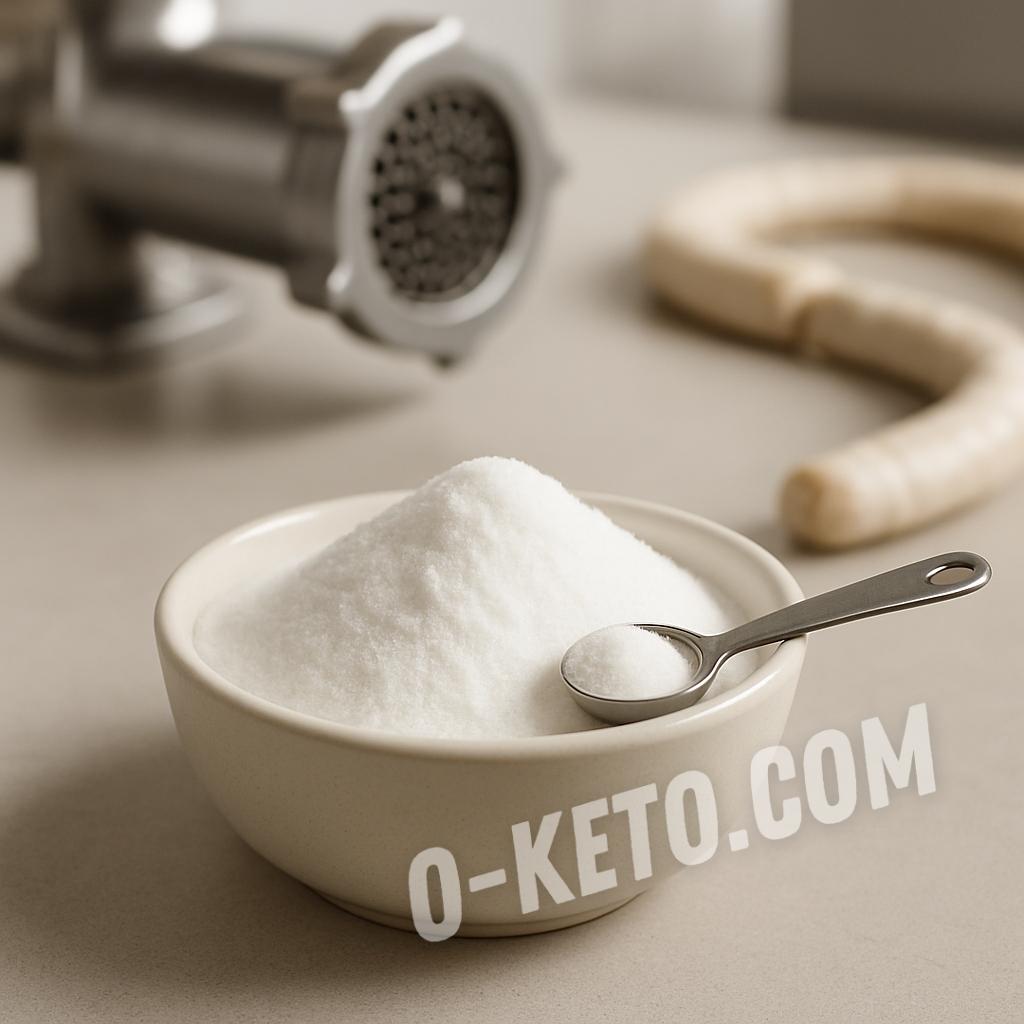

Sodium ascorbate is the sodium salt of ascorbic acid, one of the food forms of vitamin C. In cooking and meat technology it is not used as an ordinary food, but as an antioxidant: it helps slow oxidation, support color, and reduce off-flavors in fats, minced meat, brines, and some prepared mixes.
It is usually sold as a white or almost white powder. It dissolves well in water, tastes less acidic than pure ascorbic acid, and adds sodium to the recipe. That matters: it does not fully replace salt for flavor, but sodium should still be counted.
Nutrition
Sodium ascorbate does not have normal nutritional value like meat, vegetables, or spices. Protein, fat, and carbohydrate are not meaningful for practical recipe calculation, so a separate macro table is best hidden for this ingredient. The relevant values are vitamin C as ascorbate and sodium.
Chemically, the product is roughly 89% ascorbic acid equivalent and roughly 12% sodium. Real recipe doses are usually measured in grams or fractions of a gram, so it does not automatically make a dish “vitamin rich,” but it can change the technological behavior of a mixture.
How It Is Used
In meat recipes, sodium ascorbate is used in sausages, ham, frankfurters, brines, and curing mixes. It helps preserve color, works as an antioxidant, and is often used alongside curing salt according to the tested formula of a specific recipe. Do not increase the amount by guesswork: excess does not improve the product and may affect flavor.
In home cooking it is sometimes used when a less acidic vitamin C form is needed: in brines, marinades, drinks, or supplements. For an ordinary keto diet, however, it is not an essential food; it is a technological ingredient or a vitamin C form for a specific purpose.
How to Choose
Choose food-grade or pharmaceutical-grade sodium ascorbate with a clear ingredient list, shelf life, and purity information. For sausages and meat products, use a product intended for food production, not a technical powder without food approval.
The powder should be dry, uniform, free of moisture lumps, foreign odor, and visible contamination. If it is sold as part of a ready mix, read the whole ingredient list: it may also contain salt, sugar, dextrose, phosphates, flavor enhancers, or other components that must be counted separately.
Storage and Safety
Store sodium ascorbate tightly closed, away from moisture, steam, direct light, and strong odors. Damp powder clumps and becomes harder to dose, and long improper storage can reduce activity.
This is not an ingredient to eat by the spoonful. If sodium restriction, vitamin C dosing, or regular supplement use matters, count the whole diet and follow medical advice. In recipes with curing salt, use the dose from a tested process rather than general advice.
Vitamin C and the ascorbate form
Sodium ascorbate is one form of vitamin C. Ascorbic acid from supplements has comparable bioavailability to the ascorbic acid naturally present in foods, so the word “natural” by itself does not make a supplement more effective. The choice of form is more often related to acidity, tolerance, and the amount of sodium.
Vitamin C is needed for normal immune function, collagen synthesis, and protection of cells from oxidative damage. Prolonged very low intake can lead to deficiency and scurvy, but a single infection does not establish a deficiency and does not mean that sodium ascorbate treats an infection.
When using it as a supplement, count vitamin C from all sources and the sodium supplied by the ascorbate. Large doses can cause diarrhea, nausea, and abdominal cramps; for adults, the tolerable upper intake level from food and supplements is 2,000 mg of vitamin C per day. If sodium restriction matters or a clinician has prescribed a regimen, determine the dose separately.
Sources
- Vitamin C — Health Professional Fact Sheet — NIH Office of Dietary Supplements.
- Vitamin C — Consumer Fact Sheet — NIH Office of Dietary Supplements.


