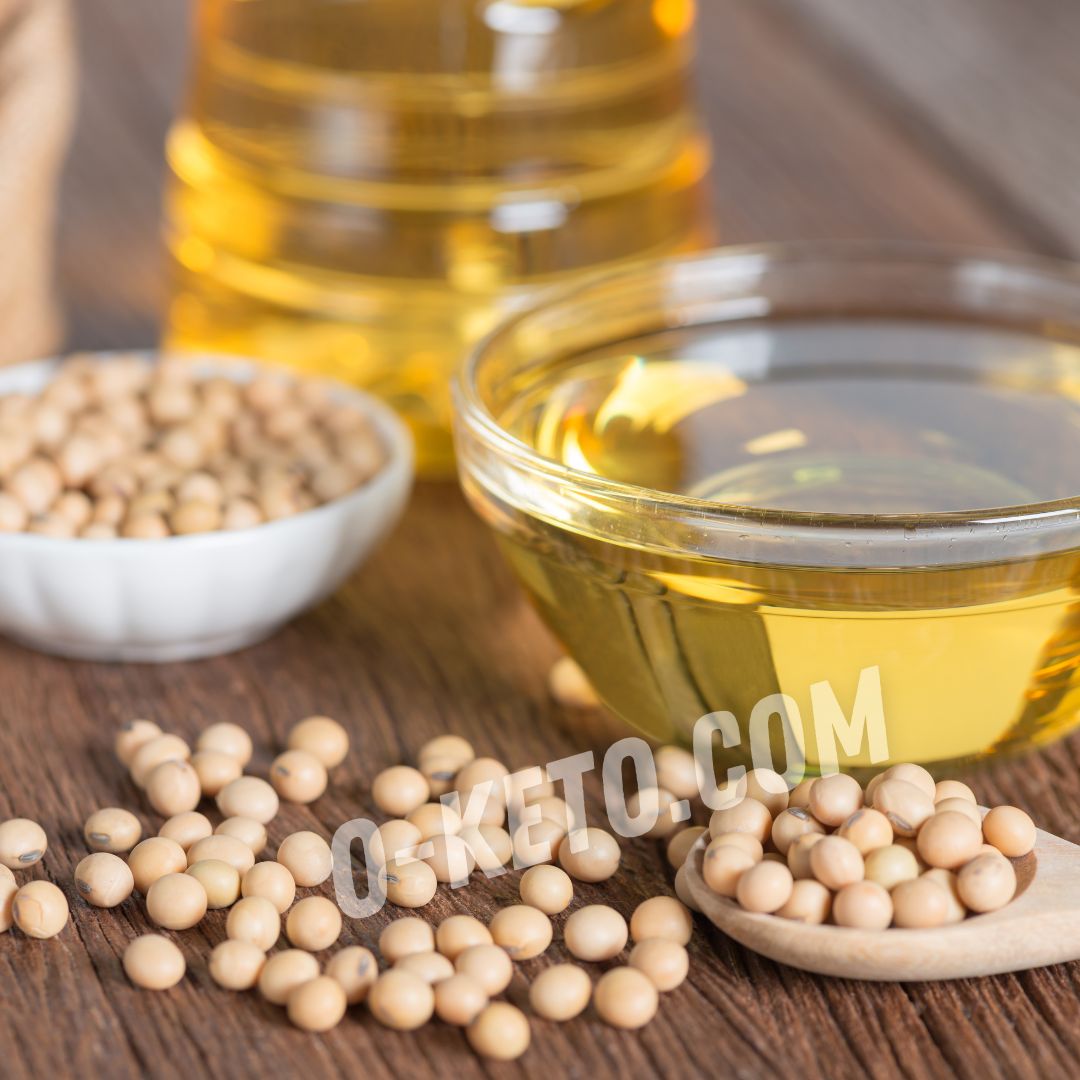

Soybean oil is made from soybeans. It is one of the most common vegetable oils in the world and is used in home cooking, industrial food production, margarines, sauces, ready-made foods, and frying blends. The most common version is refined and deodorized oil with a neutral taste.
The oil itself does not contain meaningful amounts of soy protein, fiber, starch, or sugar. It is almost entirely fat. For low-carb eating, this means zero carbohydrates, but not an automatic status as the best daily oil: fatty acid profile, freshness, heat, and the overall mix of fat sources still matter.
Nutrition
A 100 g portion of soybean oil has about 884 kcal and almost 100 g of fat. It contains no protein and no carbohydrates. A typical fat profile is about 15% saturated fat, 20-25% monounsaturated fat, and 55-60% polyunsaturated fat. This usually includes a lot of omega-6 linoleic acid and a smaller share of omega-3 alpha-linolenic acid.
One tablespoon provides about 120 kcal. During frying, some oil stays in the pan and some is absorbed into the food, so the real serving is easy to underestimate. In ready-made foods, soybean oil is often hidden in the ingredient list, so intake may come not from one bottle but from mayonnaise, sauces, convenience foods, and snacks.
Is it suitable for keto?
Soybean oil formally fits keto and LCHF because it contains no carbohydrates. Still, it is better used moderately, especially if the diet already includes many ready-made foods and vegetable oils. A high share of omega-6 does not make the oil forbidden, but a monotonous fat profile is not the best daily pattern.
For everyday keto cooking, it is often easier to rotate different fats: olive oil, avocado oil, butter, ghee, coconut oil, oily fish, and animal fats. Soybean oil can remain an option when a neutral taste, low cost, and a specific cooking function are needed.
How to use
Refined soybean oil can be used for frying over moderate to moderately high heat, as long as it is not pushed to smoking. Its taste is neutral and does not cover vegetables, poultry, fish, eggs, or sauces. Unrefined soybean oil is less common and has a stronger taste; it is better for cold dishes or gentle heat.
For keto, the oil is only part of the picture. Vegetables, fish, or eggs cooked without flour and sweet sauce remain low-carb. The same pan with breading, starch, noodles, or sugary marinade gives a completely different result. In homemade mayonnaise, soybean oil gives a neutral base, but the flavor can be softened with olive or avocado oil.
How to choose
For frying, choose refined oil with a clear expiration date, no sediment, no rancid smell, and no cloudiness. If the growing method matters, look for organic, non-GMO, or similar labeling, but still check freshness and storage. Unrefined oil should smell clean, without bitterness or old-oil notes.
A large bottle is useful only if it is used quickly. If oil stays open for months near the stove, it spoils faster. Dark glass or storage in a cupboard away from light is better than a clear bottle in the sun. After opening, keep the cap tightly closed.
What to pair it with
Soybean oil is neutral and works with eggs, chicken, turkey, white fish, tofu, zucchini, eggplant, cabbage, broccoli, mushrooms, cucumber, and herbs. In sauces, it can be mixed with mustard without sugar, vinegar, lemon juice, garlic, ginger, egg yolk, and spices.
In Asian-style recipes, soybean oil is often used for quick frying, but a keto version requires replacing noodles, rice, sweet sauces, and starchy thickeners. Cabbage, shirataki, zucchini noodles, mushrooms, egg, and unsweetened soy sauce can work instead if tolerated.
Limits and storage
Soybean oil is not suitable for people avoiding soy because of allergy or individual reaction, although refined oil contains far fewer protein fractions than the beans. It should not be overheated repeatedly, used after smoking, or kept in a fryer for several cycles. Rancid smell, stickiness, bitterness, or a strong color change means it should be discarded.
Store the oil tightly closed in a cool dark place, away from the stove. Unrefined versions should be used sooner. Do not keep wet herbs, garlic, or spices in the bottle without proper storage control: moisture and food particles speed up spoilage.
Substitutes
For cold dishes, use olive oil, avocado oil, macadamia oil, or oil mixed with lemon juice. For frying, use ghee, avocado oil, coconut oil, beef tallow, or butter over gentle heat. In mayonnaise, soybean oil can be replaced with avocado oil, mild olive oil, or a blend of the two.