


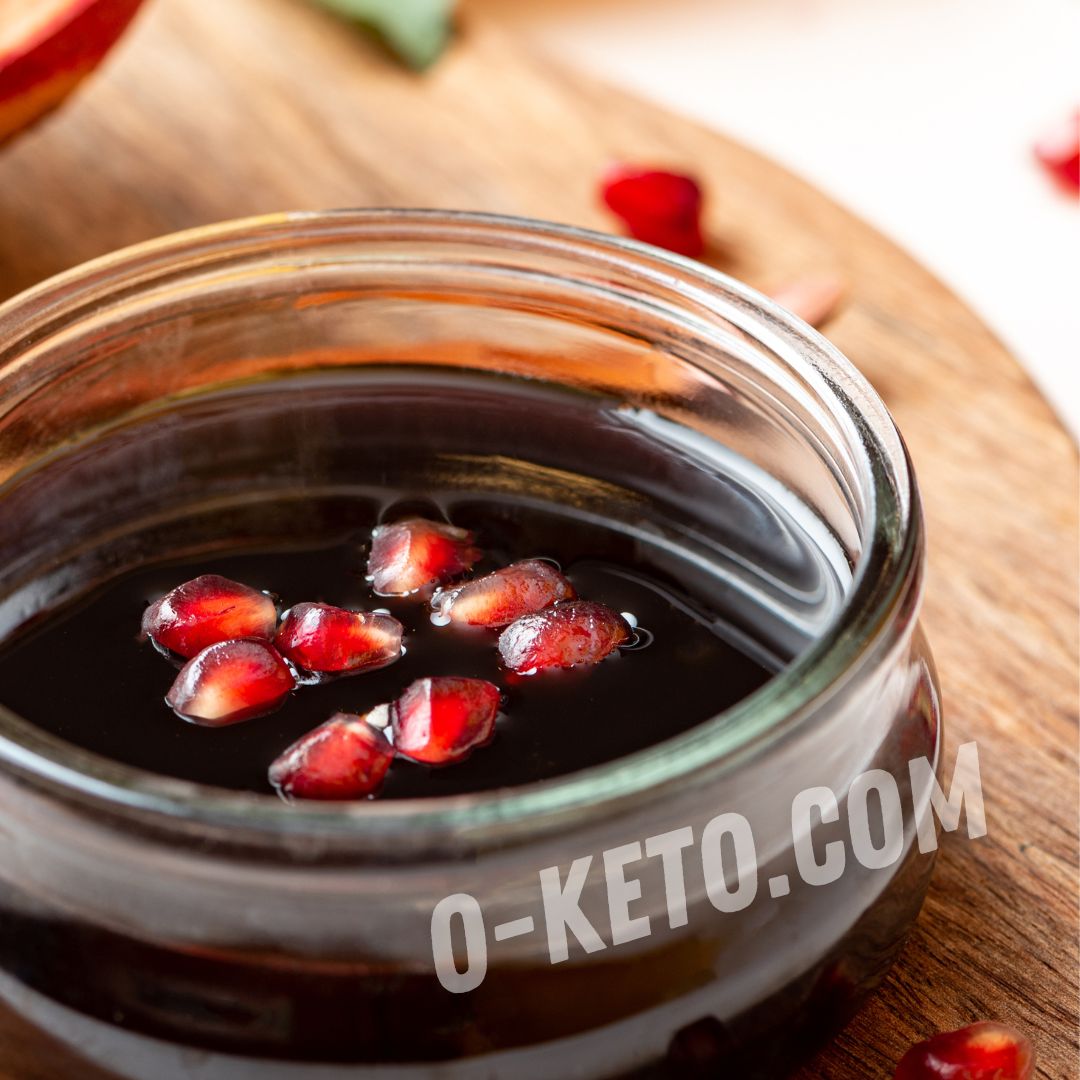

Narsharab is a thick pomegranate sauce made by reducing pomegranate juice. Its flavor is sweet-sour, tart, fruity and very concentrated. It is used with meat, poultry, fish, grilled vegetables, cheeses, salad dressings and marinades. In a dish it is not an ordinary tomato sauce and not vinegar, but a dense fruit condiment where even a small spoon changes the flavor noticeably.
Approximate values per 100 g are about 100 kcal, around 0.5 g of protein, 0.2 g of fat and up to 25 g of carbohydrates. These numbers explain the main nuance well: narsharab is made from fruit and contains concentrated pomegranate sugars. For keto it is therefore not a free addition, even if its glycemic index is sometimes listed as moderate.
Nutrition
Narsharab contains almost no protein or fat, and most of its calories come from carbohydrates. There may be around 25 g of carbohydrates in 100 g of sauce, but the real serving is usually much smaller: a teaspoon gives about 5 g of product, a tablespoon about 15 g. The spoon size decides whether the sauce remains an accent or becomes a noticeable carbohydrate addition.
The glycemic index of narsharab is often listed around 30, and the glycemic load per 100 g around 7.5. These values are best treated as a reference, not as permission to use the sauce without counting. During reduction, water evaporates while flavor, acidity and sugars become denser than in regular juice.
Is It Keto-Friendly?
For strict keto, narsharab fits only in tiny portions: a few drops or half a teaspoon in a marinade, meat sauce or salad dressing. If 1-2 tablespoons are used for one serving, the carbohydrate amount may already be too high, especially together with onion, tomatoes, berries, nuts or other carbohydrate sources in the same dish.
In moderate LCHF, the sauce is easier to include, but it is still best counted as a concentrated fruit product. The most reasonable method is not to pour it in a thick layer, but to mix it into a fatty or acidic base: olive oil, butter, unsweetened yogurt, lemon juice, sugar-free mustard or pan juices from meat.
How to Use It
Narsharab works especially well where sweet-sour depth is needed. It suits lamb, beef, duck, chicken, seared organ meats, mackerel, eggplant, cauliflower, zucchini, herbs, walnuts and brined cheeses. In hot dishes it is often added at the end so the aroma does not become flat and the fresh pomegranate acidity is not lost.
Practical options for low-carb cooking include:
- half a teaspoon in a marinade for several servings of meat;
- a few drops in a sauce with olive oil, lemon and herbs;
- a thin acidic note with roasted duck, lamb or mackerel;
- an addition to baked eggplant or cauliflower;
- a sweet-sour accent in a salad with cheese and nuts.
In marinades, narsharab is best mixed with salt, pepper, garlic, coriander, cumin or paprika rather than used as the only liquid base. For meat over charcoal, a small amount is enough: acidity pulls the flavor together, while the thick sweet part darkens quickly over high heat. If the sauce is brushed on, it is better to do it near the end of cooking, not at the very beginning.
How to Choose
Good narsharab should be made from pomegranate juice, sometimes with a little salt or spices. If the ingredient list includes sugar, glucose syrup, starch, thickeners, colors or flavorings, it is a different product: it may be cheaper and thicker, but its carbohydrate content and flavor are less predictable.
The color is usually dark ruby or brownish pomegranate, and the texture is syrupy but not jelly-like. A sharp vinegar smell, caramel stickiness or jam-like taste often suggests that the sauce is far from pure reduced juice. For keto, choosing a version without added sugar is especially important.
Limits and Substitutes
Narsharab is easy to underestimate because it looks like “just sauce.” In practice it is a fruit juice concentrate, so the serving should be small. People with a sensitive stomach may not tolerate a large amount of acidic sauce well. It also does not fit the idea of sweet snacking: if it is added to every dish, the flavor quickly shifts toward dessert.
Narsharab can be replaced with lemon juice, wine vinegar and a small amount of unsweetened berry puree; for meat dishes, pan juices with butter and acidity work well. If only a pomegranate note is needed, it is often better to use a few pomegranate seeds as garnish and count them separately than to take a large spoon of thick sauce.


