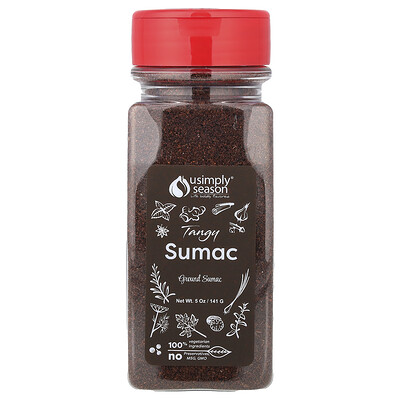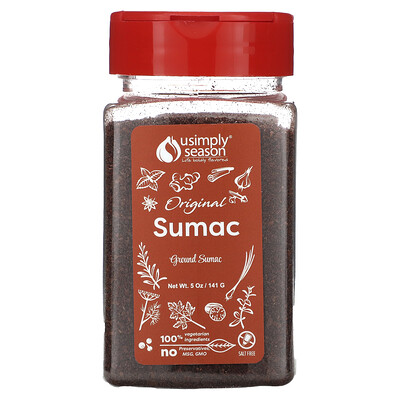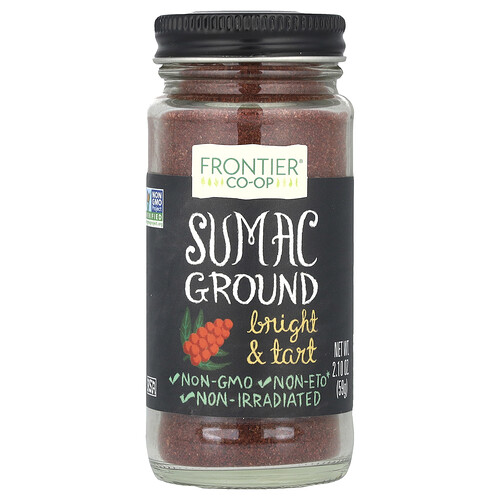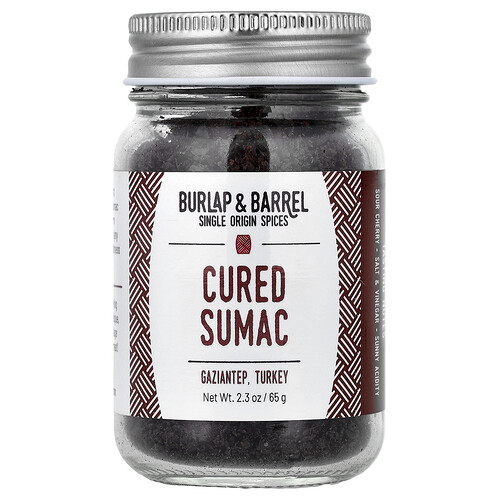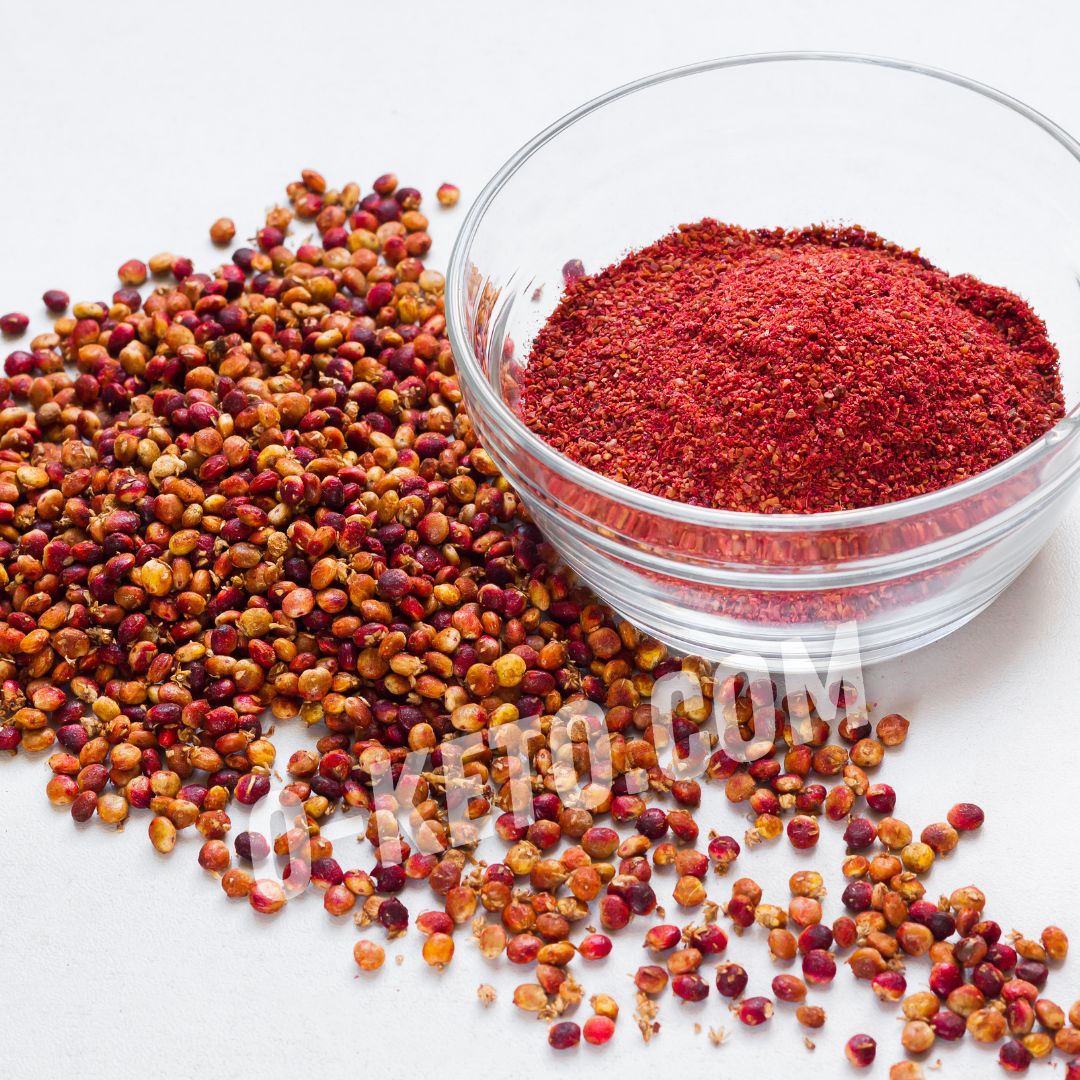

Sumac is a tart ruby-colored spice made from dried and ground berries of shrubs from the Rhus genus. It is especially common in Middle Eastern, Turkish, Caucasian, and Mediterranean cooking. Its taste is not hot but tart and sour, with a dry berry note and a light fruity edge. That is why it is often used where acidity is needed without lemon juice or vinegar.
In cooking, sumac is valued for two things: it refreshes fatty dishes and gives attractive color. It is sprinkled over meat, fish, eggs, salads, cheese, yogurt sauces, cauliflower from the oven, eggplant, cucumber, avocado, and herbs. In za’atar, sumac is combined with sesame and herbs to make a sour spiced topping for vegetables, meat, and sauces.
Nutrition
Sumac is used in small amounts: a pinch, half a teaspoon, or a teaspoon for a whole dish. Per 100 g, the spice contains carbohydrates and fiber, but the real culinary amount is very small. For that reason, sumac hardly changes the calories or carbohydrates of a portion when it contains no sugar or starch.
Sumac berries contain polyphenols, organic acids, tannins, and mineral traces. This does not make the spice a medicine or a replacement for vegetables, protein, or fats in the diet. Its practical role is simpler: to add sour taste, sharpen aroma, and reduce the need for sweet ready-made sauces.
Fit for keto and LCHF
Plain ground sumac fits keto and LCHF well. It helps make meat, poultry, fish, seafood, eggs, salads, and vegetable sides more expressive without honey, syrups, or fruit glazes. It works especially well with fatty components such as olive oil, cream cheese, sour cream, unsweetened yogurt, tahini, and avocado.
The thing to check is not the spice itself but blends and ready marinades. They may contain salt, sugar, citric acid, starch, flavor enhancers, or cheap acidic fillers. For strict low-carb eating, it is better to choose a package that lists only sumac or a clear blend without sweet additions.
How to use it
Sumac is usually added at the end of cooking or right before serving. With long heating, its fresh acidity becomes quieter, and the color can turn brownish. For hot dishes, it works well as a finishing sprinkle over grilled meat, patties, fish, omelets, fried mushrooms, or warm salad.
In cold dishes, sumac can be mixed with olive oil, lemon zest, garlic, mint, parsley, cilantro, black pepper, and sesame. It opens well in sauces based on yogurt, sour cream, and tahini. If the dish is already sour from vinegar or lemon, sumac should be added carefully so the taste does not become sharp.
Sumac does not give the juiciness of lemon juice. If a marinade needs liquid, it is mixed with oil, water, yogurt, or lemon juice. If only a dry sour topping is needed, sumac is more convenient than lemon because it does not thin the sauce or soften crunchy foods.
How to choose
Good sumac has a dark ruby or burgundy-red color, a sour berry smell, and a slightly moist powdery texture. A color that is too bright red may point to dyes, while a gray-brown shade suggests an old batch. The smell should not be musty, dusty, or moldy.
Sometimes sumac is sold already mixed with salt. This is not always a problem for sprinkling, but such a blend is harder to dose because salad or meat can become too salty unnoticed. For general use, plain ground sumac is more convenient, with salt added separately.
Limits
Because of its sour and astringent taste, sumac can irritate a sensitive stomach when used heavily. With reflux or a reaction to sour spices, it is better to start with a small pinch. People with allergies to related plants or spices should pay attention to individual tolerance.
Food sumac should not be confused with ornamental or poisonous plant species. Cooking calls for commercially prepared spice from a clear supplier, not unknown berries gathered by hand. This is especially important without experience in botany and raw material processing.
Storage and substitutes
Ground sumac should be stored in a closed jar in a dry dark place, away from steam and the stove. Aroma and color fade with time, so small packages are better. If the spice turns gray, barely smells, or has a damp odor, it is better replaced.
The closest substitute depends on the task. For acidity, lemon juice, lemon zest, lime, or a little mild vinegar can work. For a dry topping, use sugar-free za’atar, tart paprika with lemon zest, or a mix of sesame, herbs, and a tiny pinch of citric acid. The flavor will differ, but the sour role in the dish remains.