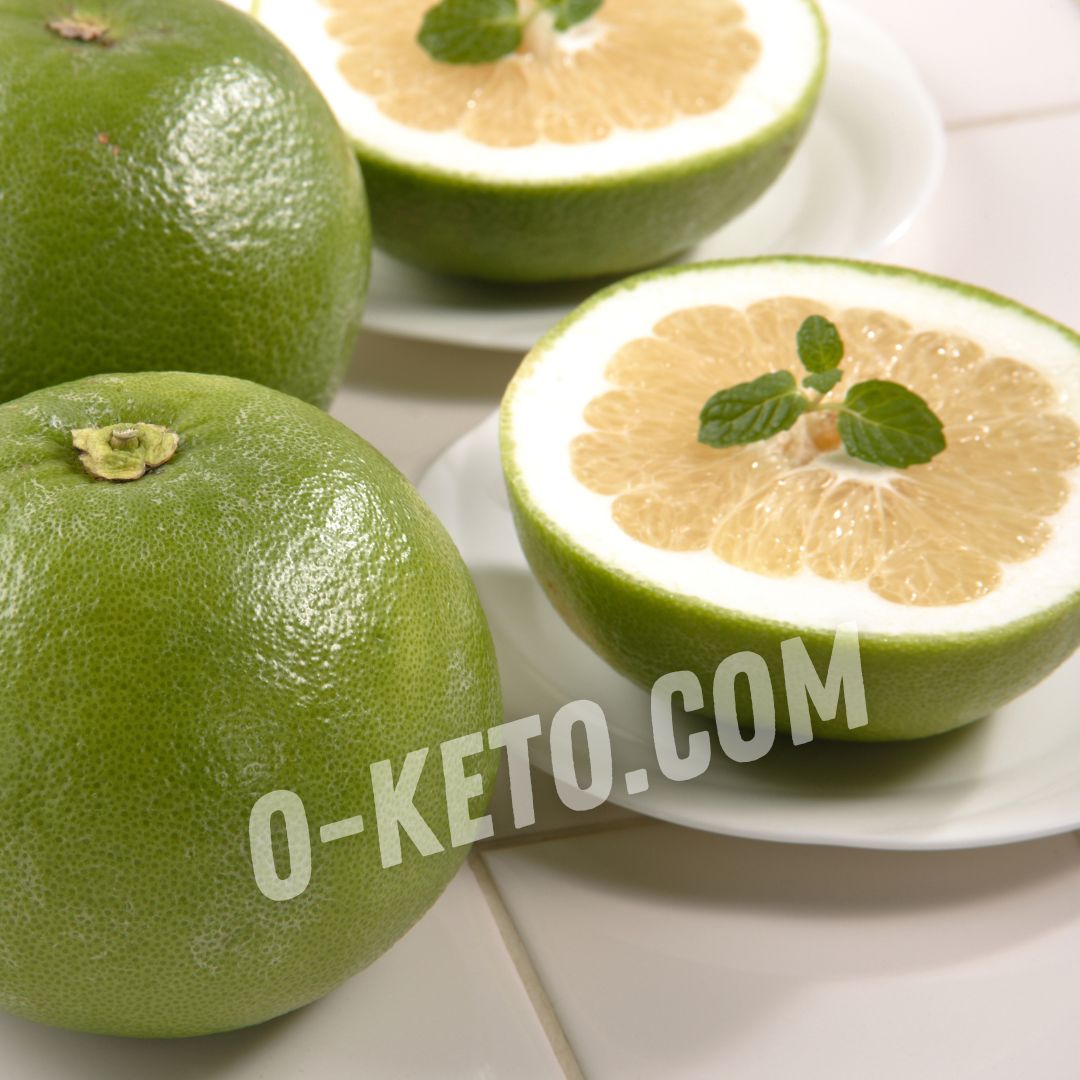

Sweetie is a citrus fruit also known as oroblanco or sweet grapefruit. It is a hybrid of pomelo and grapefruit with a thick peel, juicy flesh, mild sweetness, and low acidity. It usually tastes less sharp than grapefruit and less bitter, but it is still a fruit with natural sugars.
For keto and LCHF, sweetie needs a careful portion. It can be a pleasant citrus accent, but it is not a low-carb food. A few segments after a meal and a whole fruit as a snack are very different carbohydrate situations, even if the glycemic index of citrus fruits is often not very high.
Nutritional value
Per 100 g of sweetie flesh, values are often around 50-70 kcal, about 10-15 g of carbohydrates, a little fiber, 1 g of protein, and almost no fat. Numbers depend on variety, ripeness, and whether membranes are included. It contains vitamin C, potassium, and citrus aroma compounds.
The glycemic load of a small portion may be moderate, but for keto the total carbohydrate amount matters more. A 50-80 g portion fits more easily than 150-250 g. Sweetie juice is worse than whole segments because it is easier to drink more and gives less fiber and portion control.
Place in keto and LCHF
On strict keto, sweetie is usually used rarely and in small portions. If the daily carbohydrate limit is low, each segment is worth counting. For moderate low-carb, the fruit may be easier to include, but it still should not replace protein, fats, and low-carb vegetables.
It is better to eat sweetie after a main meal or with unsweetened yogurt, cottage cheese, a small portion of nuts, or a salad with avocado. This keeps it as a flavor accent rather than a separate sweet snack. Candied peel, juices, syrups, and sweet desserts with sweetie usually do not fit keto.
How to eat and use
Sweetie is peeled from its thick rind, divided into segments, and the firm membranes can be removed if desired. The membranes may be slightly bitter, but they provide some fiber. If the taste feels too mild, lime, mint, ginger, a pinch of salt, or a few drops of olive oil in salad can brighten it.
In keto cooking, sweetie is best used in a small amount: in salad with shrimp, chicken, avocado, cucumber, herbs, or feta; in sauce for fish; or in unsweetened cottage cheese or Greek yogurt. For desserts, use a few pieces for aroma rather than making fruit the base of the dish.
The zest is used less often than lemon or orange zest, but a thin layer of the colored peel can add citrus aroma to sauce or marinade. The white pith is bitter and should not be added. If the fruit is waxed, it is better not to use the peel for food.
How to choose
A ripe sweetie is usually heavy for its size, with firm peel and no mold, soft wet spots, or sour smell. The peel can remain green even when the fruit is ripe, so color is not always reliable. A fruit that feels too light is often dry.
Small marks on the peel are not a problem if they are dry and superficial. The fruit should not collapse under pressure. For a juicier fruit, choose heavy pieces with resilient peel and a clear citrus aroma.
Because sweetie is related to grapefruit, people taking medicines with a grapefruit warning should check compatibility with a clinician or pharmacist. This does not make the fruit unsafe for everyone, but for some medicines citrus fruits in this group may be undesirable.
Storage
A whole sweetie can stay at room temperature for a few days, but for longer storage it is better kept in the refrigerator. Cut or peeled fruit should be kept in a closed container and used quickly because the flesh dries and loses aroma.
Segments can be frozen for smoothies or sauce, but after thawing the texture becomes soft. If fermentation smell, mold, slime, or unpleasant sharp bitterness appears, do not eat the fruit.
Peeled segments are best stored without excess juice; when they sit in liquid, the taste becomes flatter. For salads, cut the fruit right before serving, otherwise it releases juice into the greens and makes the dish watery.
Substitutes
The closest substitutes are grapefruit, pomelo, orange, or mandarin, but their carbohydrates also need counting. For a lower-carb acidic accent, use lemon, lime, a little cranberry, or raspberry. In salads, sweetie can be replaced with a small amount of grapefruit, olive oil, and herbs.