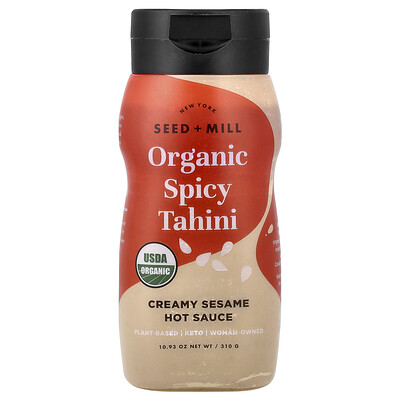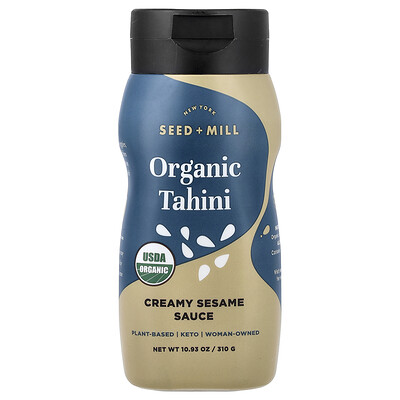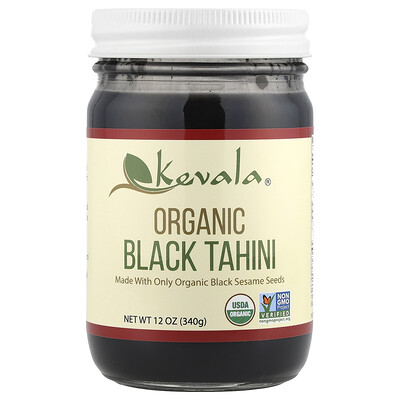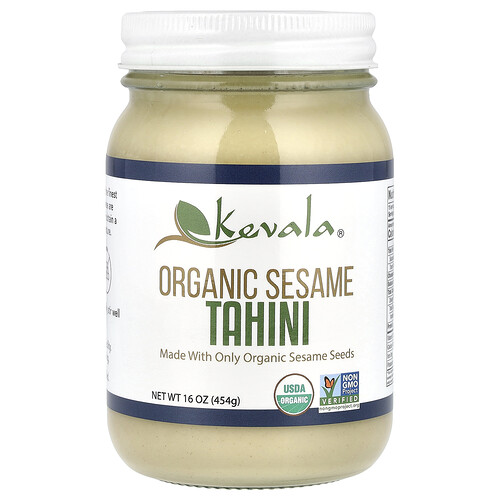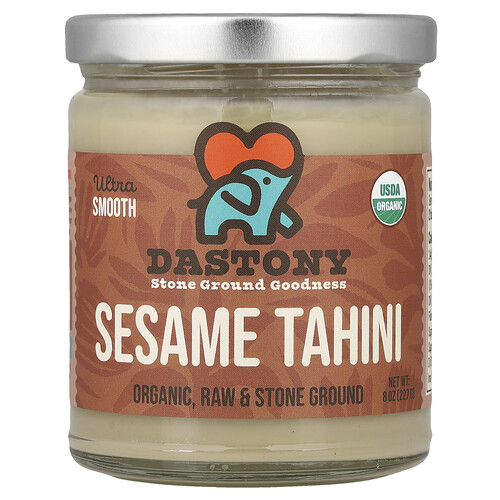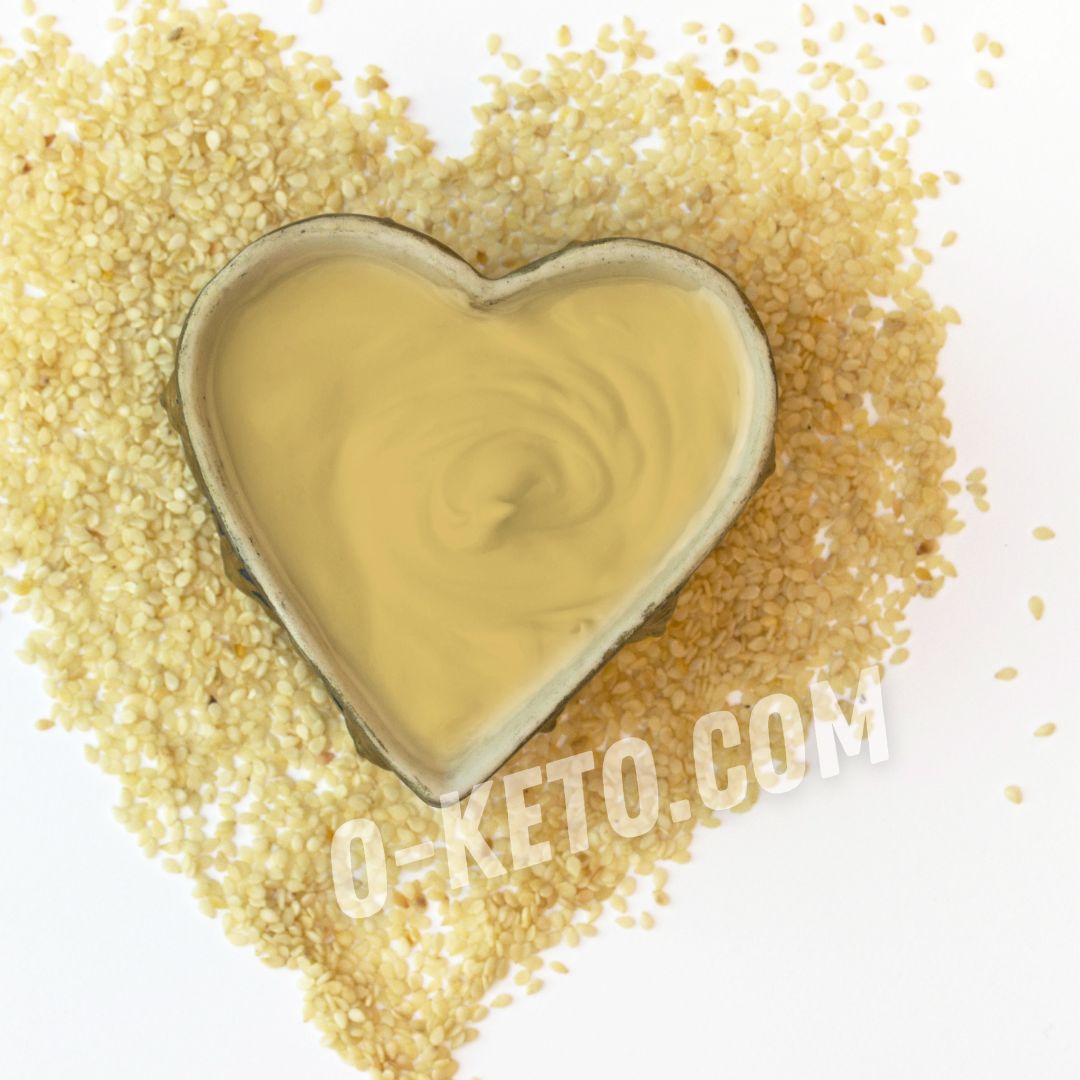

Tahini is a paste made from ground sesame seeds. In Middle Eastern, North African, and Mediterranean cooking it is used for hummus, baba ghanoush, sauces, dressings, halva, marinades, and creamy additions to meat, fish, vegetables, and salads. Good tahini is pourable, oily, nutty-sesame in flavor, and slightly bitter.
The paste may be made from hulled or unhulled sesame, raw or roasted seeds. Light tahini from hulled sesame is milder, smoother, and better for sauces. Paste from unhulled seeds is darker, thicker, more bitter, and contains more fiber and minerals, but not everyone likes its texture.
Tahini is often treated like a nut butter, although sesame is a seed, not a nut. The culinary role is similar: a lot of fat, intense flavor, density, and the ability to turn lemon juice, water, and spices into a thick sauce. But sesame allergy can be serious, so the product needs separate attention.
Nutritional value
In 100 g of tahini there are usually about 570–620 kcal, 50–55 g of fat, 17–20 g of protein, and roughly 15–25 g of carbohydrates, part of which is fiber. Exact values depend on the seeds, roasting level, and whether salt or oil is added. A 15–30 g serving is much more useful for calculation than values per 100 g.
Tahini contains calcium, magnesium, phosphorus, iron, zinc, copper, selenium, vitamin B1, vitamin E, sesamin, and sesamolin. The fat profile is mostly unsaturated, but omega-6 is much higher than omega-3. For that reason, tahini is better rotated with other fats rather than used as the only sauce base.
Is it suitable for keto?
Tahini can fit keto and LCHF in a moderate serving. It is high in fat and has relatively few digestible carbohydrates per spoonful, but it is very calorie-dense. If added by eye, a sauce quickly becomes heavy in energy even without sugar or flour.
For keto, choose tahini without sugar, syrups, starch, or vegetable fillers. Good uses include sauce for meat, fish, eggs, cauliflower, eggplant, zucchini, leafy greens, and unsweetened yogurt. Hummus with tahini remains higher in carbohydrates because of chickpeas, so strict keto is often better served by a tahini sauce without legumes.
How to use it
The jar should be mixed well before use because oil often separates and rises to the top. If the paste is thick, dilute it with cold water, lemon juice, olive oil, or unsweetened yogurt. At first the mixture may thicken even more, but with more liquid it turns into a smooth sauce.
A basic savory sauce is made from tahini, lemon, water, salt, a little garlic, and herbs. It works with grilled meat, chicken, fish, eggs, salads, cucumbers, fried eggplant, and cauliflower. For desserts, tahini can be mixed with cocoa, erythritol, vanilla, or cream, but the serving should still be counted.
How to choose
A good tahini ingredient list should contain sesame, sometimes salt. Sugar, syrup, starch, flavorings, and cheap oils are unnecessary. Separation is normal. Poor signs include rancid smell, harsh bitterness, mold, metallic taste, and a very old date.
For sauces, light pourable tahini is more convenient. For stronger flavor, roasted sesame paste works. If more mineral intensity and a rougher texture are wanted, whole-sesame tahini can be used, but it is often more bitter. The smoothest paste comes from well-ground hulled sesame.
Limitations
Sesame is a common allergen. If there is a reaction to sesame, tahini should be avoided completely. Because of its high calorie density, it is easy to overeat, especially in sauces and desserts. With sensitive digestion, a large amount of seeds and fat may feel heavy.
How to store it
Keep a closed jar in a cool dark place. After opening, store tahini tightly closed; refrigeration keeps it fresh longer, but the paste becomes thicker. Always use a clean dry spoon. If the smell turns rancid, mold appears, or the taste changes sharply, discard the product.
What can replace it?
In sauces, tahini can be replaced with almond butter, cashew butter, sugar-free peanut butter, sunflower seed butter, or sesame oil with a little nut flour. In hummus, sesame paste is closest, but for a keto sauce, unsweetened yogurt, mayonnaise, olive oil, avocado, or cream cheese can provide creamy fat without sesame flavor.