


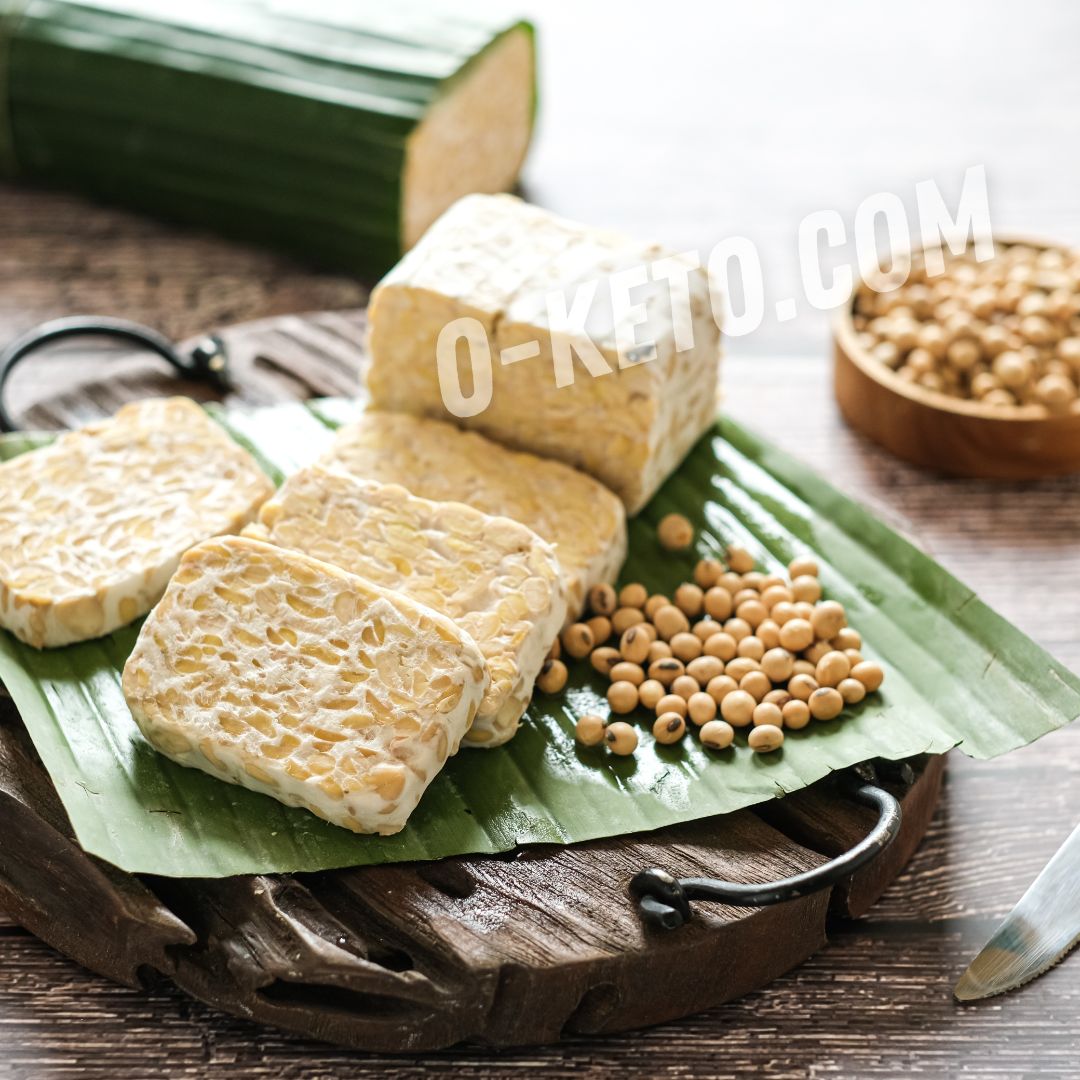

Tempeh is a fermented product made from whole soybeans, traditional to Indonesian cooking, especially on the island of Java. The beans are bound by a white Rhizopus culture into a firm cake. Unlike tofu, tempeh is not smooth or neutral: it has a nutty, slightly mushroom-like taste and a dense chewy texture.
The main feature of tempeh is the combination of plant protein, moderate fat, and fermented structure. It is fried, baked, stewed, marinated, added to salads, bowls, curries, and sandwiches. For low-carb eating, it is interesting as a grain-free protein base, but carbohydrates and marinade composition still need to be counted.
Nutritional value
In 100 g of tempeh there are usually about 190–200 kcal, roughly 18–20 g of protein, 10–12 g of fat, and 7–10 g of carbohydrates. Values depend on producer, moisture, and additions. Tempeh made only from soy differs from versions with rice, millet, barley, seeds, or sweet sauce.
It contains fiber, iron, magnesium, potassium, phosphorus, copper, manganese, and B vitamins. Vitamin B12 in tempeh should not be treated as a reliable source: its amount depends on culture, fermentation conditions, and fortification. In vegan eating, B12 is better managed separately.
Is it suitable for keto?
Tempeh can fit LCHF and moderate keto in small portions. It has fewer carbohydrates than grains and bread, but more than meat, fish, or eggs. For strict keto, the portion is better counted from the label: 80–100 g may be normal for one person and too much for another.
The most convenient option is plain tempeh without sugar, syrups, or grain fillers. Ready marinades often contain sweet soy sauce, honey, cane sugar, starch, or rice vinegar with sugar. The tempeh itself may be fairly convenient, while the sauce is not.
How to cook it
Raw tempeh has a dense flavor, so it is often preheated: steamed for 8–10 minutes, boiled briefly, or fried right away in thin slices. After heating, it absorbs marinade better and becomes softer. For a keto marinade, sugar-free tamari, garlic, ginger, lime, sesame oil, chili, and a little erythritol or allulose if desired work well.
Tempeh is best fried over moderate heat: thin slices brown quickly, but high heat can make them dry. In curries and stews, it is added around the middle of cooking so it absorbs sauce without falling apart. For salads, tempeh is good browned and served warm.
If tempeh tastes bitter, it can be sliced and steamed before frying. This softens the flavor and removes part of the sharp fermented note. For a firmer crust, the slices are dried after steaming, and the marinade is kept not too watery.
What to pair it with
Tempeh works well with cabbage, cauliflower, broccoli, cucumber, salad leaves, avocado, mushrooms, coconut milk, sugar-free peanut butter, and hot sauces. It likes bright flavors: sour, salty, spicy, and slightly sweet. If the dish feels dry, oil, tahini, sugar-free mayonnaise, or creamy sauce helps.
On a plate, tempeh is convenient with something juicy: cucumber, sugar-free pickled cabbage, lime sauce, herbs, or tomatoes in a small portion. Then the dense texture does not feel heavy. For a more filling keto meal, avocado, eggs, or a fatty sauce can be added.
Limitations
Tempeh is made from soy, so it is not suitable for soy allergy. In sensitive people, legume products may cause bloating or heaviness, even after fermentation. Individual tolerance of soy, phytoestrogens, and fermented foods should also be considered, especially if a clinician has already given restrictions.
Tempeh is not a complete replacement for meat in every nutrient. It provides protein, but it does not contain heme iron and does not solve the B12 question without a reliable source. In a mixed diet, it is convenient to rotate it with eggs, fish, poultry, meat, cheese, or other protein foods.
How to choose and store it
Good tempeh smells fresh, nutty, and slightly mushroom-like. A white culture coating is normal, and black or gray dots can appear from spores and are not always dangerous if the smell is clean. Bad signs are slime, sharp sourness, ammonia smell, unusual-colored mold, and swollen packaging.
Tempeh is stored in the refrigerator according to the date on the package. An opened cake is better used within a few days and kept in a closed container. Tempeh can be frozen in portions; after thawing the texture becomes a little drier, but it absorbs marinade better.
What can replace it?
The closest plant replacements are tofu, natto, edamame, seitan if gluten is suitable, or firm mushrooms. For keto with fewer carbohydrates, eggs, fish, chicken, cheese, meat, or seafood are chosen more often. Tofu is softer and more neutral, mushrooms give umami but less protein, and seitan is dense but unsuitable when gluten is excluded.


