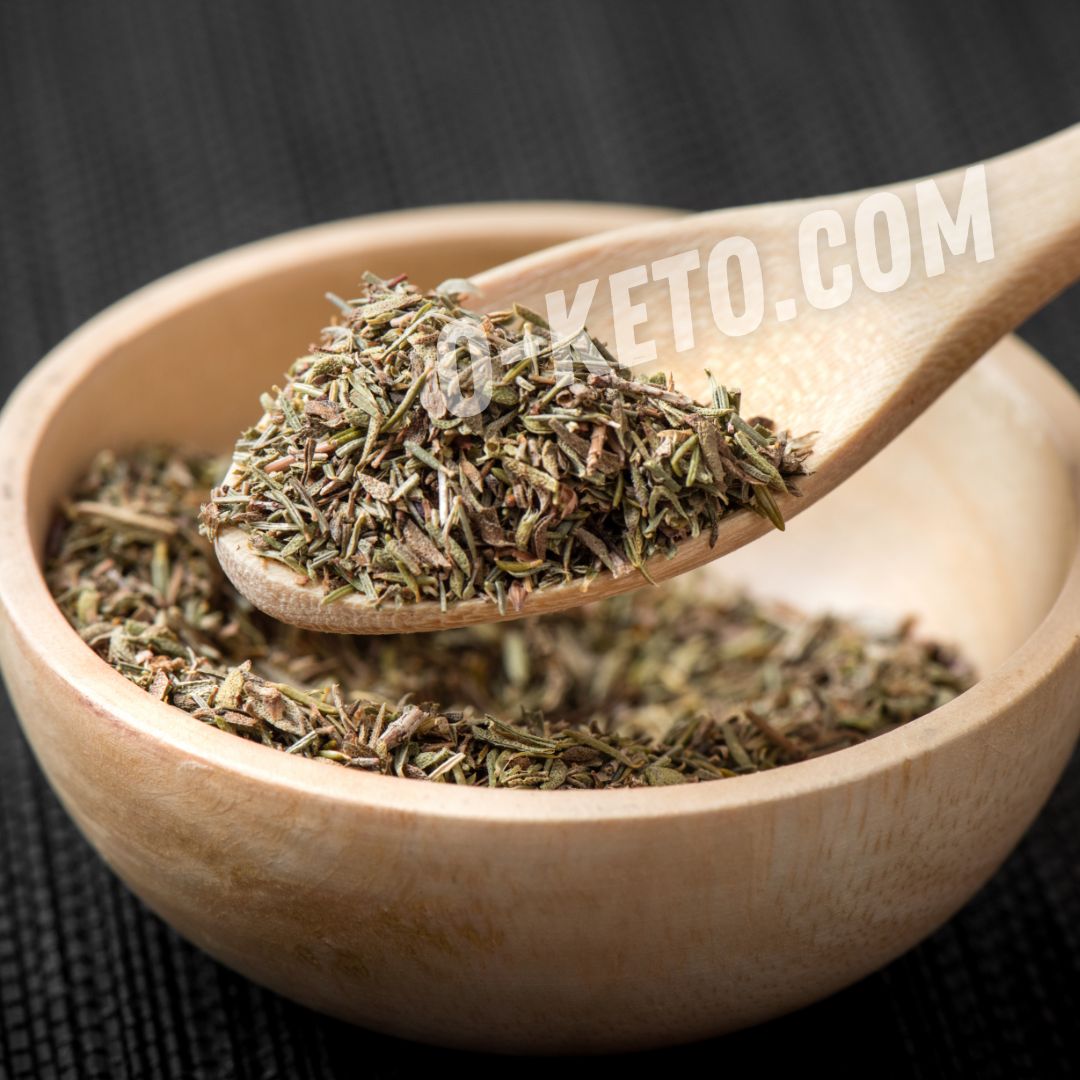

Thyme is an aromatic herb with a warm, slightly woody scent and a mild bitterness. It is used fresh and dried in meat, poultry, fish, mushrooms, eggs, vegetables, broths, sauces and marinades. Unlike very delicate herbs, thyme tolerates heat well, so it can be added during braising or roasting.
For keto cooking, thyme is useful because it adds flavor without sugar, starch or ready-made sauces. A small amount can make fatty dishes more aromatic, round out a butter or sour cream sauce, and work well with many foods used in LCHF meals.
Nutrition
Thyme is used in small amounts, so it has almost no effect on calories, carbohydrates or glycemic load. Fresh and dried thyme contain vitamin C, some B vitamins, potassium, iron, manganese and other micronutrients, but a normal serving is too small to make thyme a main nutrient source.
Thyme essential oil contains thymol and other aromatic compounds. These compounds give thyme its characteristic smell and explain its traditional use in cooking and folk practices. In food, however, thyme should be treated as a culinary herb rather than a medicine.
Is Thyme Keto-Friendly?
Yes, thyme fits keto very well. The glycemic index and glycemic load of a normal portion are practically zero. The only concern is not thyme itself, but commercial seasoning blends that may contain sugar, starch, flavor enhancers or breading ingredients.
If carbohydrates are being counted strictly, choose pure dried thyme or fresh sprigs instead of vague “meat seasoning” blends.
How to Use It
Fresh thyme can be added as whole sprigs to a pan or roasting dish and removed before serving. Dried thyme is more concentrated, so it should be added in small amounts and allowed to bloom in fat or hot sauce.
Good keto pairings include:
- beef, veal, pork, chicken and turkey;
- mushrooms, cream, sour cream, butter and garlic;
- eggs, cheese, omelets and savory keto baking;
- zucchini, cauliflower, broccoli, eggplant and sugar-free tomato sauce.
How to Choose and Store
Fresh thyme should smell strong and clean, without slime, mold or dark wet spots. Dried thyme loses aroma quickly if kept open near the stove, so store it tightly closed in a dry, dark place.
If the herb barely smells, it may not be unsafe, but it has lost much of its culinary value. It is better to replace it than to add so much that the dish turns bitter.
Limitations and Substitutes
In culinary amounts, thyme is usually well tolerated. Caution is needed with individual sensitivity to aromatic herbs, pregnancy-related restrictions or concentrated essential oils. Essential oil is not the same as a pinch of thyme in food.
For meat and mushrooms, thyme can be replaced with rosemary, marjoram, oregano or herbes de Provence. For fish, dill, parsley, lemon zest or tarragon may work better. In tomato sauces, oregano or basil can replace thyme, but the flavor will be different.
Fresh vs. Dried Thyme
Fresh thyme tastes softer and greener, while dried thyme is sharper and more concentrated. If a recipe uses fresh sprigs, you usually need less dried thyme. Both forms work in slow braises, but dried thyme should be added earlier in quick dishes so it has time to open up.
Thyme is especially useful in keto recipes where there is no sweet glaze or starchy sauce, but the dish still needs a complete flavor. It connects fat, garlic, salt, lemon or vinegar and meat juices. This is why it often works best as part of a simple mix: thyme, garlic, pepper, salt and oil.
Common Mistakes
The main mistake is adding too much dried thyme. The dish can become bitter and medicinal. Another mistake is sprinkling dry leaves over cold finished food, where they remain stiff. For salads, use fresh leaves or a very finely crushed dried herb.
When to Add It
Fresh thyme sprigs are convenient at the start of braising or roasting, so the aroma moves into fat and juices; the woody stems can then be removed. Leaves may be added closer to the end when a greener aroma is wanted. Dried thyme is better warmed in oil, broth or sauce: the dry pieces soften and do not feel like stiff grass.
In cold dishes, thyme needs restraint. A salad usually needs only a few fresh leaves or a pinch of very finely crushed dried herb. If too much dried thyme is added right before serving, it will not have time to open and may give a dry bitter note.