


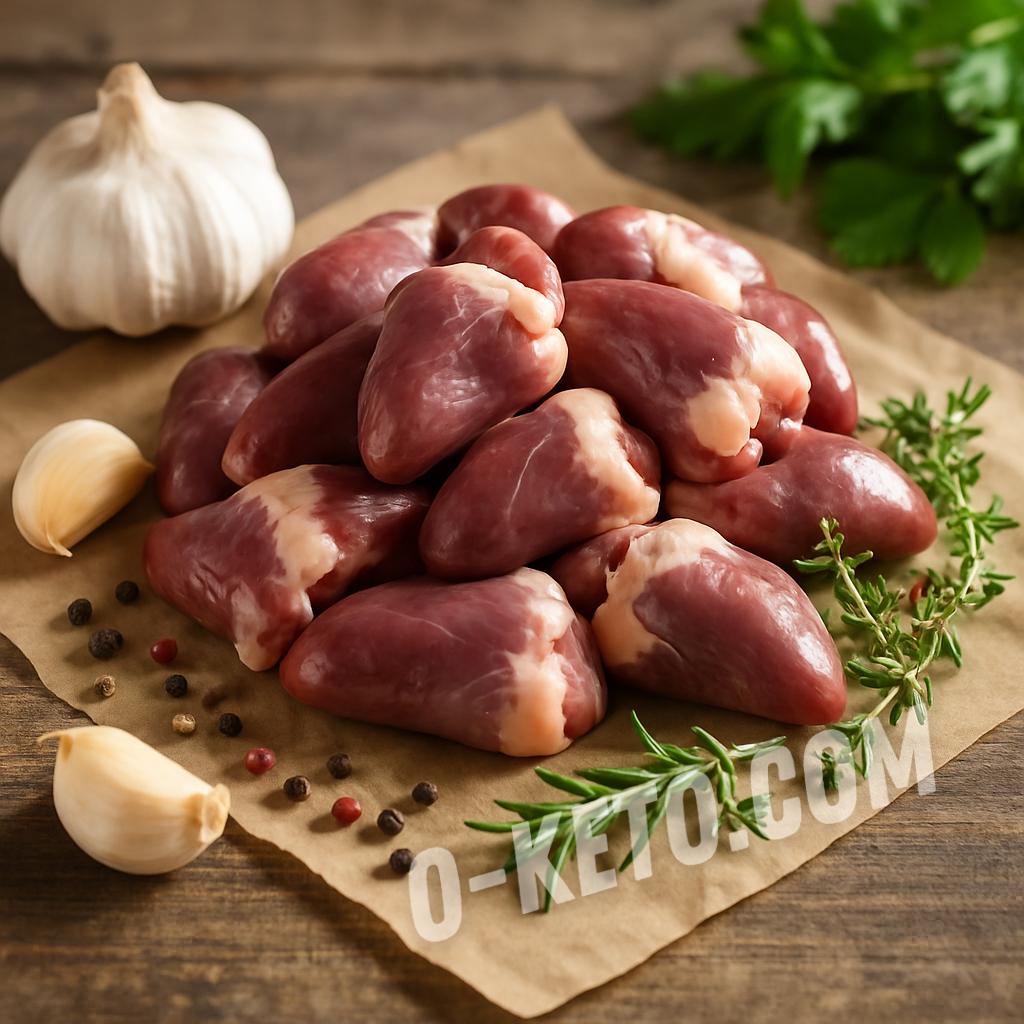

Turkey hearts are a dense muscular organ meat with a firmer texture than chicken hearts and a mild savory flavor without a strong liver note. They are used for braising, sautéing, skewers, stews, warm salads, and pâté-style mixtures.
Because they are working muscle, they need either short precise cooking or longer braising until tender. If overcooked over high heat without moisture, they can turn rubbery.
Nutrition
Turkey hearts provide complete animal protein, iron, B12, and other micronutrients typical of organ meats. They contain very little carbohydrate, which makes them suitable for keto and low-carb eating.
Fat is moderate, so richer LCHF dishes often pair them with butter, bacon, cream, mushrooms, or yolk-based sauces.
How to Cook
They can be quickly seared until just done or slowly braised with onion, cream, sugar-free tomato, or broth. Before cooking, they are usually rinsed and trimmed of excess vessels and membranes if needed.
They pair well with garlic, onion, sour cream, mushrooms, paprika, thyme, and cauliflower. For macro tracking, use the raw trimmed weight.
Choosing and Storage
Good turkey hearts should smell fresh and meaty, feel resilient, and show no grey-green tint. Stickiness or sour aroma is a warning sign.
Store like other chilled organ meats: briefly refrigerated or airtight frozen. They are best cooked soon after purchase.


