


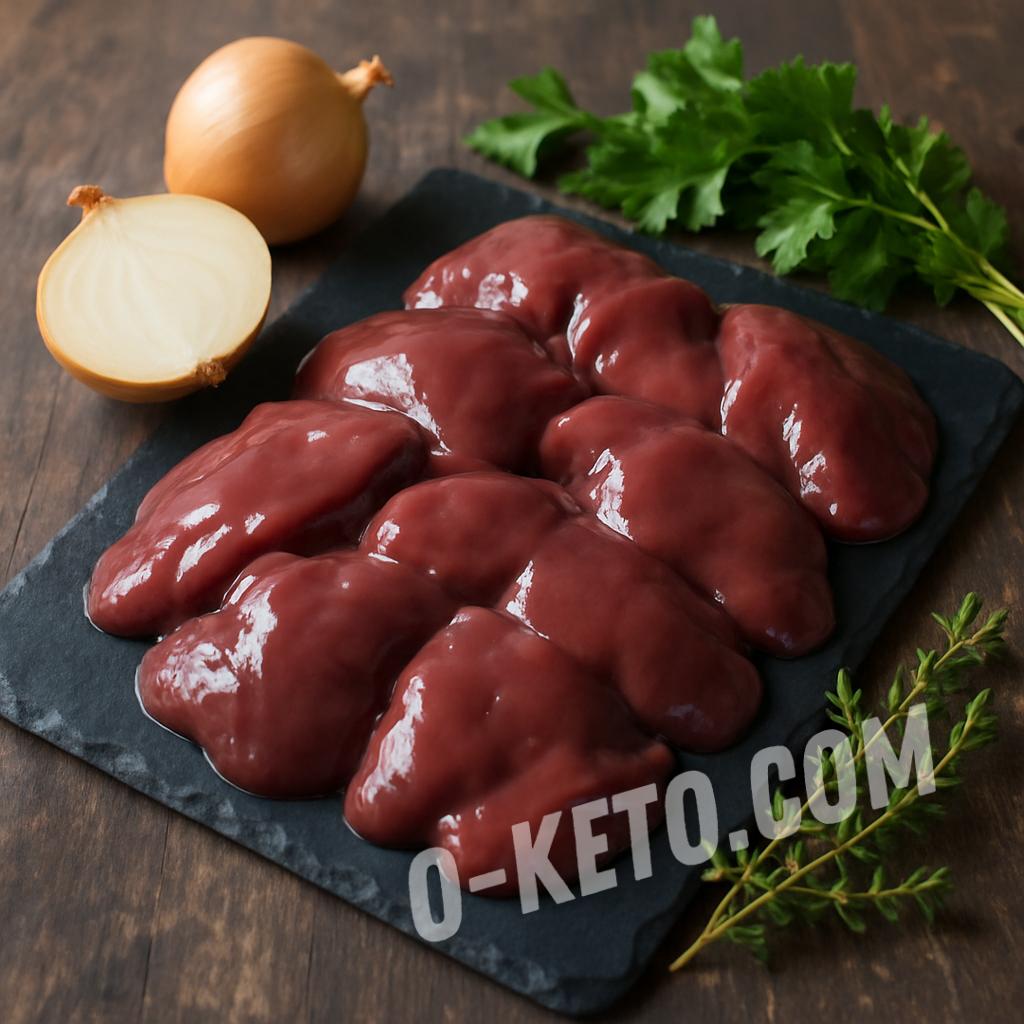

Turkey liver is a tender organ meat with a pronounced flavor, usually larger and somewhat milder than chicken liver. It is used for quick sautéing, pâté, fillings, warm salads, liver fritters, and sauces.
Liver cooks quickly and does not tolerate overheating well. If overdone, it becomes dry, grainy, and loses the delicate texture that makes it attractive.
Nutrition
Turkey liver is rich in complete protein, iron, vitamin A, B12, and other micronutrients. It contains only a small amount of carbohydrate, so moderate portions fit keto and low-carb diets well.
Because of its high vitamin A concentration and the nature of organ meats, liver is often treated as a nutrient-dense food for variety rather than the base of large daily portions.
How to Cook
It is best quickly sautéed over medium-high heat until just done, or turned into pâté with butter and cream. Before cooking, membranes and larger ducts are often trimmed away.
It pairs well with onion, sugar-free apple vinegar, cream, bacon, mushrooms, sage, thyme, and cauliflower. For a tender result, salt is sometimes added closer to the end.
Choosing and Storage
Good turkey liver should look moist and smooth, without greenish spots. Very dark color, sour smell, or dried edges are less desirable.
Store only briefly in the refrigerator or freeze airtight. This is one of the products best cooked soon after purchase.


