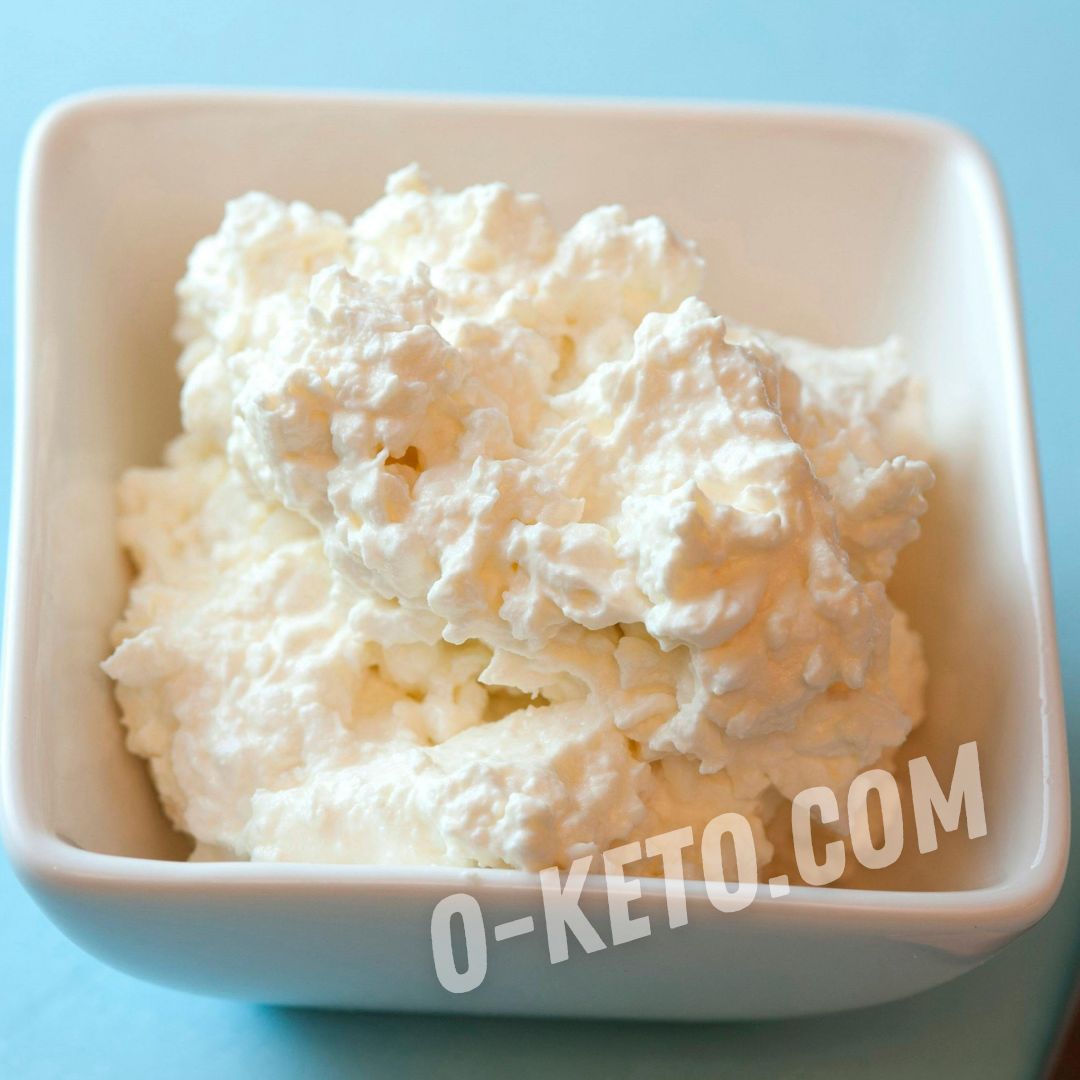

Cream cheese is a soft dairy product with a smooth texture and a neutral milky flavor. It is used for spreads, creams, sauces, rolls, sugar-free cheesecakes, appetizers with fish, vegetables and herbs. Unlike crumbly cottage cheese, cream cheese is usually more uniform, pliable and able to hold its shape.
For keto and LCHF, it is convenient when the ingredient list is simple and sugar-free. It provides fat, protein, creamy texture and helps make a dish thicker without flour or starch. But brands differ greatly in fat content, calories, salt, thickeners and carbohydrates, so the label matters more than the general name.
Nutrition
Per 100 g of cream cheese, common values are 11-14 g of protein, 6-25 g of fat, 3-4 g of carbohydrates and about 150-250 kcal. The range is wide because there are light, creamy, dessert, salted and culinary versions. The glycemic index is often listed around 30, and glycemic load remains low in a typical serving.
- Protein: about 11-14 g per 100 g;
- Fat: about 6-25 g;
- Carbohydrates: about 3-4 g;
- Calories: about 150-250 kcal;
- Glycemic index: about 30.
Cream cheese may contain calcium, phosphorus, vitamin B12 and riboflavin. These compounds are natural for dairy products, but in keto cooking the practical value of cream cheese is more often its texture, fat content and moderate carbohydrate level.
Is It Keto-Friendly?
Sugar-free cream cheese usually fits keto well. A 50-100 g serving can become the base of a sauce, cream or appetizer while providing only a few grams of carbohydrates. A 100-150 g daily portion can work for many low-carb diets, but it is best counted together with other dairy products.
On strict keto, carbohydrate amount is not the only context. If the day already includes cream, yogurt, cottage cheese, nuts or berries, a large serving of cream cheese may be too much. In dishes with fish, eggs, meat and vegetables it usually fits more easily than in desserts, where sweeteners, berries and nut flour may also appear.
Sweet versions, curd snacks, creams with fruit fillings, vanilla dessert products and starch-containing products are less suitable for keto. Even if the package uses dairy wording, the ingredient list may be closer to a dessert than to a neutral cheese.
How to Choose
Look for a simple ingredient list: milk or cream, curd or dairy components, starter culture and salt. Some stabilizers can be acceptable if they do not add meaningful carbohydrates, but sugar, fructose, syrups, starch and sweet fillings are best avoided. The shorter the ingredient list, the easier the product is to understand.
Choose fat content according to the task. Higher-fat cheese is better for keto creams, sauces and spreads because it gives density and richness. Light versions can be more watery, sometimes contain more thickeners and may hold structure worse in desserts or hot dishes.
A practical quality cue: good cream cheese is usually soft and spreadable or dense but still uniform throughout, with a white to light-cream color. A small amount of whey on the surface can be acceptable, but strong separation, graininess, odd flavor or an unusually watery body for its style should make you cautious.
Technical descriptions often use rough benchmarks such as 40-80% moisture, at least 6% milk protein and usually no more than 2% salt. For an ordinary buyer this is not a home lab test, but it helps with expectations: a very salty, overly dry or suspiciously sweet product is often less useful in neutral keto cooking.
How to Use It
Cream cheese works well where a soft creamy base without sweetness is needed. It can be mixed with herbs, garlic, lemon juice, fish, cucumber, avocado, spices, unsweetened cocoa or a sweetener if a dessert is being made. It also softens sharp and acidic ingredients.
Practical options include:
- a spread with herbs and garlic for cucumber or lettuce leaves;
- a cream for rolls with salmon without flatbread;
- a sauce for chicken, eggs or vegetables;
- a base for sugar-free cheesecake without wheat flour;
- a small addition to pureed soup instead of a starchy thickener.
Storage and Limits
Cream cheese should be stored in the refrigerator and used after opening within the time listed on the package. A clean spoon matters: the product is soft, moist and spoils easily when crumbs or food residues get inside. Sour smell, mold, gas, bitterness or unusual liquid separation are signs not to use the package.
If you want a more precise everyday guideline, cream cheese is best kept around 4±2 °C, away from direct light and not left at room temperature for long. An unopened factory pack may keep for the period stated by the producer, often up to 2-3 months, but after opening it is safer to think in about 1-3 days rather than “I will finish it later”. Homemade cream cheese is usually best used within 5 days.
Limits are related to dairy proteins, lactose, salt and calorie density. Even with low carbohydrates, it is a dense product, especially in higher-fat versions. If dairy tolerance is uncertain, it is better to start with a small serving and choose a product without unnecessary additives.
Substitutes
Similar roles can be filled by cream cheese of another type, mascarpone, ricotta, thick sour cream, soft goat cheese or unsweetened Greek yogurt. The substitute depends on the dish: desserts need softness and neutral flavor, sauces need the ability to melt, and appetizers need density and slight saltiness.
If a less dairy-based option is needed, avocado, sugar-free nut butter or a sugar-free mayonnaise sauce can be used, but flavor and nutrition will change. In keto recipes, cream cheese is usually replaced not by flour, but by another soft fatty product.