


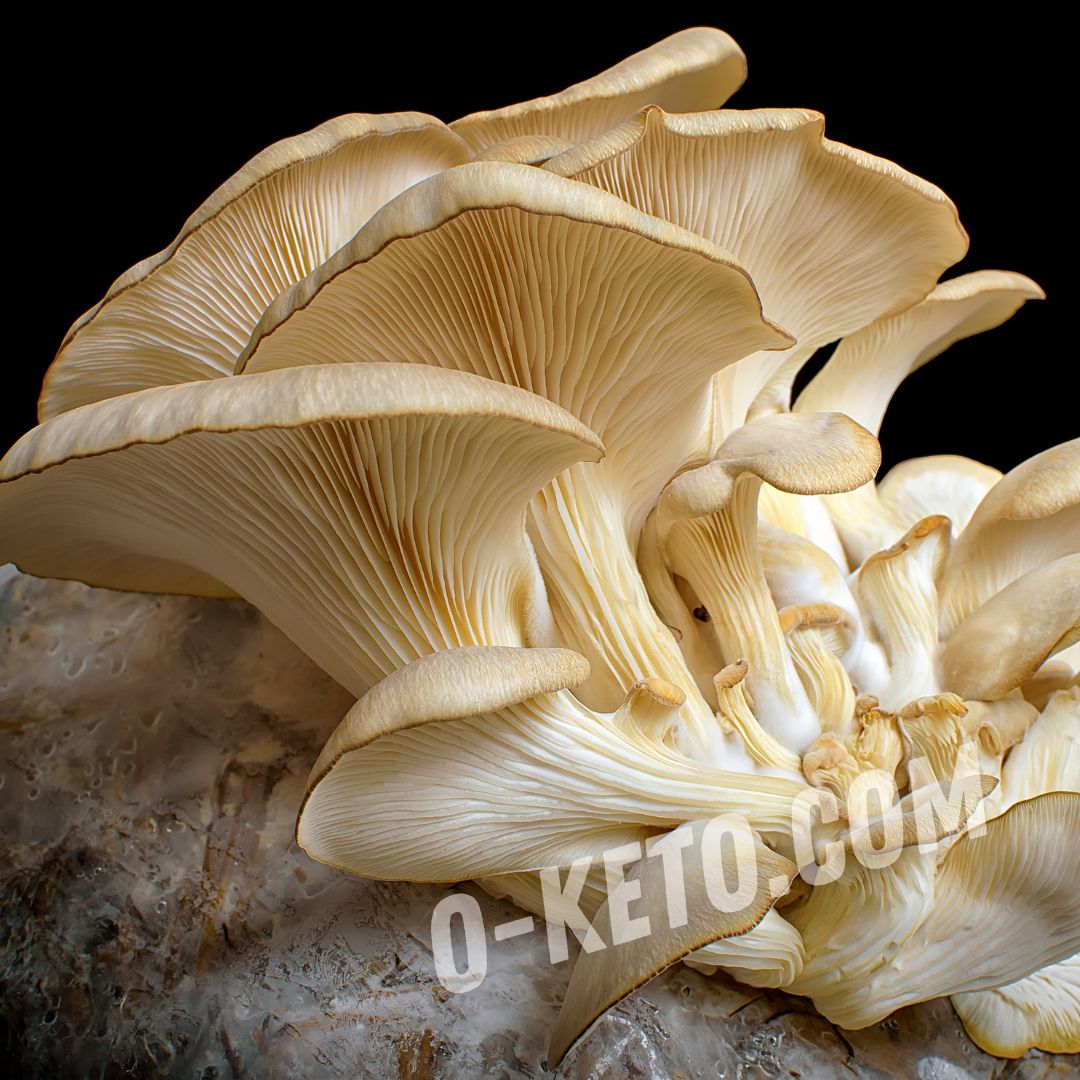

Oyster mushrooms are gilled mushrooms with a mild mushroom taste, a firm stem, and a tender cap. They grow in clusters, cook quickly, and absorb butter, cream, spices, and meat juices well. In cooking, oyster mushrooms are used for frying, braising, soups, omelets, warm salads, fillings, sauces, and side dishes.
For keto and LCHF, oyster mushrooms are convenient: they are low in calories, moderately low in carbohydrates, and have a pleasant meaty texture. They do not replace a full portion of meat in protein, but they make a dish larger and more interesting without grains, potatoes, or sweet sauces.
Nutritional value
Per 100 g of fresh oyster mushrooms, values are usually about 30-35 kcal, around 3 g of protein, less than 1 g of fat, and about 6 g of carbohydrates, part of which is fiber. Exact numbers depend on freshness, growing method, and data source. The glycemic load of a normal portion is low.
Oyster mushrooms contain B vitamins, potassium, phosphorus, copper, selenium, and mushroom fibers. Vitamin D in mushrooms depends on light exposure, so not every oyster mushroom should be treated as a reliable D source without producer data. In everyday cooking, their main role is taste, volume, and texture. Monash lists fresh oyster mushrooms among lower-FODMAP options at a standard serving, but tolerance still depends on the amount and on the rest of the dish.
Place in keto and LCHF
Oyster mushrooms usually fit keto well when cooked without flour, sweet sauces, breading, or a lot of onion. A 150-250 g portion in a hot dish is often easy to fit, especially with eggs, meat, fish, cheese, butter, cream, or sour cream.
Carbohydrates more often come from the recipe than from the mushrooms themselves: starchy gravy, sweet teriyaki sauce, noodles, potatoes, or breading change the dish. If buying marinated or ready-cooked oyster mushrooms, check sugar, vinegar brine, oil, and total carbohydrates per serving.
How to cook
Oyster mushrooms should not be soaked in water for long because they absorb moisture and fry worse. Usually it is enough to wipe them quickly, cut away the tough base, and separate the cluster by hand. For frying, use a hot pan and enough space; if there are too many mushrooms, they will steam in their own liquid.
A good method is to cook off moisture first, then add fat, salt, garlic, pepper, and herbs. Oyster mushrooms pair well with cream, sour cream, eggs, chicken, beef, bacon, cheese, thyme, parsley, and lemon juice. In soups they give a mild mushroom background, and in omelets they make a firm filling.
For a meatier texture, tear the mushrooms into larger strips along the fibers instead of chopping them finely. The edges brown while the middle stays juicy. If making a sauce, brown part of the mushrooms harder for aroma and simmer the rest with cream or sour cream for a softer base.
How to choose
Fresh oyster mushrooms should be firm, without slime, mold, dark wet spots, or sharp sour smell. Caps may be grey, beige, or brownish depending on the variety, but the surface should not be sticky. Slightly dry edges are acceptable if the mushroom is fresh overall.
Very large stems can be tough, so slice them thinner or use them for broth and braising. If there is a lot of condensation in the package, the mushrooms will spoil faster. For frying, choose firm clusters without wet collapsed areas.
Storage
Oyster mushrooms are best stored in the refrigerator, in a paper bag or a container with some airflow. A tight wet bag speeds slime formation. Do not slice them in advance unless needed because cut surfaces darken and lose aroma faster.
Keep cooked oyster mushrooms in a closed container and use them within the next few days. Fresh mushrooms can be frozen, but after thawing they become softer; for frying, it is better to quickly sauté or blanch them first. If fermented smell, stickiness, or mold appears, discard them.
Oyster mushrooms can be dried, although their aroma is usually milder than porcini or shiitake. Dried mushrooms are soaked before cooking, and the soaking liquid can be used in sauce or soup if it is clean and free of grit. For keto, avoid thickening that sauce with flour or starch.
Substitutes
The closest substitutes are button mushrooms, shiitake, portobello, wild mushrooms, king oyster mushrooms, or a mushroom mix. For meaty texture, portobello and king oyster work best; for a mild taste, button mushrooms; for a deeper aroma, shiitake. In dishes without mushrooms, eggplant, zucchini, or cauliflower can take part of the role, but the flavor will be different.


