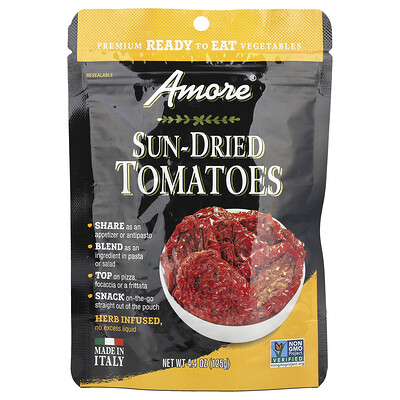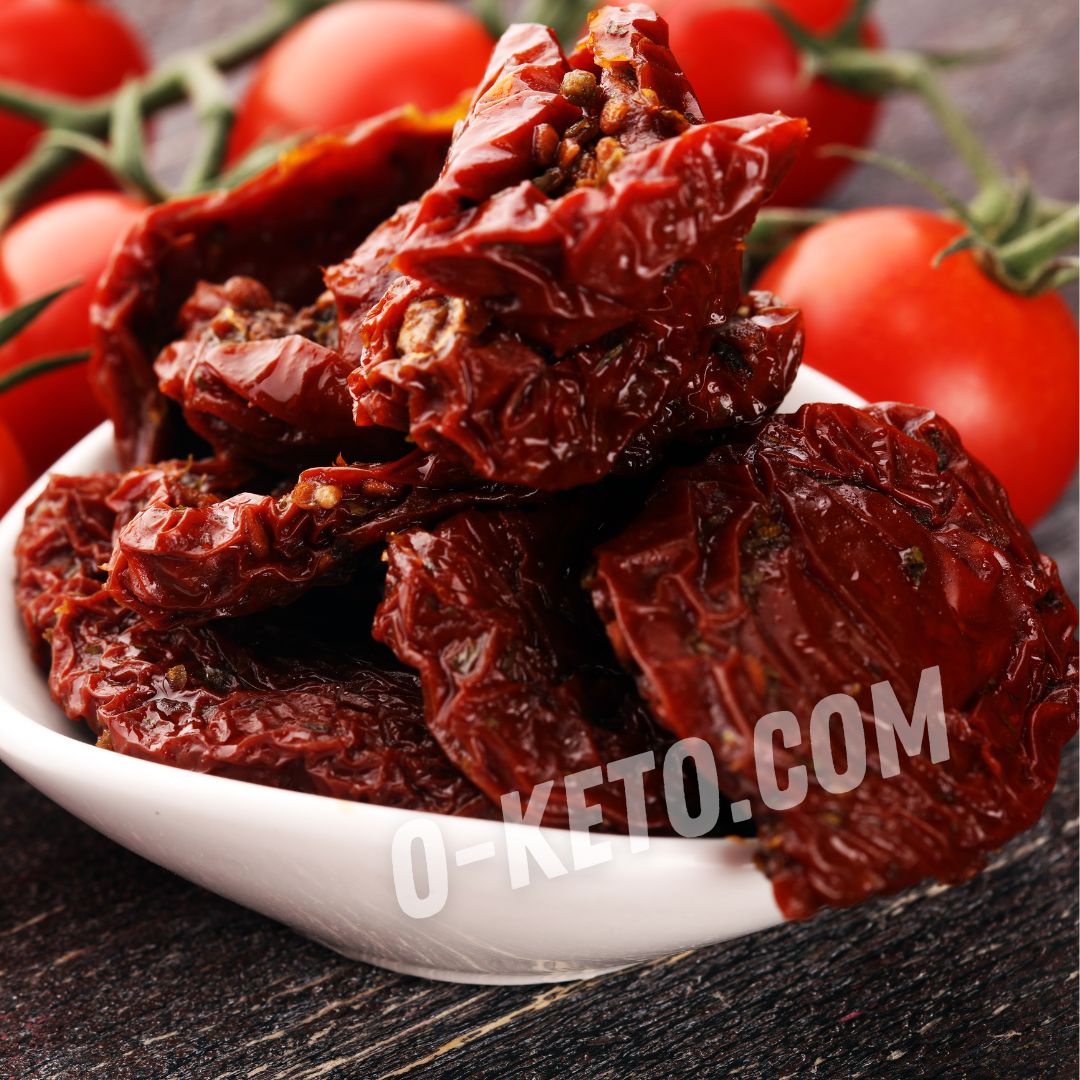

Sun-dried tomatoes are tomatoes from which a large part of the moisture has been removed. After drying, the flavor becomes more concentrated: sweetness, acidity and tomato intensity are stronger than in a fresh tomato. They are added to salads, sauces, omelets, meat dishes, fish, cheese snacks, spreads and homemade pastes based on oil, nuts or cheese.
The main feature of sun-dried tomatoes is concentration. They are no longer a watery vegetable component, but a dense sweet-tart addition. For low-carb eating, two things matter most: how much tomato is eaten and what it was stored in. Dry halves, tomatoes in oil and ready marinated mixes can differ greatly in composition.
Nutrition
The earlier values per 100 g were about 258 kcal, 14.9 g of protein, 3.3 g of fat and 55 g of carbohydrates, including about 6 g of fiber. These numbers immediately show why this product should not be judged like fresh tomatoes. Once water is removed, carbohydrates per 100 g become much more concentrated.
The glycemic index is often listed around 35, and the glycemic load around 6. But a low or moderate index does not cancel the carbohydrate amount. For keto, serving size matters more: 5-15 g in a salad or sauce may fit, while a large handful can quickly become a noticeable carbohydrate addition.
Are They Keto-Friendly?
Sun-dried tomatoes can fit keto only as a strong flavor accent. They are not best eaten as a separate snack straight from the jar, especially if the product is soft and sweet. It is better to slice a few pieces and spread them through a dish divided into several servings: the tomato flavor remains clear, while carbohydrates are easier to control.
Tomatoes in oil are often perceived as a fattier product, but oil does not remove the carbohydrates in the tomatoes themselves. It does change calories and the quality of the dish. If the oil in the jar is good, it can be used in dressing; if it is an unknown vegetable blend with a harsh smell, let the tomatoes drain and add your own olive oil.
How to Use Them
Sun-dried tomatoes add umami, acidity and sweet depth. They work best where a small strong accent is needed: in an omelet, cheese salad, sauce for fish, chicken, beef, eggplant, zucchini or cauliflower. In hot dishes they are often added near the end so the flavor does not become too sharp.
Practical options include:
- 5-10 g in a salad with cheese, herbs and olive oil;
- a few thin strips in an omelet or frittata;
- an addition to cream cheese sauce with basil and garlic;
- a small amount in a meat roll or chicken filling;
- a tomato note in a paste made from olives, nuts or cheese.
How to Choose
The ingredient list should contain tomatoes, salt, spices, herbs and, if the product is jarred, a clear type of oil. For strict tracking, avoid sugar, syrups, sweetened vinegar, starch and sweet marinades. Very soft and very sweet tomatoes often contain more additions than dry firm slices.
The color may range from dark red to brownish red. The smell should be tomato-like and spicy, without mold, fermentation or rancid oil. If the jar is open, judge not only the tomatoes but also the oil: it can spoil the whole product if it has gone rancid or absorbed foreign odors.
Dry and In Oil
Dry sun-dried tomatoes are easier to dose by weight, but they are sometimes softened in warm water, oil or sauce before use. Tomatoes in oil are softer and convenient for salads, but harder to count because the serving contains both tomato carbohydrates and fat from the oil.
If a recipe needs a lot of tomato flavor, it is not always necessary to increase the sun-dried tomato amount. Often it is better to combine a small portion with sugar-free tomato paste, paprika, basil, garlic or capers. The flavor becomes wider while the carbohydrate load grows more slowly.
Storage and Substitutes
Dry tomatoes should be stored tightly closed in a dry, cool place. After opening a jar with oil, keep it in the refrigerator, and the pieces should remain covered with oil. If mold, gas, cloudy liquid or an unpleasant smell appears, do not use the jar.
Sun-dried tomatoes can be replaced with a small amount of sugar-free tomato paste, a small portion of oven-softened tomatoes, olives, capers, roasted pepper or paprika with lemon zest. The substitute depends on the task: tomato sweetness, acidity, color, umami or dense texture.
For accurate tracking, it is better to weigh the tomatoes themselves after excess oil or marinade has drained, rather than count the number of pieces. One large soft piece can weigh much more than several dry strips, so counting “by pieces” quickly becomes inaccurate.