


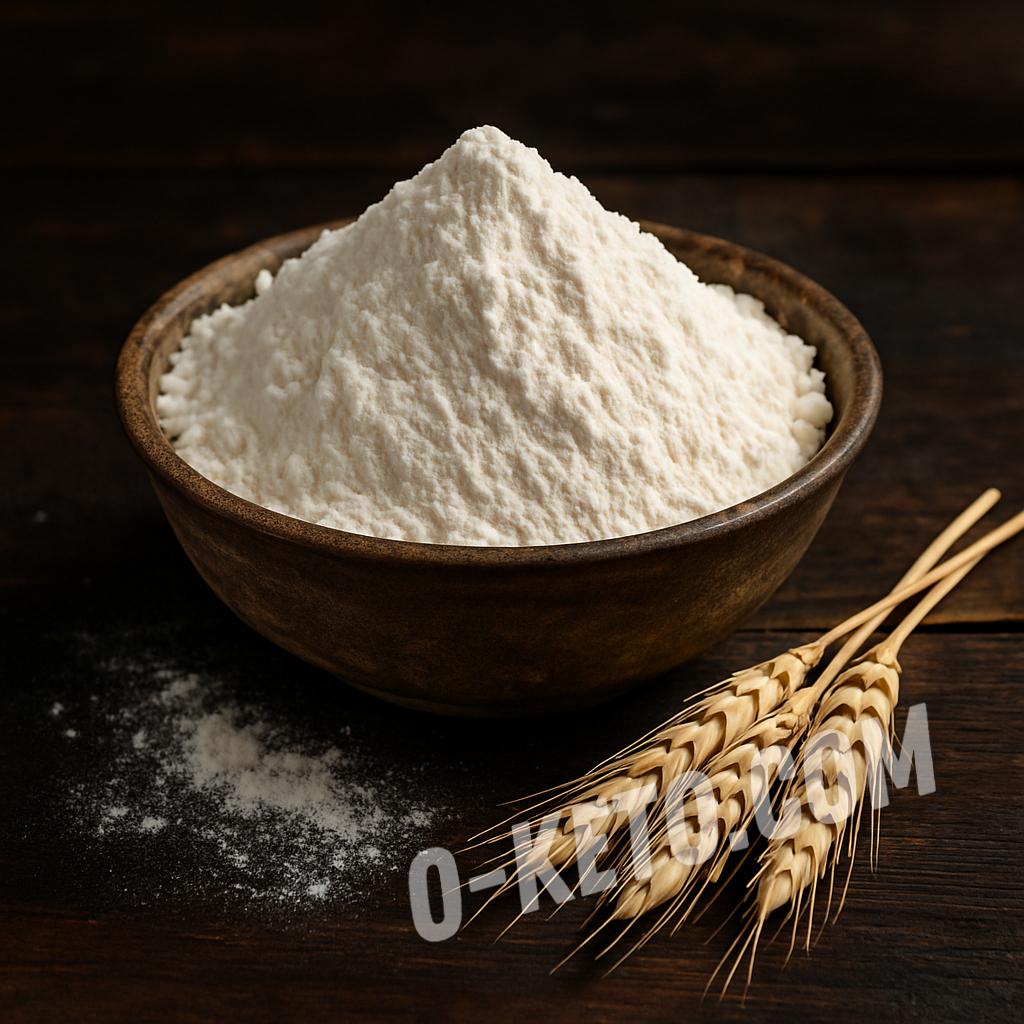

Wheat flour is one of the most common baking ingredients in everyday cooking. It is made by milling wheat grain and is widely used for bread, pastry, dumplings, pancakes, batter, thickened sauces, and coating mixtures. In everyday use, the phrase “wheat flour” usually means ordinary white all-purpose flour rather than whole wheat flour. From a culinary perspective it is popular because it is predictable, widely available, and rich in gluten-forming proteins that help dough stretch, rise, and hold structure.
For a keto diet, wheat flour is usually a poor fit. The problem is not a single ingredient but the overall profile: high starch content, high carbohydrate load, and a strong tendency to push total carbs up quickly. Even when used in a modest amount, wheat flour can consume a large share of the day’s carb budget. Most dishes built around it also include other carbohydrate-heavy ingredients, which makes the final meal even less suitable for nutritional ketosis.
What wheat flour really is
Ordinary wheat flour is mostly starch plus grain proteins, especially the gluten-forming fraction that gives dough elasticity. That is why it works so well for yeast bread, pie crusts, noodles, dumpling dough, pancakes, and many baked desserts. Compared with whole wheat flour, refined white wheat flour usually contains less fiber and fewer naturally retained micronutrients because much of the bran and germ are removed during processing.
Different bags may be labeled as all-purpose, bread flour, pastry flour, or according to local milling classifications. These differences matter for texture and baking performance, but they do not change the main nutritional point. Wheat flour remains a carbohydrate-dense product, and most of its calories come from starch rather than fat.
Nutrition and keto context
Per 100 grams, ordinary wheat flour provides a large amount of carbohydrate, a moderate amount of protein, and very little fat. Fiber content is usually much lower than in whole grain alternatives. For keto, that combination is inconvenient. It raises carbohydrate intake fast without offering the fat-heavy satiety that makes LCHF meals more practical.
The real issue becomes even clearer in finished dishes. Wheat flour is rarely eaten alone. It usually appears in bread, pastry, cakes, thickened gravies, battered foods, dumplings, and pan-fried coatings. In those recipes it often sits next to sugar, milk, starch, fruit fillings, breadcrumbs, or sweet sauces. So the flour is not only high-carb by itself, it also tends to anchor other high-carb ingredients around it.
How it is used in cooking
Wheat flour remains popular because it is technologically easy to work with. Gluten allows dough to trap gas, rise, and keep a familiar soft or elastic crumb. This is useful in bread, buns, noodles, pizza dough, pies, batter, and many classic baked goods. That convenience, however, does not make it a good everyday ingredient for low-carb eating.
In keto cooking, wheat flour is usually not “partially tolerated” as a standard base. It is more often replaced entirely with almond flour, coconut flour, flaxseed meal, psyllium-based blends, or other low-carb mixtures. In practice, replacing wheat flour often requires changing the whole recipe structure rather than swapping gram for gram.
How to choose and store it
When buying wheat flour, it helps to read beyond the front label. A simple plain flour product may have a short ingredient list, while ready-made pancake or baking mixes may include sugar, milk powder, flavorings, leavening agents, and other additives. For everyday identification, the most important distinction is whether the product is ordinary white flour, bread flour, whole wheat flour, or a blended baking mix.
Store wheat flour in a dry, cool place and protect it from moisture and odors. Warm storage over a long period can lead to stale smell, clumping, or pantry pests. If it is used only occasionally, smaller packages are often more practical than keeping a large open bag for months.
Limits and practical conclusion
The main keto limitation is straightforward: wheat flour is too carbohydrate-dense to serve as a regular base ingredient in a ketogenic menu. It is also unsuitable for people who need a gluten-free approach. Even outside strict keto, flour-based foods often need portion control when the goal is to lower refined carbohydrate intake or keep appetite and glucose response steadier.
The practical conclusion is simple. Wheat flour is useful as a traditional baking ingredient, but it is one of the least convenient flour choices for keto and LCHF. If the goal is to stay low-carb, most people do not try to “fit in a little bit” of wheat flour regularly. They usually replace it with a different flour system that behaves differently both in the recipe and in metabolism.


