


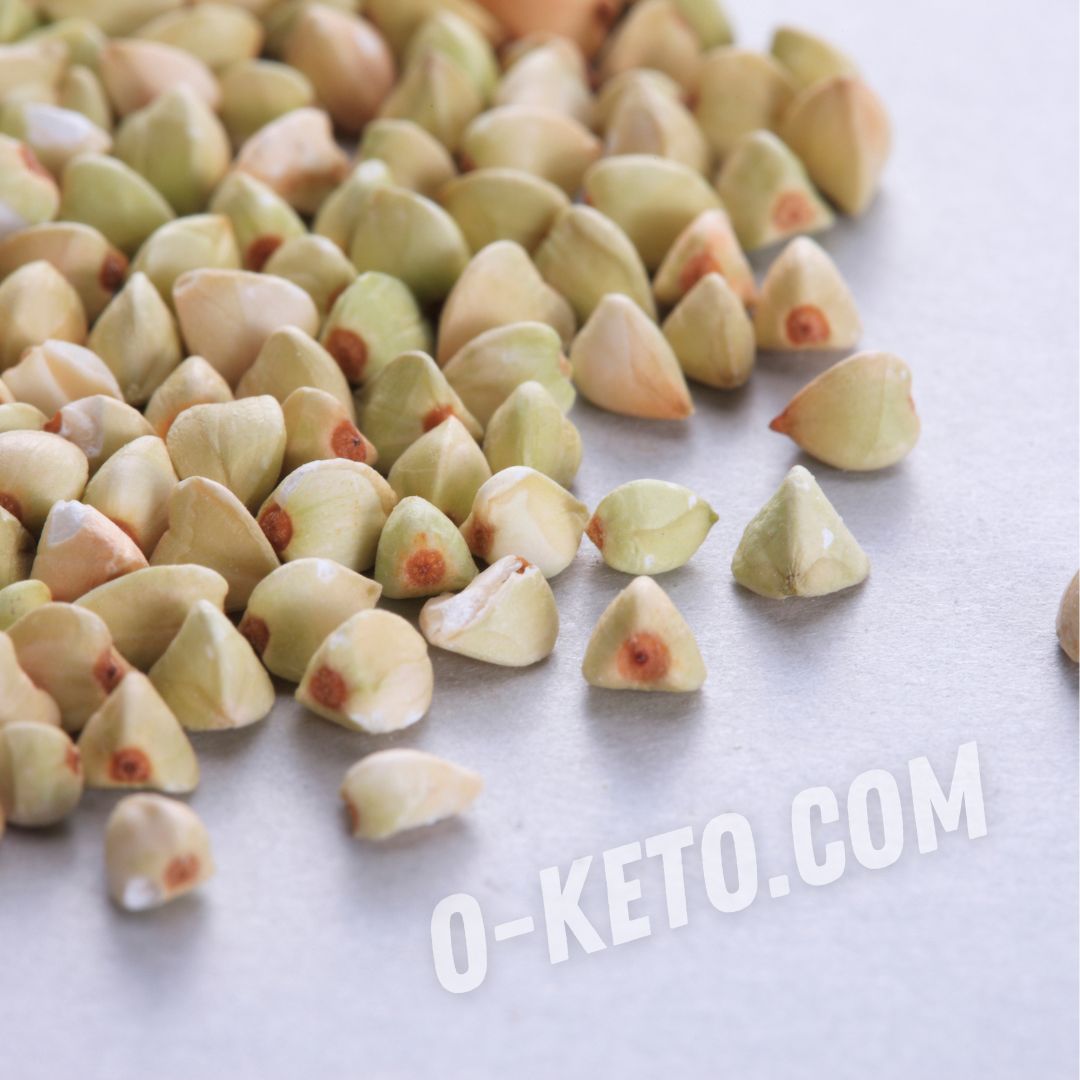

Green buckwheat is unroasted buckwheat seed. Unlike the familiar brown groats, it has not been heat-roasted, so its taste is softer, grassier, and lighter. It is boiled as porridge, soaked, sprouted, added to salads, used for side dishes, gluten-free granola-style mixes, flour for pancakes, and bases for plant-based bowls.
Despite the name, buckwheat is not wheat and contains no gluten. But in carbohydrate load, green buckwheat is closer to grains than to vegetables. For keto, this means caution: the product may be interesting in taste and composition, but it is not a low-carb base for the plate.
Nutritional value
In 100 g of dry green buckwheat there are usually about 330-350 kcal, 12-14 g of protein, 3-4 g of fat, and roughly 65-72 g of carbohydrates. It also contains fiber, magnesium, phosphorus, iron, zinc, B vitamins, and rutin. After cooking, the weight increases by about 2-2.5 times, so the prepared portion looks larger, but the carbohydrates from the dry groats remain.
The protein in buckwheat makes it more filling than many starchy sides, and the fiber changes both texture and eating pace. However, the high carbohydrate content remains the main factor for people who track macronutrients.
Is it suitable for keto?
For strict keto, green buckwheat is usually not suitable. Even 30 g of the dry product can take a noticeable part of the daily carbohydrate limit. In a softer low-carb diet, a small portion may sometimes fit if the rest of the day is built around meat, fish, eggs, greens, oils, and other foods with a low carbohydrate load.
If you want to keep the buckwheat flavor, it is better to count the dry weight before cooking rather than rely on the volume of cooked porridge. A 20-30 g dry portion becomes a small bowl after cooking, but for a ketogenic plan it is still not a free food.
How to use
Green buckwheat cooks faster and more gently than roasted buckwheat. It can be rinsed, soaked for several hours, then boiled in fresh water until soft. Soaking makes the texture more even and removes some of the floury feel. Use less water for a loose side dish and more water for porridge.
Its taste is less nutty than roasted buckwheat, but it is better suited for sprouting and softer dishes. If a strong buckwheat aroma is needed, brown roasted groats will feel more familiar. If a neutral base for a salad or bowl is needed, the green version is easier to season with dressing.
Common uses include:
- cook a soft porridge and serve it with butter, mushrooms, or egg;
- soak it and add a small portion to a salad with greens;
- sprout it until short shoots appear and use it as a crunchy component;
- grind it into flour for non-keto pancakes or flatbreads;
- mix it with vegetables and a protein food for a dense bowl.
Sprouting
Green buckwheat is much better suited for sprouting than roasted buckwheat. Rinse the groats, soak them for several hours, drain the water, and leave the seeds moist but not wet. Rinse them 1-2 times a day. Short sprouts usually appear quickly, sometimes within a day.
Do not allow musty smell, slime, or mold. If the seeds become sticky or smell unpleasant, they should not be used. Ready sprouts are stored briefly in the refrigerator and rinsed well before serving.
What to pair it with
The buckwheat flavor pairs well with mushrooms, butter, eggs, poultry, beef, fish, herbs, garlic, onion, sour cream, and fermented vegetables. For an LCHF plate, the buckwheat portion is best kept small, while volume comes from protein, fat, and low-carb vegetables.
In sweet versions, green buckwheat is often combined with berries, cinnamon, yogurt, and nuts. For keto, this is more complicated: carbohydrates need to be counted not only from the groats, but also from berries, dairy products, and sweeteners.
To reduce the carbohydrate density of the plate, buckwheat can be mixed with cauliflower, chopped herbs, mushrooms, or zucchini. This does not make the groats low-carb, but it lowers the share of buckwheat in the total portion while keeping the recognizable taste.
How to choose and store
Good green buckwheat is light, dry, without a musty smell, insects, or many broken grains. If sprouting is planned, it is better to choose a product that clearly states it is unroasted and suitable for sprouting.
Store the groats in a dry, cool place, in a tightly closed jar or bag. They easily absorb odors and moisture, so they should not be kept near spices, the sink, or the stove. Cooked porridge keeps in the refrigerator for 2-3 days, while sprouts keep for an even shorter time.
Green buckwheat and processing
Green buckwheat differs from roasted buckwheat because it has not been toasted, not because it is carbohydrate-free. Soaking and sprouting change texture and some accessible compounds, but they do not turn the grain into a low-carb food. Sprouted grain should be handled hygienically, rinsed well and not kept wet at room temperature for long.


