


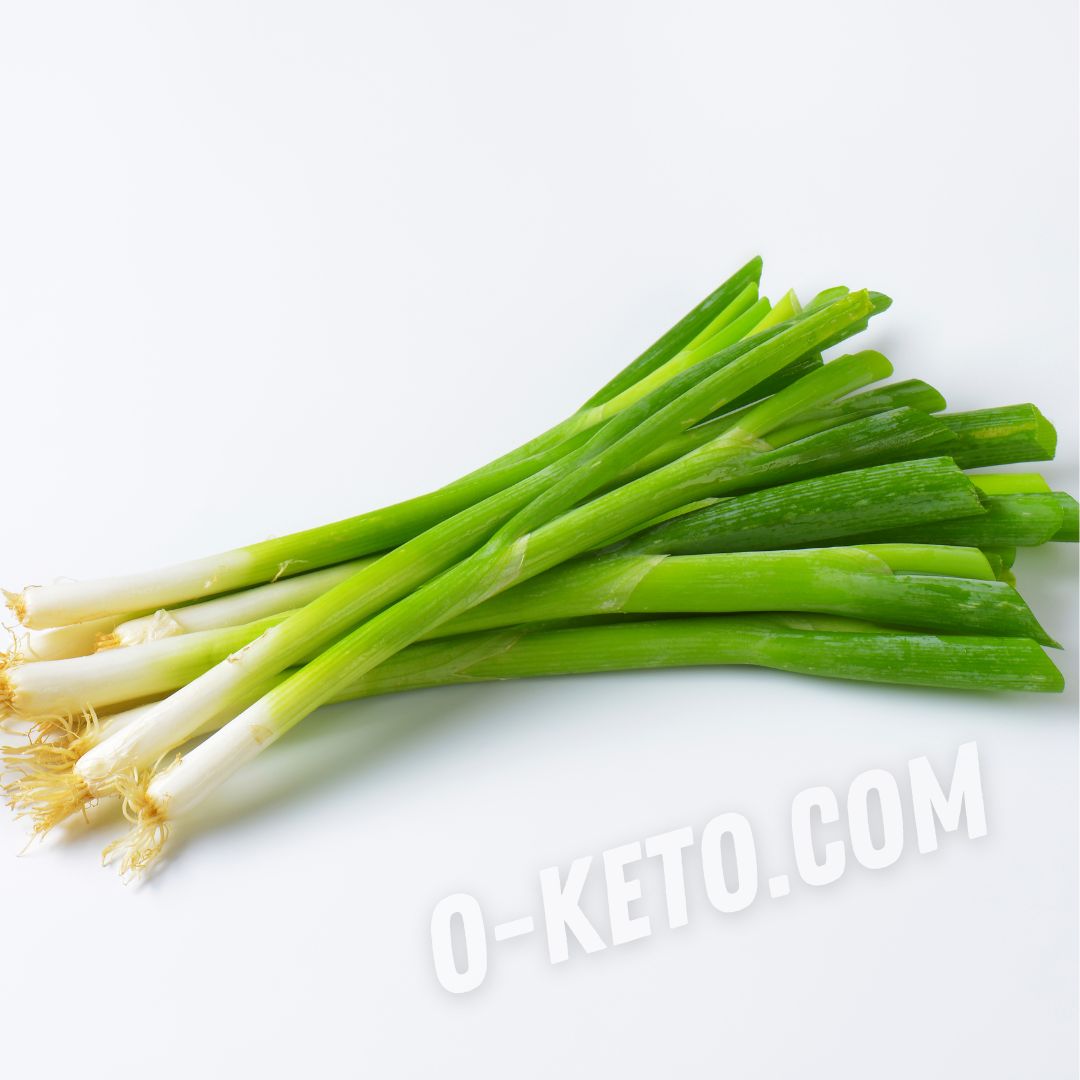

Green onion is the young green tops of onion plants, used as fresh aromatic herbs. In everyday language the name may refer to onion tops, Welsh onion, chives, or salad onion types, but the culinary role is similar: to add fresh onion aroma, mild sharpness, juiciness, and color without long cooking.
Unlike a bulb onion, green tops are usually eaten in small portions and most often added at the end. When heated, they quickly lose crunch and bright aroma, so they work better in salads, omelets, soups just before serving, sauces, cream cheese spreads, meat plates, and cold appetizers.
Nutritional value
In 100 g of green onion there are usually about 30–35 kcal, roughly 1.5–2 g of protein, about 0.3 g of fat, and 6–8 g of carbohydrates, part of which is fiber. A real serving is more often 10–30 g because the greens are used as an addition. Therefore the carbohydrate load usually remains small.
Green onion contains vitamin K, folate, vitamin C, a little vitamin A, potassium, and other minerals. It also provides sulfur-containing aromatic compounds that create the typical onion smell. The glycemic index of these greens is low, often listed around 15, but portion size and the rest of the meal matter more in practice.
Is it suitable for keto?
For keto and LCHF, green onion works as an aromatic low-carb addition. It makes dishes brighter without sweet sauces, grains, or breading. A small handful in a salad, omelet, soup, or sauce usually fits easily, especially next to eggs, fish, meat, cheese, sour cream, avocado, or oil.
If the serving is large, for example 50–100 g in a salad, carbohydrates should already be counted. That is not a problem by itself, but green onion should not silently turn from seasoning into the main vegetable during strict counting. Ready seasoning mixes also need checking: dried green onion is sometimes sold with sugar, starch, and salt.
How to use it
The cleanest flavor comes when the onion is cut right before serving. The white part is sharper and denser, while the green tops are softer and fresher. The white part can be gently heated in oil, added to scrambled eggs or broth, and the green part sprinkled on top already in the plate.
Good pairings include eggs, cottage cheese, cream cheese, sour cream, unsweetened yogurt, cucumbers, radishes, lettuce leaves, cauliflower, fish, chicken, beef, oven-cooked eggplant, mushrooms, and keto crackers. In sauces, green onion works well with dill, parsley, garlic, lemon, sugar-free mustard, and black pepper.
How to choose
Fresh green onion should be firm and juicy, with even green tops, no slime, yellow tips, or sharp sour smell. The lower white part may be dense, but not wet or dark. If the tops are wilted, sticky, or heavily bruised, the taste will be rougher and the bunch will store poorly.
Very thick tops are often tougher, while thin ones are more tender but wilt faster. For salads, choose soft fresh greens; for soups and hot dishes, a denser onion can work. If buying a cut product, check the packing date and moisture inside the package.
Limitations
Green onion may irritate a sensitive stomach, intensify heartburn, or cause bloating, especially raw and in large amounts. If onion and garlic are poorly tolerated, reduce the portion and check tolerance. People who need stable vitamin K intake from food should count green onion as one of the leafy sources of this vitamin.
For children and people with sensitive digestion, green onion is better finely chopped and added little by little. If freshness is needed without onion sharpness, part of it can be replaced with dill, parsley, or lettuce leaves.
How to store it
Keep the bunch in the refrigerator, wrapped in a damp paper towel and placed in a bag or container with a little air flow. It is better to wash the onion before use, not ahead of time. Extra water speeds spoilage, especially when the greens are packed tightly.
Cut green onion quickly loses aroma and dries out, so it is better used the same day. For longer storage, the tops can be frozen, but after thawing they are better for soups, omelets, and stewed dishes, not for a fresh salad.
What can replace it?
If fresh onion flavor is needed, chives, Welsh onion, thinly sliced shallot, a little red onion, or leek in a small serving can work. If only green color and freshness are needed without onion sharpness, choose dill, parsley, cilantro, basil, lettuce leaves, or microgreens.


