
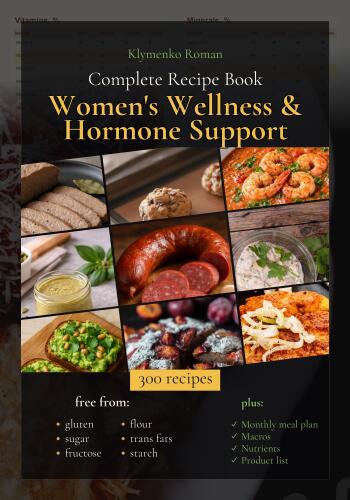
Recipe Collection for Women’s Health and Hormonal Balance
Free
Introduction
Women’s health and hormonal balance depend on energy availability, thyroid function, fat quality, the nervous system, and enough micronutrients. This is not about one “female vitamin”; the whole food environment matters.
Hormonal regulation is sensitive to under-eating, chronic stress, low protein, and insufficient fat-soluble nutrients. The recipes in this book are therefore built around substances that actually participate in metabolism, recovery, and regulation.
The key markers here are omega-9, DHA, EPA, vitamin D, zinc, iodine, and food phytoestrogens. Together they help build meals that support skin, cycle regularity, thyroid function, vessels, and the nervous system.
Key nutrients for this book
The core nutrient markers in this collection are: Oleic acid (Omega-9), DHA (Omega-3), EPA (Omega-3), Vitamin D, Zinc, Iodine, Phytoestrogens. Below is why each one matters and which foods provide it most naturally.
Oleic acid (Omega-9)
Oleic acid is the main fat in olive oil and avocado. It helps build meals with quality fats, steadier satiety, and less reliance on refined carbohydrates.
How it supports this topic:
- improves fat quality in the diet;
- helps make meals more satisfying and gentler for blood sugar;
- fits hormonal and vascular nutrition themes.
When intake may be low:
- nuts, seeds, avocado, and quality fats are limited;
- fat absorption is impaired;
- skin is dry or tissue recovery is slow.
Best food sources:
- olive oil, olives;
- avocado;
- almonds, hazelnuts, eggs.
DHA (Omega-3)
DHA is especially important for nervous tissue, the retina, skin, and hormonal regulation. It is part of cell membranes, so its role is broader than “brain fat”: it supports cell structure and resilience.
How it supports this topic:
- supports the brain, vision, and nervous system;
- contributes to the quality of cell membranes in skin and other tissues;
- works together with EPA in anti-inflammatory eating patterns.
When intake may be low:
- marine fish is rarely eaten;
- the eyes, nervous system, or skin are under higher stress;
- the diet is monotonous and low in fat-soluble nutrients.
Best food sources:
- salmon, sardines, mackerel;
- herring and trout;
- roe, seafood, cod liver.
EPA (Omega-3)
EPA is an omega-3 fatty acid involved in inflammatory balance, vascular tone, and tissue recovery. In these books it is a practical food marker: fatty fish and seafood often provide EPA together with protein, vitamin D, and other useful nutrients.
How it supports this topic:
- supports a balanced inflammatory response;
- helps maintain vascular function and blood flow;
- supports recovery after physical and metabolic stress.
When intake may be low:
- fatty fish and seafood are rarely eaten;
- the diet relies heavily on processed seed oils;
- skin, joints, or recovery seem especially sensitive to diet quality.
Best food sources:
- sardines, mackerel, herring;
- salmon, trout, tuna;
- seafood and cod liver.
Vitamin D
Vitamin D regulates calcium metabolism, immune responses, muscle function, and hormonal processes. It is especially important in books about bones, immunity, male and female health.
How it supports this topic:
- helps absorb calcium and maintain bones;
- supports muscles and immune function;
- is linked to hormonal regulation and recovery.
When intake may be low:
- nuts, seeds, avocado, and quality fats are limited;
- fat absorption is impaired;
- skin is dry or tissue recovery is slow.
Best food sources:
- fatty fish, cod liver;
- egg yolks;
- seafood and light-exposed mushrooms.
Zinc
Zinc is needed for immunity, protein synthesis, reproductive function, skin, and hair. In books about hormones, male strength, blood sugar, and skin it is a key mineral marker.
How it supports this topic:
- supports reproductive glands and immunity;
- is needed for tissue repair, skin, and hair;
- supports enzymes involved in glucose and protein metabolism.
When intake may be low:
- meat, seafood, and eggs are limited;
- nails are brittle, hair sheds, or wounds heal slowly;
- stress and infection load are high.
Best food sources:
- oysters, mussels, shrimp;
- beef, lamb, liver;
- pumpkin seeds, eggs.
Iodine
Iodine is needed by the thyroid gland to produce hormones that regulate metabolic rate, temperature, energy, and many aspects of women’s health.
How it supports this topic:
- supports thyroid hormone production;
- affects energy, metabolism, and temperature regulation;
- matters for reproductive health.
When intake may be low:
- stress, caffeine, and sleep loss are frequent;
- muscle cramps or irritability appear often;
- nuts, greens, fish, and whole foods are limited.
Best food sources:
- marine fish and seafood;
- seaweed in moderate amounts;
- eggs and dairy.
Phytoestrogens
Phytoestrogens are plant compounds with mild activity at estrogen receptors. In food they are useful as part of a varied diet, especially together with protein, omega-3 fats, and minerals.
How it supports this topic:
- may gently support hormonal balance;
- often come with fiber and polyphenols;
- add variety to women’s-health meals without extremes.
When intake may be low:
- nuts, seeds, avocado, and quality fats are limited;
- fat absorption is impaired;
- skin is dry or tissue recovery is slow.
Best food sources:
- flaxseed, sesame;
- soy foods when tolerated;
- greens, berries, legumes.
What this book is about
This is not a supplement manual and not a collection of vague wellness advice. It is a practical recipe collection built around foods that can provide meaningful amounts of the selected nutrients.
Each recipe includes ingredients, cooking time, macros, and vitamin/mineral tables per 100 g. This makes it easier to compare dishes and choose meals that fit your routine, taste, and goals.
Use the book as a food navigator: rotate protein sources, fish, eggs, vegetables, herbs, nuts, and other nutrient-dense foods, while paying attention to tolerance and variety.


