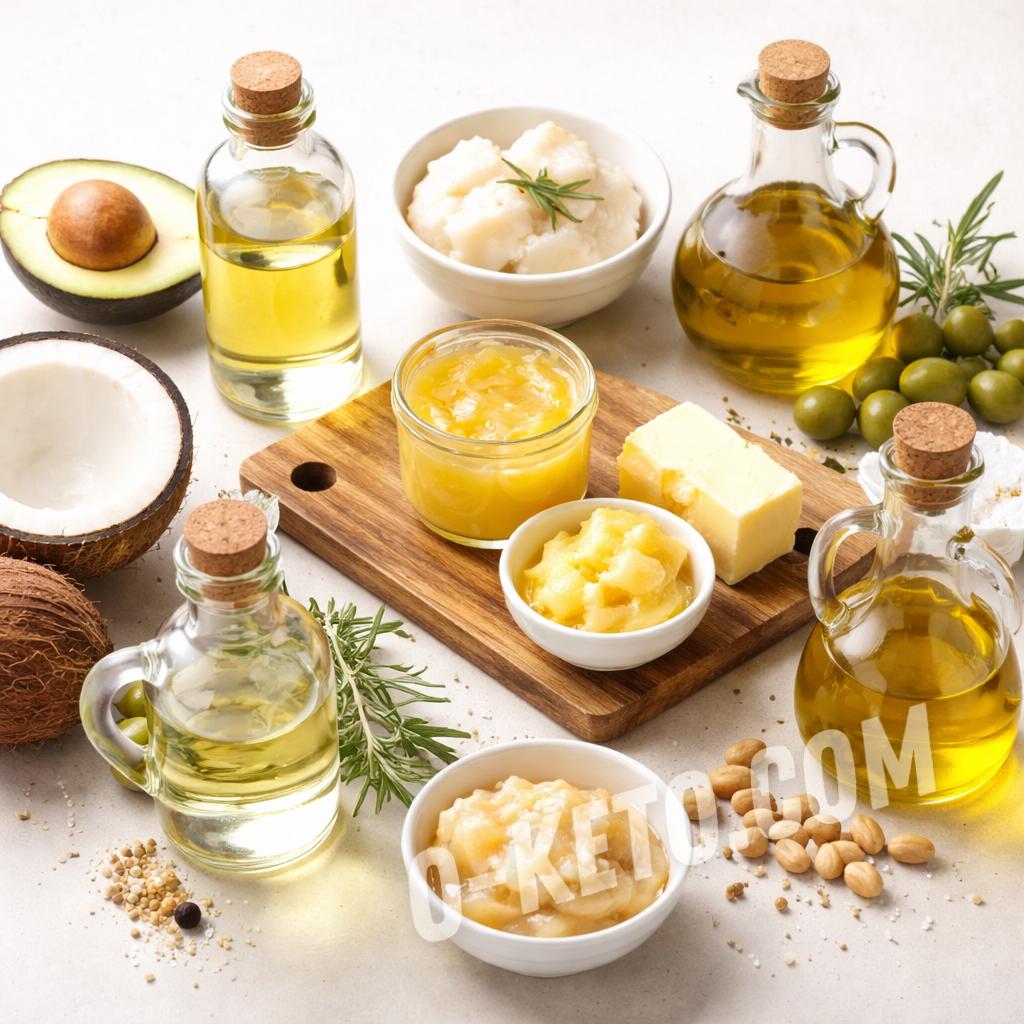

The smoke point shows the temperature at which an oil or fat starts to smoke visibly. It is a practical guide for choosing fat for different cooking methods: the hotter the cooking, the more important it becomes to use a more heat-stable option.
At the same time, a high smoke point alone does not always mean the fat is automatically the best choice in every situation. For an ordinary home kitchen, it helps to think not only about the number in the table, but also about the role of the fat: one works better for frying, another for gentle heat, and another only for finishing a ready dish.
What the smoke point means
When an oil or fat reaches its smoke point, sensitive compounds begin to break down more actively, the smell and flavor start to change, and the fat becomes less suitable for continued heating. In practice this often shows up before obvious burning: the aroma turns harsher, food darkens faster, and the pan can develop an unpleasant bitter note.
This is why the smoke point matters as a kitchen limit, not just as a reference number. The longer a fat stays near that limit, the more likely it is to produce an inferior flavor and a less stable cooking medium. For frying and roasting, higher-smoke-point fats are usually safer choices, while delicate oils are often better in cold dishes or at the very end of cooking.
A tabulated value should not be treated as a universal property of every bottle. For the same oil, the smoke point can vary with grade, refining, freshness, and free fatty acid content. For example, UC Davis gives olive oil a range of roughly 175–240°C rather than one fixed number. The table is therefore a guide to the cooking method, not a guarantee for a particular product or pan.
Vegetable oils
| Type of oil | Smoke point |
| refined avocado oil | 270°C |
| rice bran oil | 254°C |
| refined or light olive oil | 240°C |
| soybean oil | 232°C |
| peanut oil | 232°C |
| corn oil | 232°C |
| refined coconut oil | 232°C |
| safflower oil | 227°C |
| refined sesame oil | 210°C |
| vegetable oil | 204-232°C |
| canola oil | 204°C |
| grapeseed oil | 199°C |
| unrefined or natural avocado oil | 190°C |
| unrefined sesame oil | 177°C |
| natural or unrefined coconut oil | 177°C |
| extra virgin olive oil | 163-190°C |
Animal fats and butter-based fats
| Type of fat | Smoke point |
| ghee, clarified butter | 252°C |
| beef fat | 204°C |
| chicken fat or schmaltz | 190°C |
| duck fat | 190°C |
| lard or pork fat | 188°C |
| butter | 150°C |
How to use them in the kitchen
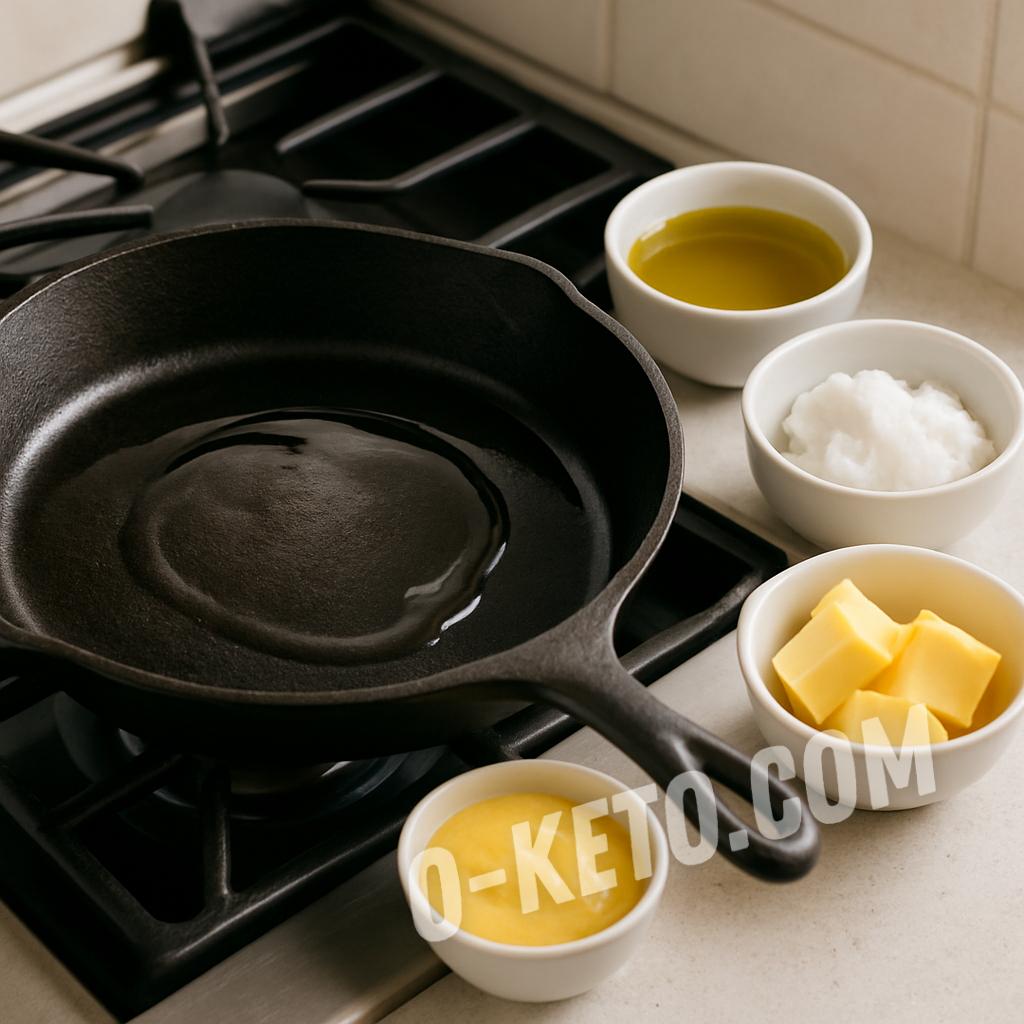
For stronger heat, refined avocado oil and ghee are among the most practical options. They work well when you want a hot pan, quick browning, or a better chance of getting a crust without the fat tasting scorched too early.
For moderate frying, beef fat, duck fat, chicken fat, and lard can also work well. They fit eggs, patties, vegetables, stews that begin with sauteing, and many ordinary savory dishes.
Butter and unrefined oils are usually better for gentler heat or for adding to food at the end. If you care not only about flavor but also about heat stability, it helps to keep separate fats for frying and separate flavorful oils for finishing.
Frying oils and finishing oils are not the same thing
One common home mistake is trying to use one oil for every task. But frying oils and finishing oils play different roles. Frying calls for heat tolerance, while finishing oils are chosen for taste, aroma, and how they behave when added after cooking.
Finishing oils are useful in salads, over ready vegetables, fish, meat, and creamy sauces after the heat is off or almost off. Extra virgin olive oil, dark sesame oil, and nut oils often shine here. Their flavor can be excellent, but that does not make them ideal for active frying.
The practical rule is simple. If you are preheating a pan, searing protein, or cooking over strong heat, use a more stable fat. If you want an olive, nutty, or seed-like aroma in the final dish, use a delicate oil as a finishing layer instead of forcing it through a high-heat job.
Why unrefined aromatic oils are poor choices for frying
Unrefined oils are often valued because they keep more aroma and character, but those same qualities usually come with a lower tolerance for aggressive heat. Under strong frying conditions they can begin smoking earlier, lose their pleasant flavor, and turn bitter or heavy.
This is especially noticeable with flax oil, nut oils, dark sesame oil, and other strongly aromatic oils. They may be excellent in dressings or on ready food, but they are not the best tools for a hot skillet. Even if the food does not visibly burn, the flavor can become rough and the kitchen aroma less pleasant.
That is why the idea that natural is always better is too simplistic in this context. For cold use, unrefined oils may indeed be more interesting. For frying, however, thermal stability matters more than the romance of minimal processing.
Where ghee, light olive oil, pomace olive oil, and refined avocado oil fit best
Ghee and clarified butter are especially useful when you want a buttery profile without the same vulnerability as ordinary butter. Because most milk solids are removed, ghee tolerates higher temperatures and works well for eggs, vegetables, poultry, fish, and many quick hot dishes. In a keto kitchen it is one of the most flexible everyday fats.
Light refined olive oil and olive pomace oil are generally better for frying than extra virgin olive oil. They have a milder flavor and a higher tolerance for heat, so they are good when you want an olive-based cooking fat without the sharper green taste and without pushing a delicate oil too close to smoke.
Refined avocado oil is useful for hotter techniques, including stronger skillet work, browning meat, and some fast roasting jobs. Its smoke point is high and its flavor is fairly neutral, so it tends not to compete with the main ingredients. That is why many people keep it as a workhorse frying oil rather than a salad oil.
Ordinary butter is a different case. It tastes good, but milk solids brown and scorch relatively early, so it is less reliable for aggressive frying. It is often better for gentle heating, quick warming, soft omelets, or in combination with a more stable fat.
How to choose oil for a real cooking task
For a home kitchen, it is usually enough to think in three groups. First, frying fats: ghee, refined avocado oil, neutral refined oils, and some animal fats. Second, moderate-heat fats: butter, coconut oil, lard, duck fat, and chicken fat when the temperature is not extreme. Third, finishing oils for flavor: extra virgin olive oil, nut oils, flax oil, and other delicate aromatic choices.
This approach is more practical than chasing one perfect oil for everything. In real cooking, two or three well-chosen fats usually work better than one universal compromise. One can be kept for hot searing, one for gentler cooking, and one for cold finishing. That makes both flavor and heat management much easier.
Conclusion
The smoke point helps show which fat can tolerate heat, but the best oil is chosen not only by the number in a table, but by the actual kitchen task. For frying, more stable options such as ghee, refined avocado oil, light refined olive oil, olive pomace oil, or suitable animal fats usually make more sense, while unrefined aromatic oils are better saved for salads and finished dishes. Matching the oil to the cooking method makes it easier to get good flavor without bitterness, smoke, or overheated fat.
Why smoke point is not the only criterion
Modern assessment of frying oil considers more than the moment smoke appears: fatty-acid composition, antioxidants, heating time, repeated use, contact with water, and the actual temperature all matter. Smoke is a visible household signal, but chemical changes can depend on conditions that occur before or after it. A smoke-point table is therefore not a universal ranking of oil “healthfulness.”
During cooking, avoid overheating, discard oil that has become very dark or strongly odorous, and match the fat to the method. The choice should reflect the dish, stability under that process, and taste rather than one number.
Sources
- Vegetable Oils and Their Use for Frying: A Review of Their Compositional Differences and Degradation
- Refining of Edible Oils: A Critical Appraisal of Current and Potential Technologies
- Deciphering the Complexity of Smoke Point in Virgin Olive Oils to Develop Simple Predictive Models
- Influence of Heating during Cooking on Trans Fatty Acid Content of Edible Oils: A Systematic Review and Meta-Analysis
- Olive Oil Myths and Facts — UC Davis Olive Center
- Navigating Dietary Fats: Understanding, Selection, and Usage — Utah State University Extension