


Infertility
Absence of pregnancy despite regular unprotected intercourse requires assessment of both partners, including ovulation, sperm quality, thyroid status, weight, inflammation, nutrient deficiencies and wider metabolic context.



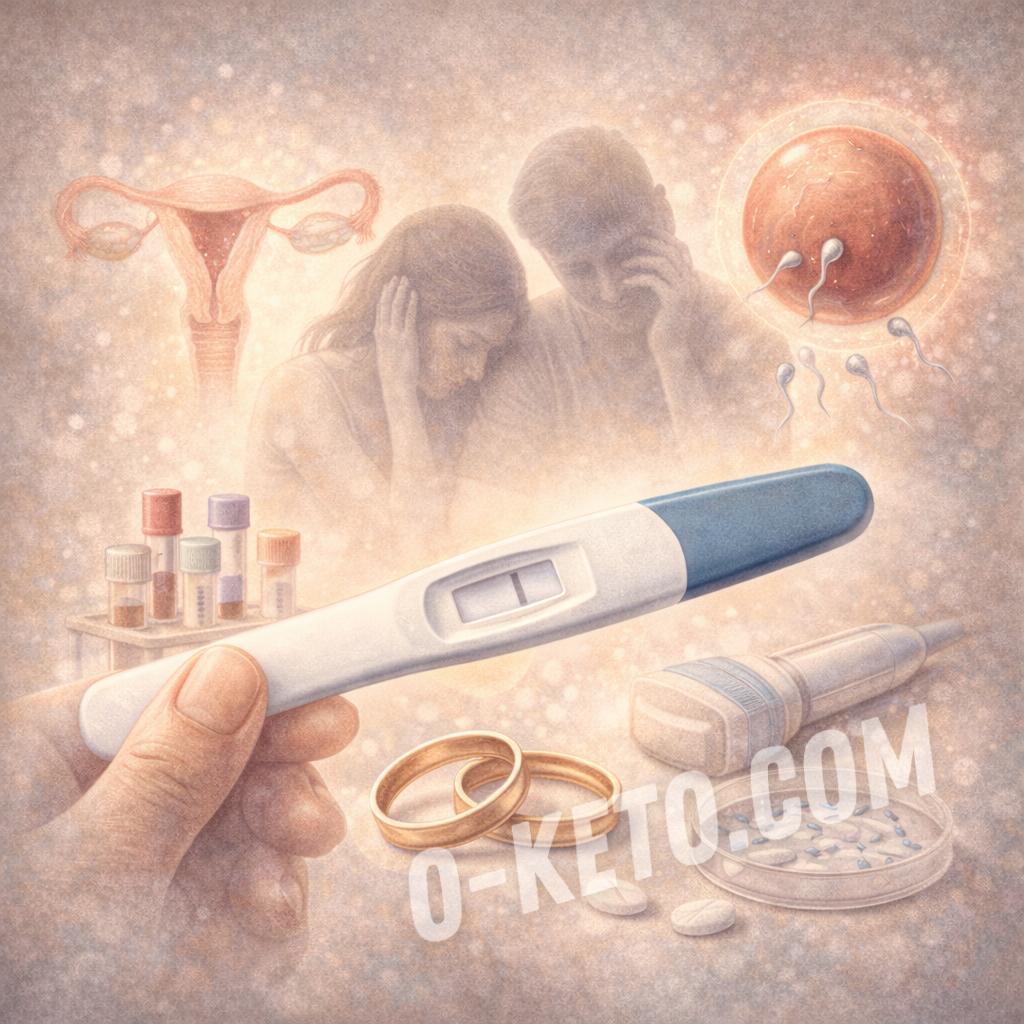
Infertility is not one diagnosis, but a clinical situation in which pregnancy does not occur within the expected time despite regular unprotected intercourse. For a couple, this is always both an emotional and medical issue because the limiting factors may lie on the female side, the male side or in both at the same time. That is why infertility should not be reduced to a “female problem” or to hormones alone. The practical goal of evaluation is to determine whether ovulation, tubal patency, sperm quality, implantation, hormonal regulation, metabolic state or several factors together are limiting conception.
Common causes
In women, important causes include absent ovulation, polycystic ovary syndrome, diminished ovarian reserve, endometriosis, pelvic inflammatory damage, tubal factors, hyperprolactinemia, thyroid dysfunction and major underweight or obesity. In men, sperm concentration and motility, varicocele, inflammation, hormonal disturbance, overheating, smoking, alcohol and metabolic factors can all matter.
Sometimes standard evaluation does not reveal one dramatic cause, and infertility reflects a combination of borderline factors that each look “acceptable” on their own but lower the chance of conception together.
What should be assessed
Infertility workup rarely ends with one test. In women, clinicians often assess ovulation, hormonal patterns, TSH, prolactin, AMH, vitamin D, ferritin, body weight, metabolic status and imaging, with tubal evaluation when needed. In men, semen analysis is one of the most important starting points, followed by hormones, inflammatory clues or additional studies depending on the findings.
That is why it is unhelpful to obsess over one “favorite cause” from the internet. A real fertility goal requires structured evaluation of the couple rather than a search for one fashionable explanation.
Metabolic and lifestyle factors
Fertility is strongly influenced by obesity, insulin resistance, chronic inflammation, severe calorie deficit, iron deficiency, B12 or folate deficiency, zinc status, poor sleep, stress, smoking, alcohol, overheating and low physical activity. In some people, correcting body weight, sleep and metabolic health improves ovulation and sperm production. But that does not mean lifestyle alone solves everything. Tubal disease, severe endometriosis or major sperm abnormalities usually require more than dietary improvement.
Low-carbohydrate strategies may be helpful for some women with insulin resistance or PCOS, but they should not become extreme or lead to underfeeding. Reproductive health suffers both from metabolic dysfunction and from chronic energy deprivation.
When faster in-person evaluation is needed
If the woman is older than 35, the waiting period is usually shortened. Faster evaluation is also important with irregular cycles, severe pain, known endometriosis, prior pelvic infection, surgery, recurrent miscarriage, marked semen abnormalities or known hormonal problems. The earlier the real limiting factor is identified, the less time is lost in unstructured attempts.
The most useful way to think about infertility is as a couple-level clinical syndrome with multiple possible causes. That perspective makes both evaluation and treatment more precise and less chaotic.
Common mistakes that delay progress
A frequent mistake in infertility is waiting too long in the hope that conception will happen “next month” without structured evaluation. The opposite error is to panic over one borderline laboratory result and treat it as the whole answer. Fertility depends on timing, age, ovulation quality, semen quality, endometrial conditions, tubal patency and the wider metabolic background. It is therefore far more useful to build a complete picture than to jump between isolated online theories.
It is also important to remember that a healthier lifestyle does not replace diagnosis. It may improve reproductive resilience, but it does not substitute for semen analysis, ovulation assessment, imaging or work on the specific limiting factor once it has been identified.
When evaluation is sequential and timely, even a complex fertility situation usually becomes more understandable and more manageable.
If you have any questions about the term "Infertility", you can ask them to AI. Please note, a low-cost OpenAI model is used. It may answer questions about disease treatment with errors!


 1 / 4
1 / 4


 1 / 4
1 / 4
 1 / 4
1 / 4 1 / 4
1 / 4