


E1401 (acid-treated starch)
Acid-treated starch gives more controlled viscosity and texture after heating; in low-carb products it remains a starch source when used in more than trace amounts.
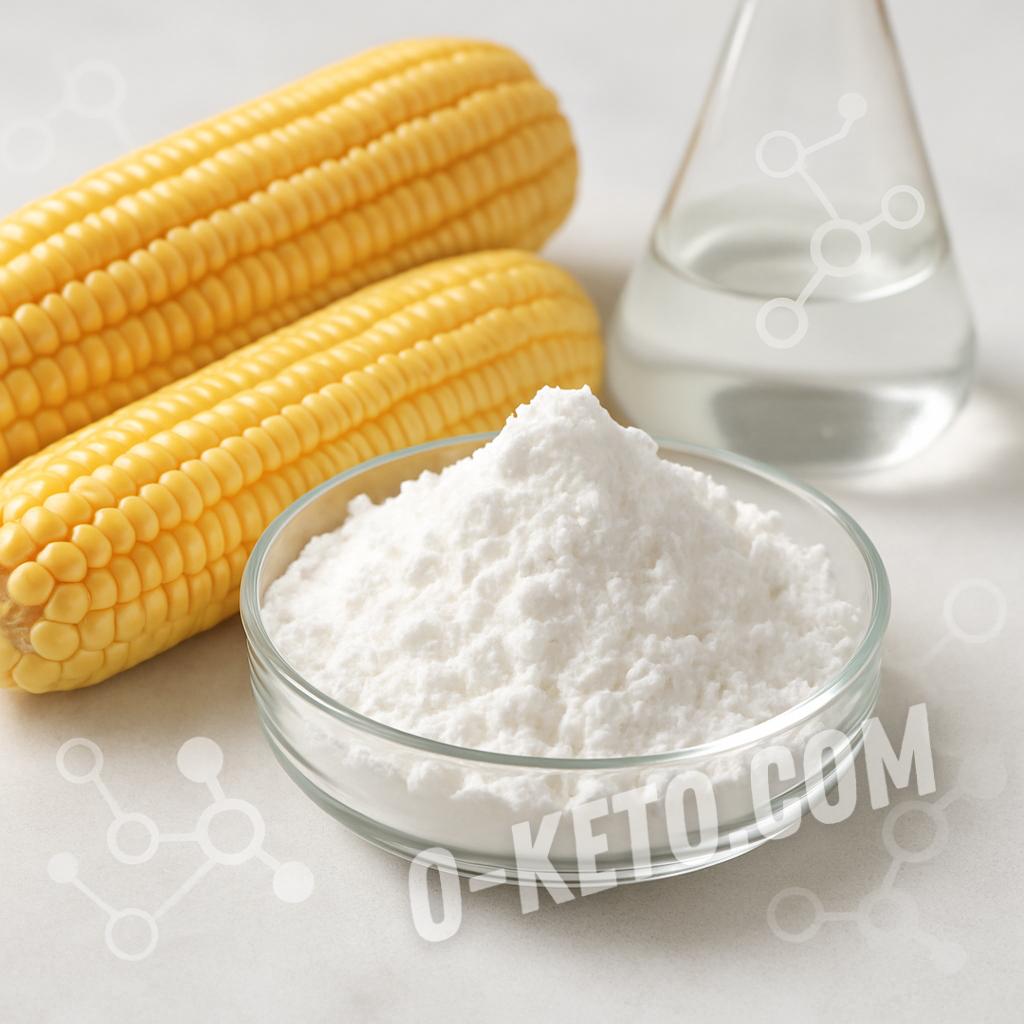
E1401 is known as acid-treated starch. In Codex/JECFA specifications it corresponds to INS 1401: a starch suspension is treated with food-grade acids such as hydrochloric, orthophosphoric or sulfuric acid and then adjusted to the required finished-product parameters. The purpose is not to make starch healthier or low-carb, but to change how it behaves during heating, cooling, mixing and storage.
This starch is often associated with the term thin-boiling starch. During hot processing it can give lower viscosity than ordinary starch, yet after cooling it may form a firm or stable texture. That is useful in fillings, sauces, gels, confectionery systems, coatings and products where native starch would become too thick, lumpy or unstable. For a consumer, the key issue is not the acid treatment itself but the fact that the ingredient remains a starch-based carbohydrate material.
How acid changes the starch
Starch granules and the chains of amylose and amylopectin are sensitive to processing conditions. Acid treatment partially shortens molecular chains and changes how the starch swells, holds water and forms a gel. This does not mean that harsh acid remains in the finished food. The technological process is controlled, and the final ingredient is adjusted to defined pH and purity specifications.
In practice E1401 is chosen when predictable texture is needed. A mixture may need to stay fluid enough during manufacturing, then set or stabilize in the finished product. This matters in industrial food, where every batch must behave consistently, remain stable during storage, cut evenly, resist separation and tolerate specific processing conditions. Plain starch does not always provide that level of control.
Where it may appear
Acid-treated starch may be used in confectionery fillings, glazes, dessert masses, sauces, fruit preparations, jelly-like products, prepared meals and some semi-finished foods. It helps create structure without excessive viscosity during production. In the finished product this may look like a smooth filling, a stable sauce, a sliceable gel or a uniform coating film.
The position on the label matters. If E1401 appears at the end of the ingredient list in a food eaten in tiny portions, its carbohydrate contribution may be small. If it sits in the middle of a dessert, sauce, baked substitute, bar or thick filling, it may be part of the product’s main structure. Then the more important questions are total carbohydrates, added sugars, syrups, flour, maltodextrin and the realistic serving size.
Keto and LCHF context
On keto and LCHF, E1401 should not automatically be treated as toxic or unacceptable in every trace amount. Small technological quantities may be practically irrelevant. But acid treatment does not turn starch into a ketosis-friendly fiber replacement. If a product is built around starch-based texture, especially sauces, desserts and bread-like substitutes, it can raise net carbohydrates and make carbohydrate restriction harder to maintain.
A common trap is the phrase “sugar free.” A product may contain no sucrose while still using modified starches, dextrins, syrups, fruit concentrates or other ingredients that contribute digestible carbohydrates. For someone with diabetes or insulin resistance, such a product may still produce a noticeable glucose response even when the marketing looks diet-oriented. Reading carbohydrates per serving and, when needed, checking personal response with a glucose meter or CGM is more informative than relying on the absence of table sugar.
Acid-treated starch is also important in products with dense fillings. There it may not be a flavor ingredient at all, but a structural one. If the filling makes up half of a bar, dessert or prepared dish, the technological starch can no longer be treated as a random detail. In such cases the product should be compared with processed foods that use starch for convenient texture, not with a genuinely zero-carbohydrate keto snack.
Tolerance and limitations
Most people tolerate food-use amounts of acid-treated starch normally. Digestive tolerance, however, depends on the whole formula. If the same food also contains polyols, large amounts of fiber, emulsifiers, acidic fruit fillings or a heavy fat load, bloating or discomfort cannot automatically be blamed on E1401 alone. The product should be judged as a whole, and repeated reactions to similar formulas are more useful than a single episode.
For celiac disease, wheat allergy or strict gluten avoidance, the starch source matters. The code does not tell whether the starch came from corn, potato, wheat, rice, tapioca or another source. In safe gluten-free practice, certified labeling and cross-contamination control matter more than assumptions based on the additive number. For low-carb eating, the simplest practical rule is still reliable: the fewer industrial thickeners a product needs and the clearer the ingredient list is, the easier it is to control carbohydrate intake.
If you have any questions about the term "E1401 (acid-treated starch)", you can ask them to AI. Please note, a low-cost OpenAI model is used. It may answer questions about disease treatment with errors!


 1 / 4
1 / 4