


E339 (Sodium phosphates (i) Monosodium phosphate (ii) Disodium phosphate (iii) Trisodium phosphate)
Sodium phosphates regulate acidity, hold moisture and stabilize protein foods, which makes them important in processed cheese, meat products and ready meals.
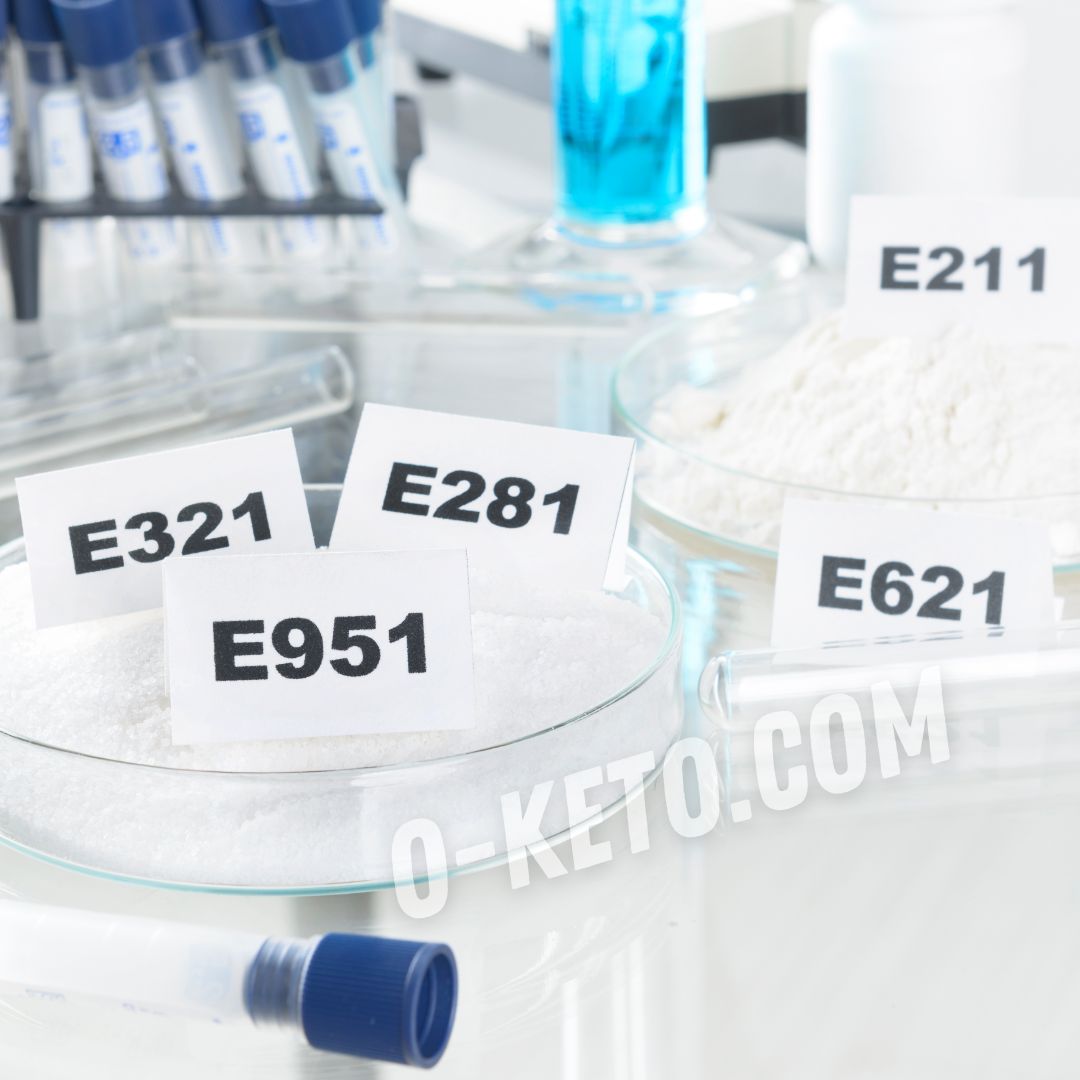
E339 refers to sodium salts of phosphoric acid, or sodium phosphates. In foods they are not antioxidants; they work as acidity regulators, buffering salts, moisture-retaining agents and stabilizers of protein systems. They can be found in processed cheese, meat products, sauces, baked goods, drinks and ready meals. For the shopper, the main questions around E339 are not carbohydrates in the additive itself, but product processing, sodium, phosphate load and how often such foods become a dietary base.
What sodium phosphates are
Phosphoric acid can form several sodium salts: mono-, di- and trisodium phosphates. On a label they may be grouped under E339. These forms differ in acidity and technical behavior, but for practical label reading the key point is the role of the group: it helps control pH, water and structure.
Sodium phosphates dissolve well and are convenient in manufacturing. They can create a buffer system, helping a product resist sharp changes in acidity. This matters in formulas where pH affects proteins, color, flavor, melting, viscosity and microbial stability. E339 is therefore rarely added without a purpose; it usually solves a specific technological problem.
Meat products and water binding
In meat products, sodium phosphates help proteins bind water more effectively. This affects juiciness, yield, tenderness and slicing quality. In sausages, ham, marinated poultry and semi-finished meats, E339 can reduce moisture loss during heating and storage. The product may feel juicier even when the raw meat was not especially fatty.
This effect is not automatically bad, but it should be understood honestly. In a well-made product, phosphates help maintain structure. In a cheap product, they may accompany excess water, salt, starch, protein substitutes and flavorings. The full formula matters: how much meat is present, how much salt, whether sugar or starch appears, and how often the product is eaten.
Processed cheese and sauces
In cheese products, sodium phosphates may act as emulsifying salts. They help cheese proteins hold fat and water in a more uniform system. This makes processed cheese, cheese sauce or filling smoother, more plastic and less likely to separate when heated. Citrates can perform a similar role, but phosphates give manufacturers different pH and texture options.
For the shopper, E339 in processed cheese is not a strange accident. The real question is the quality of the raw material and the whole recipe. One product may be based mainly on dairy ingredients and emulsifying salts, while another may contain starch, vegetable fats, flavorings and little cheese. E339 may look similar in both labels, but the nutritional meaning is different.
Low-carb relevance
E339 is not sugar, flour or starch. By itself it does not add meaningful carbohydrates. On keto and LCHF, the more important issue is the food that contains it. In sliced meat without sugar, E339 may be a technical detail. In a ready sauce, processed cheese product or semi-finished meal, it may appear next to starch, dextrose, maltodextrin, flour or sweet fillers.
There is also the sodium issue. On a low-carb diet, salt needs may increase in some contexts, especially during adaptation, but that does not mean every salty processed food becomes a good staple. Sodium phosphates often come together with ordinary salt. In edema, hypertension, kidney disease or sodium restriction, the total salt per serving matters.
Phosphates and mineral balance
Phosphorus is needed for bones, teeth, ATP, cell membranes and acid-base balance. But phosphate additives are not the same as phosphorus from whole foods, where it comes with protein, calcium, magnesium and other nutrients. Concerns usually arise not from an occasional product with E339, but from a high intake of ultra-processed foods with phosphate additives within a weak diet.
Phosphates deserve special attention in chronic kidney disease because the kidneys regulate phosphorus levels. In that situation, medical and dietetic advice matters more than self-interpretation of one E-number. For a healthy person, moderate occasional intake of a food with E339 is usually not a separate problem, but a daily base of processed cheese, sausages, ready sauces and semi-finished meals is a different pattern.
How to read E339 on a label
Sodium phosphates should be read as a strong technological tool for pH, water and protein structure. In a short, understandable ingredient list, they may be a normal part of the product. In a long list with excess salt, sugar, starches, substitutes and flavorings, they become one sign of deep processing, although not necessarily the main one.
The practical conclusion is balanced. E339 does not require automatic fear, but it deserves attention in foods eaten often. For low-carb eating, carbohydrates and the quality of the base food matter. For people limiting sodium, salt matters. For kidneys and mineral metabolism, total phosphate load matters. In everyday cooking, it is better when phosphates remain an occasional technical detail rather than a constant part of every meal.
If you have any questions about the term "E339 (Sodium phosphates (i) Monosodium phosphate (ii) Disodium phosphate (iii) Trisodium phosphate)", you can ask them to AI. Please note, a low-cost OpenAI model is used. It may answer questions about disease treatment with errors!


 1 / 4
1 / 4 1 / 4
1 / 4

 1 / 4
1 / 4
 1 / 4
1 / 4 1 / 4
1 / 4