


Fructosamine
Fructosamine reflects average glucose exposure over the previous 2 to 3 weeks and is especially useful when HbA1c may be distorted by red-cell problems, but it should be interpreted together with blood glucose, albumin, and the broader clinical picture.

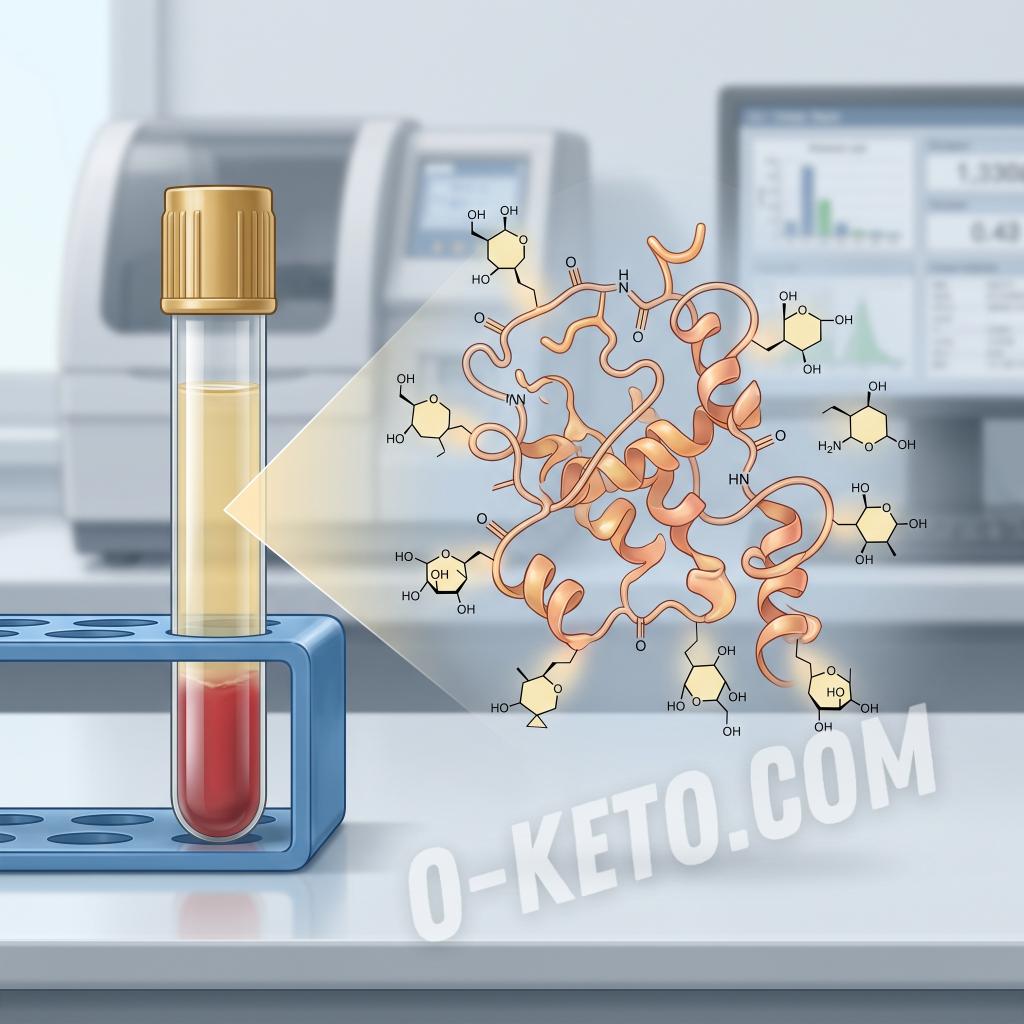
Fructosamine is a laboratory marker that reflects glycation of serum proteins, mainly albumin, and therefore helps estimate average glucose exposure over the previous two to three weeks. In practical terms, it can be viewed as a shorter-term companion to hemoglobin A1c. If HbA1c gives an average picture across roughly two to three months, fructosamine responds more quickly to recent changes. That makes it useful when a clinician needs to understand short-term glycemic shifts during treatment changes, diet adjustments, pregnancy, or unstable diabetes management. At the same time, fructosamine is not a stand-alone diagnosis and does not replace other glucose markers. It becomes most informative when interpreted alongside blood glucose, HbA1c, albumin, and the clinical context that explains why sugar control may be changing.
What the test measures
The test measures glycated serum proteins. When blood glucose stays elevated, some glucose binds to circulating proteins, and the amount of that binding is reflected in the fructosamine value. Because serum proteins turn over more quickly than red blood cells, fructosamine reflects a shorter time window than HbA1c. This is the core practical value of the test. It can show whether the overall glucose pattern has been better or worse during the most recent weeks rather than the most recent months. In real practice, this makes fructosamine helpful not only for monitoring established diabetes but also for evaluating whether a recent treatment change, a nutrition shift, or a newly started regimen is moving the person in the right direction.
When fructosamine is especially useful
There are several situations in which fructosamine may be more informative than HbA1c. It is particularly helpful when red-cell lifespan is altered and HbA1c can become misleading, such as in some anemias, hemolysis, recent blood loss, or selected hematologic conditions. It can also be valuable during pregnancy or when glucose control is changing quickly and a shorter monitoring window is needed. Another common use case is when HbA1c seems inconsistent with fingerstick readings, continuous glucose data, or obvious symptoms. In those situations, fructosamine can help reveal whether the recent glucose pattern is worse than HbA1c suggests or whether a recent improvement has not yet had enough time to influence the longer-term marker. That shorter time horizon is exactly what makes fructosamine clinically attractive.
What can raise the result
A high fructosamine level usually suggests that average glucose has been elevated over the past few weeks. This may happen in poorly controlled diabetes, insulin resistance, hyperglycemic states, or treatment settings where the current regimen is still not adequate. What matters, however, is not just the number itself but how it fits with neighboring markers. If fructosamine rises while HbA1c is still only mildly changed, the pattern may point to a more recent deterioration. If both are elevated, the glucose burden is more likely to have been sustained for a longer period. In that sense, fructosamine is best used as a dynamic marker of short-term control rather than as a disease label by itself. It tells you that recent glycation of plasma proteins has increased, but it does not explain why unless you connect it with glucose patterns, insulin status, treatment, weight, and lifestyle factors.
What can distort interpretation
Because fructosamine depends on serum proteins, especially albumin, it can be affected not only by glucose but also by protein abnormalities. Marked hypoalbuminemia, nephrotic syndrome, severe liver disease, protein-losing states, and other conditions that change the serum-protein pool can alter the result and make interpretation less straightforward. Large doses of vitamin C and some assay-specific interferences may also affect the measurement. This is why fructosamine should never be interpreted as an isolated number without checking albumin and the broader protein context. If the protein background is abnormal, the result may overestimate or underestimate the true burden of recent hyperglycemia. That is not a flaw unique to the test; it is simply part of understanding what biological compartment the marker actually depends on.
How to read it with other markers
The most useful combination is fructosamine together with blood glucose, HbA1c, and albumin. If fructosamine is high while HbA1c has not yet moved much, this may suggest recent worsening. If HbA1c remains high but fructosamine is beginning to fall, that may indicate that the most recent weeks have already improved relative to the previous months. If both are elevated, the disturbance is probably neither brief nor trivial. Fructosamine becomes especially valuable in cases where HbA1c may be distorted by anemia, blood-loss states, altered red-cell turnover, or other hematologic factors. In that setting, the shorter-term protein-based marker adds a practical corrective lens. The most sensible approach is to use fructosamine as a short-interval monitoring tool rather than as a replacement for the wider glucose picture.
Why the test should not be read alone
Fructosamine is useful, but it is not universal. It does not show daily glucose variability, does not replace home glucose monitoring or continuous glucose sensors, does not explain the mechanism of hyperglycemia, and does not by itself distinguish between transient metabolic instability and an established diabetic process. It also depends on the protein environment, which means its reliability changes in some clinical settings. That is why the test works best as a clarifying and monitoring tool. It is particularly good when the goal is to see the direction of change over recent weeks, but its meaning becomes much stronger when it is interpreted alongside ordinary glucose measurements, HbA1c, albumin, symptoms, and treatment context. Used that way, fructosamine becomes a practical clinical tool instead of just an obscure biochemistry line.
If you have any questions about the term "Fructosamine", you can ask them to AI. Please note, a low-cost OpenAI model is used. It may answer questions about disease treatment with errors!


 1 / 4
1 / 4
 1 / 4
1 / 4 1 / 4
1 / 4


 1 / 4
1 / 4